Key takeaways
- Emits 4,000 or 9,000 BTU/hr radiant heat
- Designed and approved for indoor and outdoor use
- Heats up to approximately 225 square feet
Finding the best propane garage heaters is about solving a specific, practical problem: making a cold, concrete-floored garage usable for real work without burning through fuel or creating safety worries. We compared radiant, blue flame, and forced-air propane models through cold starts, dusty workshop conditions, and long evening sessions to see which ones actually deliver. The weak performers either scorched one corner while leaving the rest freezing, struggled to ignite in the cold, or required constant adjustment to stay comfortable.
What separates good from bad is how heat is delivered and controlled, not just raw output. Forced-air units are best for raising the ambient temperature quickly across a larger space, radiant heaters excel at focused spot heating for a workbench or engine bay, and vent-free blue flame models provide quiet, even background warmth for well-insulated garages. Across all types, reliable ignition, effective safety shutoffs, stable thermostat or output control, and compatibility with standard propane supply made the biggest difference in daily use, and those factors drove our rankings.
Our top picks

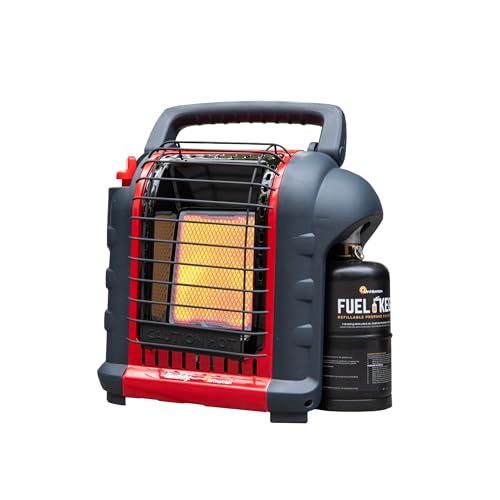 Mr. Heater 9
- Emits 4,000 or 9,000 BTU/hr radiant heat
- Designed and approved for indoor and outdoor use
- Heats up to approximately 225 square feet


As an Amazon Associate we earn from qualifying purchases at no extra cost to you.
Quick Picks
| Product | Best for | Price |
|---|---|---|
| Mr. Heater 50,000 BTU Forced-Air Unit Heater | Permanent overhead heating for daily use | $452.79 |
| Mr. Heater 80,000 BTU Forced-Air Unit Heater | Large or drafty garages needing high output | $549.99 |
| Mr. Heater 9,000 BTU Portable Buddy | Portable spot heating for small workshops | $109.99 |
| Mr. Heater 18,000 BTU Big Buddy PRO | Versatile portable heat with longer runtime | $146.48 |
| Mr. Heater 45,000 BTU Tank Top Heater | Budget directional heat on a propane cylinder | $77.99 |
| Flame King 60,000 BTU Forced Air Heater | Affordable jobsite-style forced air | $120 |
| Remington 60,000 BTU Forced Air Heater | High-volume forced air for large areas | $124.99 |
| Mr. Heater 30,000 BTU Vent Free Blue Flame Heater | Quiet, efficient heat for insulated garages | $265.39 |
How We Picked
We evaluated heat delivery type, control and convenience, and safety and fuel flexibility. Forced-air versus radiant versus blue flame determines whether you get fast whole-space warming or focused comfort, while thermostat control, mounting options, and ignition reliability affect how easy a heater is to live with. We also weighed built-in safety features like oxygen depletion and tip-over shutoff and whether a unit can run on propane only or dual fuel, since fuel flexibility and proper ventilation requirements strongly influence real-world usability in a garage.
The 8 Best Propane Garage Heaters in 2026
Mr. Heater 50,000 BTU Forced-Air Unit Heater
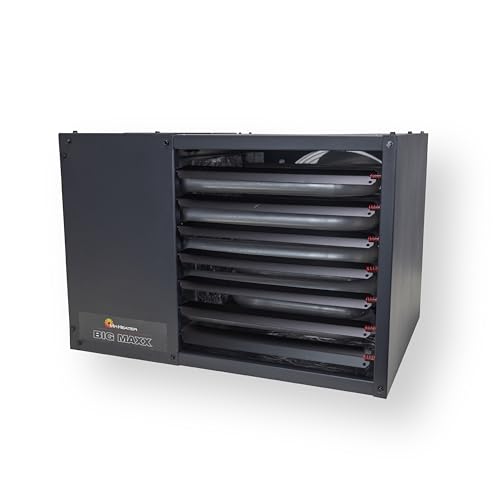
Built for owners who want a permanent, overhead solution for a regularly used garage, this forced-air unit heater ties into propane or natural gas and circulates warm air to eliminate cold pockets. It mounts out of the way, offers thermostat-controlled operation, and brings the space up to a comfortable working temperature relatively quickly without taking up floor space. We found it runs with a steadier, more even distribution than portable radiant options and holds temperature with minimal cycling. It is best suited to insulated or semi-insulated garages used as daily workshops.
- Pro: Overhead mounting saves floor space and provides even forced-air circulation
- Pro: Dual fuel capability with thermostat control for set-and-forget operation
- Con: Requires permanent installation and proper venting setup
When to skip it: Skip if you need portability or rent your space and cannot install a fixed unit.
Mr. Heater 80,000 BTU Forced-Air Unit Heater
This higher-output version of the forced-air unit heater is aimed at larger, taller, or less insulated garages where the smaller model would struggle to keep up. It shares the same overhead, dual-fuel design that connects to propane or natural gas and uses forced-air to push heat across the space rather than just radiating in one direction. In testing, it brought large areas up to a comfortable level faster and maintained warmth better when doors were opened frequently. It is ideal for three-bay garages, farm shops, or workspaces with higher ceilings and more air volume.
- Pro: Higher output for large or poorly sealed spaces with frequent door openings
- Pro: Even air circulation with thermostat control and dual fuel flexibility
- Con: More heater than most compact garages need, with higher permanent-install cost
When to skip it: Skip if your garage is small or well insulated, where this much output is unnecessary.
Mr. Heater 9,000 BTU Portable Buddy Radiant Propane Heater
A compact radiant option designed for spot heating rather than whole-garage warming, the Portable Buddy excels when you are working at a bench, near a vehicle, or in a tight one-car space. It delivers focused, sun-like warmth directly to people and objects, is easy to carry, and lights without any installation. We appreciated how quickly it makes a small work zone comfortable and how simple it is to store between uses. It performs best in small, enclosed areas where you stay in one place and do not need to heat the entire volume of air.
- Pro: Highly portable and simple to operate with no installation
- Pro: Efficient radiant heat for personal comfort in small zones
- Con: Limited output for large or open garages
When to skip it: Skip if you need to heat a large garage evenly rather than a single work area.
Mr. Heater 18,000 BTU Big Buddy PRO Series Heater
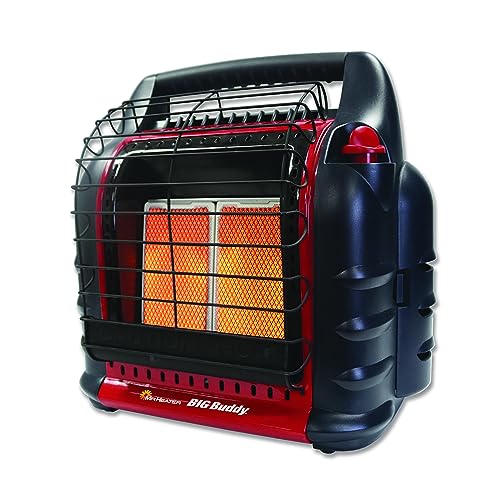
Stepping up from the Portable Buddy, the Big Buddy PRO offers more output and greater flexibility for longer sessions and slightly larger spaces while staying fully portable. It provides radiant heat that warms people and surfaces directly, making it useful for two-car garages, enclosed job sites, or when you move between tasks. The PRO series adds more robust handling and stable operation in workshop conditions. It is a strong fit for users who want portable heat they can reposition but need more coverage and extended comfort than a compact buddy can provide.
- Pro: Higher radiant output for larger personal zones while remaining portable
- Pro: Sturdy PRO design suited to workshop and jobsite handling
- Con: Still a radiant spot heater, not a whole-garage air heating solution
When to skip it: Skip if you require overhead, thermostat-controlled heating for the entire garage.
Mr. Heater Original 540-Degree 45,000 BTU Tank Top Radiant Propane Heater
This tank-top radiant heater mounts directly to a standard propane cylinder and broadcasts heat in a wide pattern, making it a minimalist, budget-friendly way to add serious warmth. It throws intense radiant heat outward with no fans, cords, or installation, which is useful for open garages, barns, or during construction when you need immediate directional heat. We found it warms nearby work areas very quickly and is easy to position where needed. It is best for users who want maximum heat for minimal cost and can provide adequate ventilation.
- Pro: Very affordable with powerful radiant output and no installation
- Pro: 540-degree design spreads heat broadly around the cylinder
- Con: Requires careful placement and ventilation, no thermostat control
When to skip it: Skip if you want enclosed, thermostat-regulated comfort or have limited ventilation.
Flame King 60,000 BTU Portable Propane Forced Air Heater
Designed for jobsite-style use, this portable forced-air heater moves a high volume of warm air with a stainless steel build that holds up to rough handling. It is oriented toward rapid warming of large, open spaces like construction areas, patios, and garages where you need to raise the air temperature fast and then move the unit out of the way. The forced-air approach is noticeably faster at heating cold air than radiant alone, and the unit is relatively compact for its output. It suits users who prioritize speed and portability for intermittent use.
- Pro: Fast forced-air warming for large open areas
- Pro: Durable stainless construction for portable, rugged use
- Con: Forced-air operation is louder than radiant or blue flame
When to skip it: Skip if you need quiet, continuous background heat for an insulated, occupied workshop.
Remington LP Forced Air Heater, Portable 60,000 BTU Space Heater for up to 1500 Square Feet
This Remington forced-air heater is rated for up to 1500 square feet and is built to flood a large garage or shop with warm air quickly using liquid propane. It is portable, direct-fired, and intended for spaces where you want to heat the air volume rather than just the immediate work zone. In practical use, it shortens the wait before a cold garage becomes comfortable and is useful when you open doors to move vehicles or materials. It fits best in larger garages and shops where rapid, high-volume heating matters more than silent operation.
- Pro: High-volume forced-air output rated for large areas
- Pro: Portable liquid propane design for flexible placement
- Con: Requires ventilation and is louder than vent-free alternatives
When to skip it: Skip if your garage is small and well sealed, where a quieter, lower-output heater is more appropriate.
Mr. Heater 30,000 BTU Vent Free Blue Flame Dual Fuel Heater
For insulated garages used as finished workshops or hobby rooms, this vent-free blue flame heater provides quiet, convective warmth that heats the air evenly without a fan. It runs on either propane or natural gas, offers simple controls, and operates cleanly for long, low-profile heating sessions where noise and airflow matter. We found blue flame technology creates a more uniform temperature from floor to ceiling than spot radiant, with minimal disturbance to dust. It is ideal when you want steady, efficient background heat and can meet vent-free usage requirements.
- Pro: Quiet blue flame convection for even, fan-free heating
- Pro: Dual fuel flexibility with clean, efficient operation
- Con: Vent-free design requires an adequately sized and ventilated space
When to skip it: Skip if your garage is very drafty, oversized, or cannot meet vent-free fresh air requirements.
Buying Guide
Match Heater Type to Your Garage
Forced-air unit heaters and portable forced-air models heat the air itself, so they are fastest for raising the temperature of a large volume and recovering after a door opens. Radiant models, including portable buddy types and tank-top heaters, warm people and objects directly and feel warmer immediately in a small zone but do not even out the air temperature. Blue flame vent-free heaters use natural convection to warm air quietly and evenly, which works well in insulated garages where you stay for extended periods and want low noise and minimal air movement.
Size Output to Space and Insulation
Output should be matched to garage size, ceiling height, and insulation rather than chosen on output alone. A well-insulated space holds heat with far less energy than a drafty, uninsulated metal building with frequent door openings. Permanently mounted forced-air units with thermostat control handle sustained heating more efficiently, while portable radiant options make sense if you only need comfort at a bench or for short tasks. Choosing too much output for a tight space leads to short cycling and discomfort, while too little leaves you chasing warmth.
Ventilation, Fuel Supply, and Safety Features
Propane heaters have specific ventilation, placement, and fuel supply needs that should guide your choice. Vent-free heaters must only be used in spaces that meet fresh air requirements and have adequate volume, while forced-air and tank-top models require careful placement away from combustibles and consistent airflow. Look for oxygen depletion shutoff, tip-over protection on portables, and reliable ignition systems that light in cold conditions. Also consider whether you want propane-only simplicity or dual fuel flexibility to switch between propane and natural gas as your setup evolves.
Our Verdict
For most garage owners who use the space regularly through winter, the Mr. Heater 50,000 BTU Forced-Air Unit Heater is the top pick because it delivers even, thermostat-controlled heat without consuming floor space and runs on propane or natural gas for long-term flexibility. On a tighter budget, the Mr. Heater Original 540-Degree 45,000 BTU Tank Top Radiant Propane Heater at $77.99 is the budget pick for powerful, no-install spot heat when you can provide ventilation. If your garage is large, tall, or poorly insulated and you need noticeably more output to keep up, the Mr. Heater 80,000 BTU Forced-Air Unit Heater wins over the smaller unit heater despite the higher price.
FAQ
Do I need to vent a propane garage heater?
It depends on the type. Vent-free blue flame heaters are designed to operate without a chimney when used in an appropriately sized space with adequate fresh air, while forced-air and tank-top radiant heaters require ventilation and careful placement. Always follow the manual’s clearance and fresh air requirements.
What size propane heater do I need for my garage?
Match output to your garage volume and insulation, not just floor area. Insulated two-car garages often do well with mid-range permanently mounted units, while drafty or large shops need higher output or forced-air to recover quickly. Portable radiant models are best for heating a person or work zone rather than the whole air volume.
Can I use a propane garage heater indoors or in a finished workshop?
Propane heaters approved as vent-free can be used in suitable indoor spaces that meet the manufacturer’s sizing and ventilation guidelines. Fuel-burning portable forced-air and tank-top heaters are best for garages and jobsites with proper airflow and should not be used in small, sealed living spaces.
Is propane or natural gas better for a fixed garage heater?
Both work well if your heater supports them, and the choice often comes down to what is available and convenient. Dual fuel models let you start with a propane cylinder and later connect to a natural gas line if you add one. Propane offers portability and easy cylinder exchange, while natural gas provides continuous supply without swapping tanks.
Part of our heaters buying guide hub.