Old homes are not just older versions of new homes. After living with plaster walls, uneven heating, drafty additions, and wiring that predates the idea of a common wire, you learn that a smart thermostat has to do more than look good on the wall. The real problem is compatibility and control. Many vintage systems run on boiler heat, radiators, or two-wire furnace setups with no C-wire in the wall, and rooms that heat unevenly can make a single temperature reading misleading. A good thermostat for this kind of house handles finicky wiring without forcing you to pull new cable, plays well with the heating type you actually have, and gives you scheduling that matches how you really live.
What separates the good from the bad after detailed research in 2026 is restraint. The best models make installation forgiving for old wiring, keep day-to-day use simple for anyone in the household, and offer app controls that are reliable when you are away. The weak ones assume you have a modern air handler, a C-wire, and perfect Wi-Fi at the thermostat location. In this roundup we ranked eight widely available options specifically for retrofit friendliness, ease of DIY setup, and everyday usability in older homes, so you can match your wiring and heating system to the right pick without overpaying for features you will not use.
Our top picks
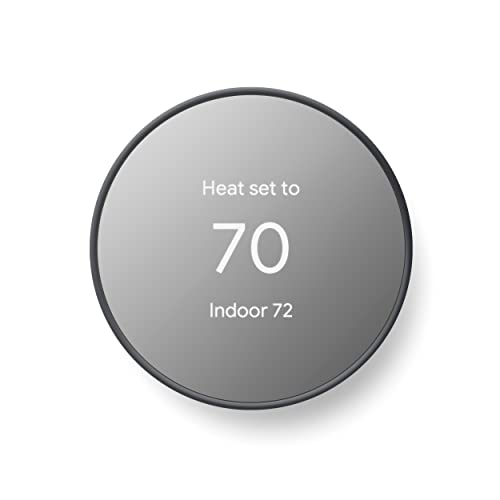 Google Nest Thermostat
- ENERGY STAR certified smart thermostat for home that…
- The Nest Thermostat is designed to work without…
- Nest Thermostat turns itself down when you leave,…
 Honeywell Home T5 Smart Wi-Fi Thermostat
- High use of the scheduling feature of the…
- Save Energy and Get Rewarded
- 7-Day Flexible Scheduling or Location Based Temperature Control
| Product | Key specs | |
|---|---|---|
| Google Nest Thermostat | ENERGY STAR certified smart thermostat for home that… The Nest Thermostat is designed to work without… Nest Thermostat turns itself down when you leave,… | Check price |
| Honeywell Home T5 Smart Wi-Fi Thermostat | High use of the scheduling feature of the… Save Energy and Get Rewarded 7-Day Flexible Scheduling or Location Based Temperature Control | Check price |
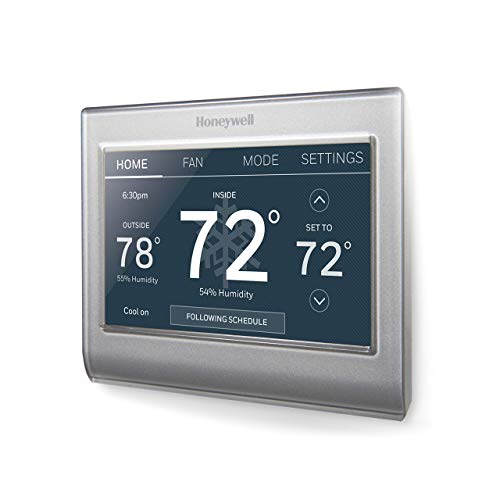 Honeywell Home RTH9585WF Wi-Fi Smart Color Thermostat Honeywell Home RTH9585WF Wi-Fi Smart Color Thermostat | Check price | |
 Sensi Smart Thermostat Sensi Smart Thermostat | PRIVACY PROTECTION*: Sensi won’t sell your personal information… Use the built-in level and step-by-step app instructions… SAVE ABOUT 23% ON HVAC ENERGY*: The ENERGY… | Check price |
 Google Nest Thermostat Google Nest Thermostat | ENERGY STAR certified smart thermostat for home that… The Nest Thermostat is designed to work without… Nest Thermostat turns itself down when you leave,… | Check price |
 Sensi Lite Smart Thermostat Sensi Lite Smart Thermostat | Do it yourself fast with a built-in level… Common wire(C-Wire) required for heat pump and heat/cool… SAVE ABOUT 23% ON HVAC ENERGY: ENERGY STAR-certified… | Check price |
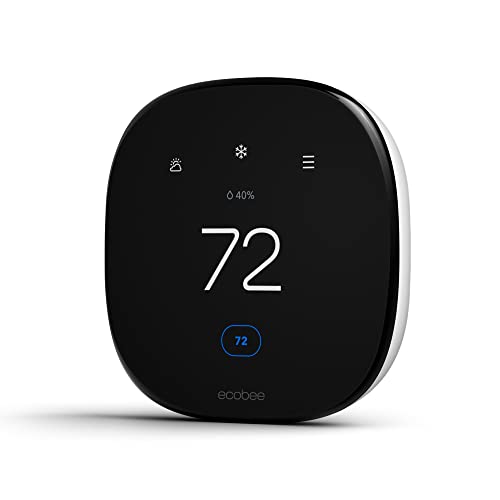 ecobee Smart Thermostat Enhanced ecobee Smart Thermostat Enhanced | Saves you energy automatically Smart comfort for everyday life Compatible with 90% of HVAC systems: Use the… | Check price |
 ecobee Smart Thermostat Essential ecobee Smart Thermostat Essential | Save up to 23% every year on heating… Compatible with 85% of systems, check your system’s… Change your temperature by easily tapping the color… | Check price |
As an Amazon Associate we earn from qualifying purchases at no extra cost to you.
Quick Picks
| Product | Best for | Price |
|---|---|---|
| Google Nest Thermostat Charcoal | Simple upgrade with modern design | $79 |
| Honeywell Home T5 Smart Wi-Fi Thermostat | Flexible scheduling on a budget | $77.5 |
| Honeywell Home RTH9585WF | Large color display and detailed programming | $123.89 |
| Sensi ST55 | DIY friendly with broad system compatibility | $94.99 |
| Google Nest Thermostat Snow | Same smart features in a lighter finish | $99.99 |
| Sensi Lite ST25 | Lowest cost entry to smart control | $61.05 |
| ecobee Enhanced | Advanced sensing and premium control | $169.99 |
| ecobee Essential | Essential ecobee experience for less | $119.99 |
How We Picked
We prioritized what matters most in older construction: wiring flexibility including options that reduce or eliminate the need for a C-wire or make it easy to add, compatibility with common older systems such as conventional furnaces, boilers, and heat-only setups, straightforward installation and app setup for DIYers without an HVAC background, and controls that remain intuitive for the whole household while still offering remote access, scheduling, and voice assistant support. Build quality, display readability, and long-term reliability in homes with thicker walls and variable heating loads also weighed heavily.
The 8 Best Smart Thermostats For Old Homes in 2026
1. Google Nest Thermostat Charcoal
Ideal for owners of older homes who want a clean, low-profile upgrade without a steep learning curve. This version is aimed at straightforward comfort control with helpful automation that learns routine over time rather than demanding constant manual tweaks. It handles typical retrofit wiring well for many homes and keeps the interface simple both on the device and in the app. Consider it if you value design, ease of use, and reliable app and voice control.
- Pro: Intuitive, minimal interface that is easy for any household member to use
- Pro: Helpful scheduling and remote access that adapts to changing routines
- Con: Advanced customization is more limited than some enthusiast models
Skip it if your system is line volt heating or you need deep manual programming with many daily setpoints and prefer direct control over automation.
2. Honeywell Home T5 Smart Wi-Fi Thermostat
Built for buyers who want clear, flexible scheduling without complexity, the T5 is a strong fit for older homes where predictable programs beat heavy automation. It offers a balanced set of features for the price and is approachable for DIY installation in many conventional systems. The app makes it simple to set weekday and weekend patterns and override them when plans change, which is useful when room temperatures vary by floor.
- Pro: Straightforward seven-day programming with easy overrides
- Pro: Good value with reliable app and voice assistant integration
- Con: Display and on-device navigation feel more basic than premium models
Skip it if you want a large full-color touchscreen or more advanced sensing features for balancing hot and cold spots.
3. Honeywell Home RTH9585WF Wi-Fi Smart Color Thermostat
This model is for those who prefer a vivid, customizable display and detailed programming in an older home. The touch screen is easy to read from across the room and the interface leans toward explicit scheduling, which suits households that like to set a clear weekly plan. It is a solid choice when you want more visual feedback and on-wall control than entry models provide. Note that this thermostat requires a C-wire and is not compatible with line volt heating, so check wiring before you buy.
- Pro: Large color touch screen with customizable display
- Pro: Detailed programming and Energy Star certified operation
- Con: C-wire required, which can mean extra wiring work in some old homes
Skip it if you lack a C-wire and do not want to add one, or if your home uses line volt baseboard heating.
4. Sensi ST55
The ST55 is a standout for old-house retrofits because it emphasizes DIY installation and wide system compatibility. It is designed to be approachable for homeowners tackling the swap themselves, with clear guidance and an app that simplifies setup. For houses with older furnaces or heat-only systems, its flexibility is reassuring. It also carries Energy Star certification and works with common voice assistants for hands-free adjustments.
- Pro: DIY friendly setup with helpful in-app guidance
- Pro: Broad compatibility that suits many older system types
- Con: Industrial design is more functional than premium
Skip it if you prioritize a high-end color touchscreen or built-in room sensors over straightforward compatibility and value.
5. Google Nest Thermostat Snow
Functionally similar to its Charcoal sibling, the Snow finish offers the same approachable experience in a lighter color that blends with bright trim and classic interiors. It is best for buyers who liked the Nest approach but want a softer look on plaster or painted woodwork. Expect simple programming, sensible automation, and dependable remote control without a complicated menu structure. It fits well in homes where you want smart convenience that does not call attention to itself.
- Pro: Same easy operation and automated scheduling as the Nest line
- Pro: Light finish that pairs well with traditional decor
- Con: Limited manual granularity for users who prefer extensive custom schedules
Skip it if your system requires line volt support or you need advanced on-device configuration and accessory sensors.
6. Sensi Lite ST25
The ST25 is the budget-friendly path to smart control when you want the essentials and little else. It keeps installation simple for DIYers, supports common system types found in older homes, and provides Energy Star certified efficiency with app and voice control. For rental units, guest wings, or a first smart thermostat trial in a drafty house, its lower price makes it easy to justify while still delivering remote access and scheduling basics.
- Pro: Very accessible price for an Energy Star certified smart thermostat
- Pro: Simple DIY installation with clear app support
- Con: More basic display and fewer premium features
Skip it if you want a full-color display, extensive accessory support, or advanced learning features.
7. ecobee Smart Thermostat Enhanced
For old homes with uneven heating, the Enhanced model brings more refined control and a premium feel. It is designed for households that want stronger automation, detailed preferences, and an ecosystem that can expand over time. The interface is polished both on the wall and in the app, and it handles scheduling with more nuance than basic models. While it sits at a higher price, it rewards owners who want to fine tune comfort room by room and keep a closer eye on system behavior.
- Pro: Refined software and polished user experience
- Pro: Strong platform for comfort tuning and future expansion
- Con: Higher price than most alternatives in this roundup
Skip it if you need the lowest cost option or prefer a thermostat that stays out of the way with minimal setup.
8. ecobee Smart Thermostat Essential
The Essential brings the core ecobee experience down to a more approachable price for older homes. You get straightforward smart control, Energy Star certification, and the familiar ecobee app experience without paying for the top-tier extras. It is a good middle ground if you like ecobee usability but do not need the most advanced feature set. Installation remains homeowner friendly for many conventional systems, and day-to-day use stays simple.
- Pro: Core ecobee usability at a lower price
- Pro: Energy Star certified with reliable scheduling and remote access
- Con: Lacks some of the enhanced sensing and premium touches of the higher model
Skip it if you specifically want the Enhanced model’s expanded capabilities or have line volt heating that this class of thermostat does not support.
Buying Guide
Wiring and Power in Old Homes
Before falling in love with a display, check what is in the wall. Many older homes have two or three thermostat wires and no spare common wire. Some of the models here require a C-wire for steady power, which can mean repurposing a spare wire, using an adapter, or having a wire added. Others are more forgiving and designed to work in a wider range of retrofit situations. Also confirm heating type. Standard low-voltage systems are widely supported, but line volt baseboard heat is not compatible with these thermostats, so a different category is needed for those rooms.
Heating System Type and Control Style
Old homes often use radiators, boilers, or older furnaces that heat unevenly. Think about how you want to control them. If you prefer a set-it-and-forget-it weekly schedule, a model with clear seven-day programming will feel more predictable than one that leans on automation. If rooms swing between hot and cold, a platform that supports additional sensing or more nuanced scheduling will help balance comfort. For households with varying occupancy, look for easy app overrides and voice control so quick changes do not require navigating a complex menu.
Usability, Display, and Long-Term Living
Consider who will use the thermostat every day. A large color touch screen is easier to read for guests and family, while a minimalist display stays discreet on historic trim. App quality matters as much as hardware in a house with thick walls where you may adjust temperature from another floor. Look for Energy Star certification, reliable remote access, and straightforward alerts if temperature drops unusually, which can be valuable in winter. Choose a model that your household will actually enjoy using, not just the one with the longest spec sheet.
Our Verdict
For most old homes, the Sensi ST55 at $94.99 is the top pick because it balances DIY-friendly installation, broad system compatibility, and simple, reliable control without demanding a C-wire project or premium price. On a tight budget, the Sensi Lite ST25 at $61.05 is the clear budget pick, delivering the smart essentials for less than many basic programmable models. If a large, vivid color touch screen and highly detailed manual programming are your priority and you have a C-wire available, the Honeywell Home RTH9585WF at $123.89 wins, with the caveat that it is not for line volt systems.
FAQ
Do I need a C-wire in an old home?
It depends on the thermostat. Some models in this roundup require a C-wire for continuous power, while others are more flexible for retrofit wiring. Check your current wire bundle at the wall plate and the product requirements before you buy, and plan on adding a wire or adapter if your chosen model requires it and no spare wire is present.
Will a smart thermostat work with radiators or a boiler?
Many low-voltage boiler and radiator systems work with these thermostats when they are controlled by a standard low-voltage thermostat circuit. The key is confirming you have a compatible control voltage and not line volt baseboard heat, which needs a different type of thermostat altogether.
What if my home has only two wires?
Two-wire heat-only setups are common in older houses. Choose a model known for broad compatibility and follow the included guidance for two-wire installation. If your preferred thermostat requires a C-wire, you will need to add one, repurpose a spare wire, or use a manufacturer-supported power solution.
Are smart thermostats worth it if heating is uneven?
Yes, with the right expectations. Smart scheduling, remote overrides, and platforms that support better sensing can reduce waste and even out comfort, but they cannot fix underlying issues like poor insulation or unbalanced radiators. Pair the thermostat with basic weatherization and radiator balancing for the best results.