Choosing between a flat top gas griddle vs traditional gas grill is one of the most significant decisions you will make for your outdoor living space. For decades, the traditional open-grate gas grill was the undisputed king of the American backyard. However, a massive culinary shift has brought commercial-style flat top griddles out of restaurant kitchens and onto residential patios.
The real decision a buyer faces isn’t just about heat output or surface area; it is a fundamental choice about how you want to live and cook. Do you envision yourself flipping delicate over-easy eggs, searing thin smash burgers, and tossing stir-fries for a crowd? Or do you crave the classic ritual of open-flame cooking, the distinct crosshatch sear marks on a thick ribeye, and the smoky aroma of fat dripping onto hot flame tamers? As we look at the outdoor cooking landscape in 2026, home cooks are demanding more versatility than ever from their appliances, making this choice highly personal.
Our top picks


As an Amazon Associate we earn from qualifying purchases at no extra cost to you.
Quick Verdict
If your priority is ultimate culinary versatility—allowing you to cook breakfast, lunch, and dinner for large groups without flare-ups—choose a flat top gas griddle. If you prioritize high-heat open-flame searing, traditional smoky barbecue flavor, and low-and-slow indirect cooking with a closed lid, stick with a traditional gas grill.
Side by Side
To help you weigh your options, here is a direct comparison of how these two popular cooking appliances match up across key performance, lifestyle, and ownership metrics:
| Metric | Flat Top Gas Griddle | Traditional Gas Grill |
|---|---|---|
| Comfort & Ease of Use | High. Easy food turning; no risk of small items falling through grates. Works like a giant cast-iron skillet. | Moderate. Requires active management of flare-ups, grease dripping, and precise zone-cooking. |
| Durability & Lifespan | Excellent. Solid steel tops are virtually indestructible if seasoned and kept dry. No delicate grates to burn out. | Good to High. High-end stainless steel or cast-iron grates last, but burner tubes and heat tents require periodic replacement. |
| Price Range | $150 to $600 for standard residential models; premium built-ins can exceed $1,500. | $40 for basic portables to over $2,500 for high-end multi-burner built-in systems. |
| Maintenance | Demanding. Requires seasoning before first use and consistent oiling/scraping after every cook to prevent rust. | Moderate. Requires regular brushing of the grates and occasional deep cleaning of the grease tray and firebox. |
| Space Needed | Moderate to High. Most configurations feature wide, flat footprints with side shelves for prep work. | Variable. Available in ultra-compact footprints up to massive multi-burner outdoor kitchen inserts. |
| Visual Appeal | Industrial and modern. Gives your patio a professional, commercial-kitchen aesthetic. | Classic and timeless. Fits seamlessly into traditional backyard designs and outdoor kitchens. |
| Resale Value | High. Popular brands hold their value well due to the robust, long-lasting nature of steel cooktops. | Moderate. Used grills depreciated quickly unless they are premium, rust-resistant stainless steel brands. |
| Best For | Smash burgers, breakfast spreads, stir-fries, fajitas, fried rice, and cooking for large crowds. | Thick-cut steaks, bone-in chicken, rack of ribs, whole vegetables, and traditional charred burgers. |
Where Flat Top Gas Griddle Wins
The flat top gas griddle shines when it comes to sheer versatility and surface contact. Because a griddle utilizes a solid steel cooktop, 100% of the food’s surface area makes contact with the heat source. This continuous contact creates a uniform, deep-brown crust (the Maillard reaction) across the entire surface of your food, which is why smash burgers cooked on a griddle taste so distinct compared to those cooked over open grates.
Furthermore, the solid cooking surface means you can prepare foods that are physically impossible to cook on a traditional grill. You can cook delicate fish fillets without them flaking apart into the fire, sauté chopped onions and mushrooms without losing them between the grates, and whip up a complete breakfast of pancakes, bacon, and scrambled eggs simultaneously. For those who love entertaining, large-format cooking stations like the Blackstone 36 Inch 4 Burner 60,000 BTU Portable Steel Griddle Cooking Station with Foldable Legs, Grease Pan, and Storage Rack, Black, which retails around $399.99, provide massive 720-square-inch cooking surfaces that can feed twenty people in a single session. Mid-sized options such as the Royal Gourmet PD4001 4 Burner Propane Gas Griddle, Removable Standing Cart, priced at $214.96, offer similar multi-zone cooking versatility on a highly maneuverable frame.
Another major advantage is the complete absence of flare-ups. Because grease cannot drip down onto open flames, you never have to worry about sudden fire spikes burning your food. Instead, grease is channeled safely away into a collection cup, allowing you to cook fatty foods like bacon or duck breast with complete peace of mind.
Where Traditional Gas Grill Wins
Despite the rising popularity of griddles, the traditional gas grill remains a backyard staple for several excellent reasons. First and foremost is the distinct flavor profile. When fat and juices drip from your food onto the hot heat tents, flame tamers, or ceramic briquettes below the grates, they instantly vaporize. This vapor rises back up, enveloping the food and imparting that classic, smoky backyard barbecue flavor that a flat top simply cannot replicate.
Traditional grills are also unmatched when it comes to high-heat searing of thick meats and indirect cooking. If you are cooking a two-inch-thick ribeye steak or a thick bone-in chicken breast, you need a lid to trap the ambient heat, turning your grill into an outdoor convection oven. This allows the interior of the meat to cook through without burning the exterior. While you can use melting domes on a flat top, a traditional grill lid makes roasting, baking, and indirect low-and-slow cooking effortless.
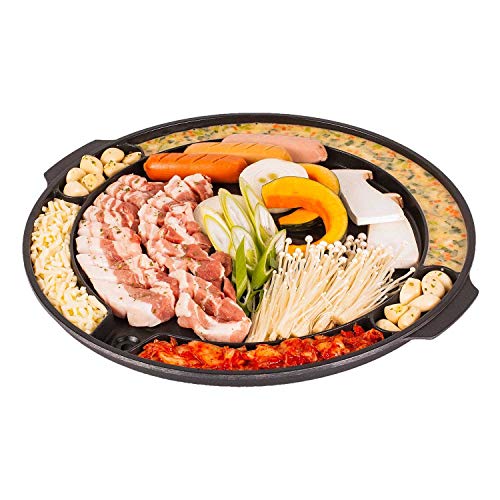
Additionally, traditional gas grills are available in a much wider array of sizes and price points. You can find everything from ultra-affordable, lightweight travel models like the Charbroil Portable Convective 1-Burner Propane Gas Grill – 465133010, which costs just $38.49 and is perfect for quick beach trips or tailgating, to premium built-in units. If you love the look of classic grill marks and want the option to quickly sear hot dogs and steaks with minimal setup, the traditional gas grill is your best bet. Even if you primarily use a flat top, you can always supplement your kitchen with a stovetop accessory like the COOKKING – Master Grill Pan, Korean Traditional BBQ Grill Pan – Stovetop Nonstick Indoor/Outdoor Smokeless BBQ Cast Aluminum Grill Pan, Made in Korea, priced at $44.99, to get those beautiful grill marks indoors.
Cost Over 5 Years
When calculating the true cost of ownership for a flat top gas griddle vs traditional gas grill, you must look beyond the initial checkout price. Over a five-year period, maintenance, fuel, accessories, and replacement parts can significantly alter the total investment.
Flat Top Gas Griddle: A high-quality steel griddle, such as a $400 36-inch unit, is highly durable because the cooktop is a solid sheet of steel. It will not burn out or rust if seasoned correctly. Over five years, your primary expenses will be seasoning oils (cast iron conditioner or canola oil) and specialized tools like heavy-duty scrapers, spatulas, and basting domes, costing about $50 to $100. Because griddles are often run with multiple burners on high to maintain surface heat, propane consumption can be slightly higher, averaging about 1.5 to 2 standard 20-lb tanks per season ($40 to $60 annually). Total 5-year cost: ~$700 to $900.
Traditional Gas Grill: While you can purchase a traditional grill for less upfront, the components inside the firebox are exposed to direct flame, dripping grease, and extreme heat cycles. Over five years, you will almost certainly need to replace the heat tents/burner covers ($20 to $40) and potentially the cooking grates ($40 to $80) due to corrosion. You will also spend money on brass-wire cleaning brushes and specialized degreasers. Propane usage is comparable, though slightly lower if you regularly cook with the lid closed, trapping heat. Total 5-year cost: ~$650 to $1,100 (depending heavily on the initial quality of the grill’s stainless steel components).
Which One for Your Home
Small Apartment
If you live in an apartment with a small balcony, space and safety are your primary concerns. Many apartment complexes ban open-flame grills entirely. A compact, single-burner traditional gas grill or a table-top griddle is ideal here. However, if space is at an absolute premium, using an indoor-outdoor stovetop solution on your kitchen range is often the smartest route, allowing you to enjoy griddle-style cooking without taking up precious balcony square footage.
Family with Kids and Pets
For busy families, speed, safety, and food volume are paramount. A flat top gas griddle is an exceptional choice for families because it allows you to cook massive quantities of food all at once. You can make fifteen grilled cheese sandwiches, a dozen pancakes, or a massive pile of chicken fajitas in under twenty minutes. Because there are no open flames, there is also a lower risk of flare-ups causing sudden smoke clouds near children or pets playing in the yard.
Rental Property
If you are renting a home, you want an appliance that is easy to transport when your lease ends. Look for models featuring folding legs and removable components. A portable flat top griddle with a collapsible cart or a lightweight, mid-sized gas grill can easily be packed into the back of an SUV. This ensures you won’t have to leave your investment behind or struggle with a heavy, non-collapsible 150-pound appliance during a move.
Long-Term Home
For homeowners planning to build a permanent outdoor kitchen or entertainment hub, the decision comes down to your cooking style. Many modern backyard designs now incorporate both: a built-in traditional gas grill for high-heat steak searing and a built-in flat top griddle for breakfast and stir-fries. If you must choose just one, consider your entertainment style. If you host large weekend parties, the theatrical nature and high capacity of a flat top griddle make it an incredible centerpiece for outdoor hosting.
FAQ
Can you get a smoky flavor on a flat top gas griddle?
No, you cannot get a true wood-fired or charcoal-style smoky flavor on a flat top griddle. Because the cooking surface is solid, juices cannot drip onto hot burners to vaporize and smoke. However, you can use melting domes with wood chips underneath, or add liquid smoke and smoked spices to your food to mimic the flavor profile.
Which is easier to clean: a griddle or a traditional grill?
While a griddle requires more discipline (it must be scraped, wiped down, and lightly oiled after every single use to prevent rust), the actual cleaning process takes less than five minutes while the cooktop is still warm. Traditional grills can go longer between cleanings, but deep-cleaning carbon buildup off the grates and emptying the grease firebox is a much dirtier, more labor-intensive chore.
Can you use a flat top griddle in the winter?
Yes, but cold temperatures and wind will significantly impact heat retention. Because the steel plate is exposed to the air, it takes longer to heat up and requires more propane to maintain cooking temperatures in freezing weather. Using a griddle hood or wind guards can help retain heat during winter cooking sessions.
Do I need to season a traditional gas grill like a griddle?
If your traditional gas grill features cast-iron cooking grates, yes, they must be seasoned with oil to prevent rust and keep food from sticking. However, if your grill features stainless steel or porcelain-coated steel grates, they do not require seasoning; they only need to be kept clean and free of carbon buildup.