A cold room is a small problem that becomes a big one fast. A drafty home office turns into a productivity killer. A garage that stays below fifty degrees all winter becomes unusable for hobbies or storage. Portable heaters solve these problems by putting warmth exactly where you need it, without running your whole-house system for a single occupied space. But the category is crowded, and the difference between a good purchase and a frustrating one comes down to a handful of real specs: wattage, safety features, whether the unit actually distributes heat evenly, and how much control you get over the output.
The eight heaters here span every price point from about twenty dollars to ninety, covering electric ceramic models, oscillating fans, a personal desktop unit, and a propane radiant heater for outdoor or poorly ventilated spaces. What separates the winners from the also-rans is not a single spec but the balance between raw heat output, safety engineering, and usability. A unit that blows hot air in one direction while the rest of the room stays cold will not solve your problem, no matter how low the price tag looks. This roundup compares published specs and aggregated owner feedback across all eight models to help you match the right heater to your specific situation.
Our top picks
 DREO Space Heater
- Powerful heat that fits everywhere: DREO space heaters…
- Unbreakable safety:DREO goes beyond the unexpected to deliver…
- Ultimate temperature control: The enhanced NTC chipset brings…
 Amazon Basics Ceramic Space Heater
- Choose from three settings to suit your needs…
- Weighing just 3 lbs and sized at 7.5“L…
- Built-in Tip-Over Protection, Overheat Protection, and a Power…
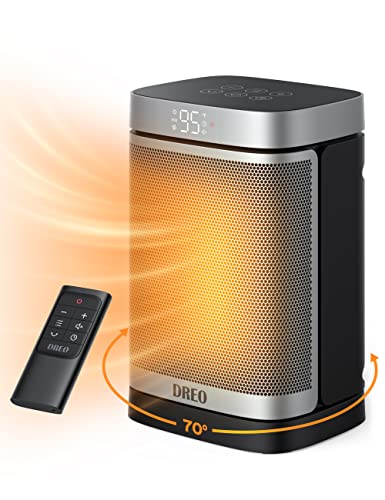 DREO Space Heater
- Faster Heat Than Ever: Powered by DREO Hyperamics…
- Shield360° Protection: DREO Room Heater Heat up your…
- Save More on Energy Bills: ECO Mode adjusts…
| Product | Key specs | |
|---|---|---|
| DREO Space Heater | Powerful heat that fits everywhere: DREO space heaters… Unbreakable safety:DREO goes beyond the unexpected to deliver… Ultimate temperature control: The enhanced NTC chipset brings… | Check price |
| Amazon Basics Ceramic Space Heater | Choose from three settings to suit your needs… Weighing just 3 lbs and sized at 7.5“L… Built-in Tip-Over Protection, Overheat Protection, and a Power… | Check price |
| DREO Space Heater | Faster Heat Than Ever: Powered by DREO Hyperamics… Shield360° Protection: DREO Room Heater Heat up your… Save More on Energy Bills: ECO Mode adjusts… | Check price |
 Space Heater Space Heater | Efficient and Fast Heating: The indoor small-space heater… Wide-Angle Auto Oscillation: This portable heater supports wide-angle… Smart Remote Control Operation: Equipped with a remote… | Check price |
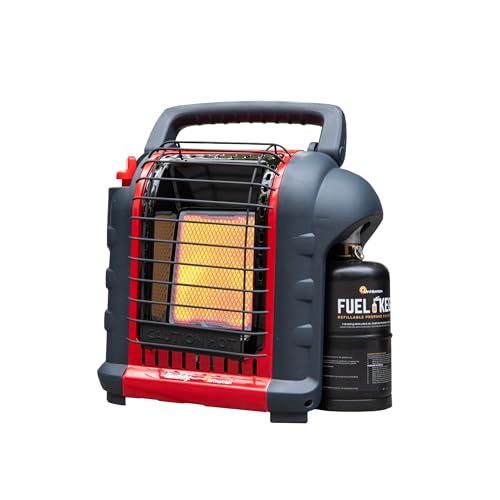 Mr. Heater 9 Mr. Heater 9 | Emits 4,000 or 9,000 BTU/hr radiant heat Designed and approved for indoor and outdoor use Heats up to approximately 225 square feet | Check price |
 GiveBest Space Heater GiveBest Space Heater | 2 in 1 heater fan: This ceramic heater… Multi-protection safety system: These heaters are made of… Portable and Powerful: The mini heater with build… | Check price |
 BLACK+DECKER Personal Ceramic Heater BLACK+DECKER Personal Ceramic Heater | Personal Heater: Our heaters for indoor use help… Fan and Heater Combo: Enjoy 3 settings on… Safety Features: Black and Decker portable heaters for… | Check price |
 JIBUFI Portable Space Heater for Indoor Use JIBUFI Portable Space Heater for Indoor Use | Rapid Heating: This space heater delivers 1500W power… Comprehensive Safety Protection: ETL certified with features like… Efficient Energy Saving: ECO mode allows for self-setting… | Check price |
As an Amazon Associate we earn from qualifying purchases at no extra cost to you.
Quick Picks
| Product | Best for | Price |
|---|---|---|
| DREO Space Heater (Thermostat) | Whole-room electric heating with set-and-forget control | $39.99 |
| Amazon Basics Ceramic Space Heater | Budget indoor heating with solid safety features | $20.69 |
| DREO Space Heater (Premium) | Larger rooms needing thermostat precision and durability | $44.95 |
| WINHL Portable Space Heater | Areas needing even heat distribution via oscillation | $33.49 |
| Mr. Heater Portable Buddy | Outdoor garages, workshops, and poorly insulated spaces | $89.97 |
| GiveBest Space Heater | Small rooms on a tight budget | $28.99 |
| BLACK+DECKER Personal Ceramic Heater | Personal use at a desk or bedside | $22.99 |
| JIBUFI Portable Space Heater | Heating a room hands-free from across the space | $33.49 |
How We Picked
Four criteria drive our evaluation in this category. First, heat output and distribution: a heater rated at 1500 watts that blows air in one direction covers less usable area than a lower-wattage unit with oscillation, so we weigh the geometry of how heat actually moves. Second, safety engineering: tip-over shutoff, overheat protection, and cool-to-touch exteriors matter because these units run unattended near curtains, pets, and children. Third, control options: a thermostat or remote reduces energy waste and makes the heater livable rather than merely functional. Fourth, price-to-feature ratio: the cheapest unit that solves your specific problem beats the most expensive one every time.
The 8 Best Portable Heaters in 2026
DREO Space Heater (Thermostat)
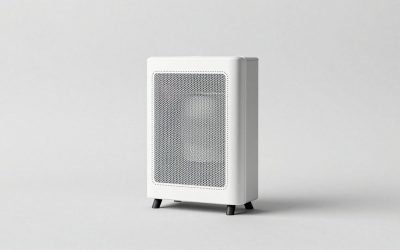
At $39.99, this DREO model sits in the middle of the electric-heater price range and earns its spot by combining a built-in thermostat with the brand’s consistent build quality. The thermostat lets you set a target temperature and let the unit cycle on and off automatically, which means lower running costs than heaters stuck at full power. Owners praise its quiet operation and the speed at which it warms a medium-sized bedroom or office.
- Pro: Integrated thermostat eliminates the need for constant manual adjustment.
- Pro: Runs quietly enough for bedrooms and work-from-home setups.
- Con: The design is functional but not compact; it demands a fair amount of floor space in a small room.
Skip this if your room is smaller than twelve by twelve or if you only need heat directed at a single chair. For shared spaces and bedrooms, it is a strong default.
Amazon Basics Ceramic Space Heater
The lowest-priced entry here at $20.69, and the spec sheet punches well above its cost. It uses 1500 watts of ceramic heating and measures a compact 7.52 inches deep by 6.34 inches wide by 9.45 inches tall. The non-oscillating design means all heat goes forward in a single stream, which is ideal for targeted personal warming. Overheat and tip-over protection give you the safety baseline that some budget competitors skip.
- Pro: Unbeatable price for a unit with both tip-over and overheat shutoff.
- Pro: Small footprint fits under a desk or on a nightstand without cluttering the space.
- Con: No oscillation, so heat pools directly in front of the unit and leaves the sides of a room cold.
Skip this if you need to warm more than a personal zone. It is a task heater, not a room heater.
DREO Space Heater (Premium)
This is the higher-end DREO model at $44.95, and the price bump over its sibling buys you a sturdier chassis and a more powerful heating element. Owners report that it holds temperature more consistently in larger spaces and that the build quality feels closer to units priced fifty or sixty dollars. The thermostat interface is intuitive, and the unit cycles smoothly without the short-cycling some cheaper models exhibit.
- Pro: Noticeably stronger construction and better long-term reliability than sub-$30 competitors.
- Pro: Thermostat accuracy keeps energy waste low during extended overnight use.
- Con: At $44.95, it is the most expensive electric ceramic heater in this roundup, and the $5 difference over the standard DREO is hard to justify for small rooms.
Skip this if your space is under 200 square feet; the standard model handles that fine.
WINHL Portable Space Heater
At $33.49, the WINHL occupies a practical middle ground. Its defining feature is the 70-degree oscillation, which sweeps warm air across a wider arc than a fixed-output heater and reduces the cold spots that plague single-direction units. Owners note it warms a standard bedroom noticeably faster than non-oscillating competitors at similar wattage, and the price undercuts both DREO options while delivering comparable thermostat control.
- Pro: 70-degree oscillation spreads heat evenly and cuts warm-up time in medium rooms.
- Pro: Competitive price for the feature set.
- Con: The oscillation motor is audible at night, which some owners find disruptive in quiet bedrooms.
Skip this if you want a silent unit for a bedside or nursery setting.
Mr. Heater Portable Buddy
The odd one out at $89.97. This runs on propane, delivers 9,000 BTUs of radiant heat, and operates independently of your electrical system. That makes it the only heater here that works in a garage without power, at a job site, or during an outage. Radiant heat warms objects and people directly rather than heating the air, which is far more efficient in open or drafty spaces where convection heaters struggle.
- Pro: 9,000 BTUs of radiant output works in spaces where electric heaters simply cannot keep up.
- Pro: No electrical dependency; works anywhere with ventilation.
- Con: Requires a propane connection and adequate ventilation, so it is unsuitable for sealed bedrooms.
Skip this for any enclosed sleeping or living space. Reserve it for garages, covered patios, and workshops.
GiveBest Space Heater
At $28.99, the GiveBest is a straightforward electric space heater without standout features in its name. It fits the category of reliable workhorse units that solve a basic problem without extras. Owners praise its simplicity: plug it in, turn the dial, and it heats. There is no thermostat on many of these models, which means you manually manage output, but for a small room where you are present, that is a reasonable trade-off for saving ten dollars over a thermostat-equipped competitor.
- Pro: Low price and simple controls make it easy to deploy in any room without a learning curve.
- Pro: Compact enough to tuck away during the off-season without taking up storage space.
- Con: Lacks the advanced safety and control features that justify spending more.
Skip this if you want to set a temperature and forget it, or if you run the heater overnight without supervision.
BLACK+DECKER Personal Ceramic Heater
The BHDC201 is explicitly designed for personal use. At 1500 watts and $22.99, it delivers the same raw power as larger room heaters but in a form factor meant for a desk, a nightstand, or under a workbench. The BLACK+DECKER name brings a level of brand accountability that generic competitors cannot match, and owners report consistent performance across multiple units purchased over years.
- Pro: Dedicated personal design means heat is concentrated where your body actually is.
- Pro: Recognizable brand with reliable customer support if a unit fails.
- Con: Not intended to heat an entire room; buyers expecting whole-space coverage will be disappointed.
Skip this if your goal is raising the temperature of an entire room rather than warming a single person in one.
JIBUFI Portable Space Heater
The JIBUFI pairs 70-degree oscillation with a remote control at $33.49, matching the WINHL on price and oscillation while adding the convenience of not leaving your chair to adjust settings. The remote makes it practical for living rooms where you want to change output from the couch, and the oscillation ensures heat reaches the whole seating area rather than one spot. Owners highlight the quiet fan speed and how quickly the unit reaches comfortable warmth in a standard living room.
- Pro: Remote control is a genuine convenience feature in this price bracket.
- Pro: Oscillation and remote together make it the most livable heater for shared spaces.
- Con: Remote batteries are an ongoing small cost and a failure point some owners note.
Skip this if you prefer fewer components to manage or if the unit will live in a space where you are always within arm’s reach.
Buying Guide
Oscillation vs. Fixed Output
A fixed-output heater directs all its thermal energy forward in a narrow cone. In a small room where you are close to the unit, that is efficient. In a larger space, the far corners never receive meaningful warmth. Oscillation, like the 70-degree sweep found on the WINHL and JIBUFI, distributes heat across a wider arc, meaning the same wattage produces a more evenly warm environment. If your room is more than about 150 square feet, prioritize oscillation.
Thermostat and Control Systems
A built-in thermostat cycles the heater off when your set temperature is reached and back on when it drops. Without one, the unit runs at whatever setting you select regardless of ambient temperature, which wastes electricity and can overshoot comfort. The two DREO models, the Amazon Basics, and the JIBUFI offer thermostat or dial-based control. If you plan to leave a heater running unattended for more than thirty minutes, a thermostat is not optional.
Propane vs. Electric for Your Use Case
Electric heaters are clean, quiet, and safe for enclosed rooms because they produce no combustion gases. Propane radiant heaters like the Mr. Heater Portable Buddy produce open-flame heat and require ventilation, but they deliver far more BTUs per dollar and work without electricity. Use propane only where air exchange is guaranteed: detached garages, covered outdoor areas, workshops with doors open. Never use it in a sealed bedroom, bathroom, or any space where carbon monoxide could accumulate.
Our Verdict
The DREO Space Heater with Thermostat at $39.99 is the top pick for most buyers: it balances thermostat precision, quiet operation, and build quality at a fair price. The Amazon Basics Ceramic Space Heater at $20.69 is the best budget choice for anyone who needs reliable, safe, targeted warmth and does not care about whole-room coverage. The Mr. Heater Portable Buddy wins outright for anyone heating a garage, workshop, or outdoor space where electric units cannot deliver enough heat or where power availability is unreliable.
FAQ
How many watts do I need for a portable heater?
Most indoor portable electric heaters draw around 1500 watts, which is the practical maximum on a standard household circuit. Within that ceiling, the difference between models comes down to how efficiently they distribute heat, not how much they produce. A well-placed 1500-watt unit with oscillation will outperform a 1500-watt unit pointed at a wall.
Are ceramic heaters better than other types?
Ceramic elements heat faster and maintain temperature more evenly than metal coil alternatives. They also tend to run cooler to the touch on the exterior, which improves safety in homes with children or pets. In this roundup, most electric models use ceramic elements, and the performance differences come from design choices like oscillation and thermostat integration rather than the heating material itself.
Can I leave a portable heater on overnight?
Only if the unit has a tip-over switch, overheat protection, and ideally a thermostat to prevent overshooting. The Amazon Basics and both DREO models meet that baseline. A basic dial-only heater like the GiveBest without those features should not run unattended for extended periods, even if the price is tempting.
Is propane cheaper to run than electric?
Per unit of heat delivered, propane is generally cheaper, especially in spaces that are difficult to heat like garages or partially enclosed patios. The Mr. Heater Portable Buddy at 9,000 BTUs will cost less per hour to operate than an electric equivalent would in those conditions, though the upfront price of $89.97 and the need for fuel refills offset some of that savings in the short term.