Key takeaways
- Set up on level ground and keep exits and walkways clear.
- Secure every leg before adding sidewalls or hanging decorations.
- Keep grills, open flames, and hot appliances away from canopy fabric.
- Dry the canopy fully before storage to reduce mildew and corrosion.
- Inspect pins, joints, stitching, and the frame coating before each use.
How to choose the best canopy tents
The best canopy tents match the space you need to cover, the height and weather protection your activity requires, and the weight you can comfortably transport and secure. For most backyard gatherings, a straight-leg 10 × 10 ft pop-up with a steel or aluminum frame is a useful starting point; choose a larger footprint for dining groups, a taller peak for standing activities, or a lighter design for camping and frequent carrying.
Before buying, measure the usable area—not just the ground dimensions. A 10 × 10 ft canopy covers 100 square feet at the edges, but sloping fabric can make the shaded area smaller, and legs, guy lines, and stakes need room outside it. Treat a canopy as shade, not as a shelter for severe weather: wind and rain performance depend on the specific design, correct anchoring, and conditions.

Vinabilia 10x10 Pop Up Canopy Tent with One-Push Center Lock,White
Included for 'Best Canopy Tents for Events, Camping, and Backyard Shade' because the listing specifies White, details this guide uses to compare options.
View on Amazon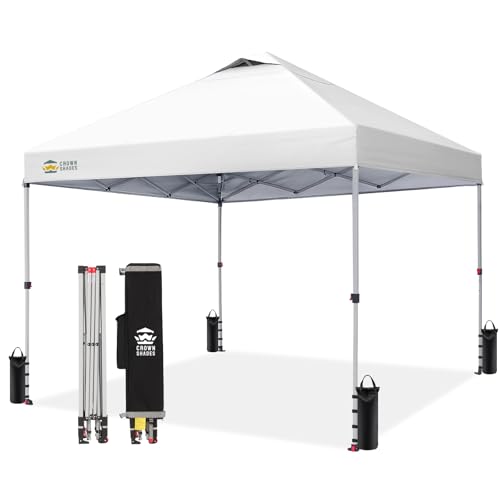
CROWN SHADES 10x10 Pop Up Canopy Tent with One Push Setup, Grid White
Included for 'Best Canopy Tents for Events, Camping, and Backyard Shade' because the listing specifies Grid White, details this guide uses to compare options.
View on Amazon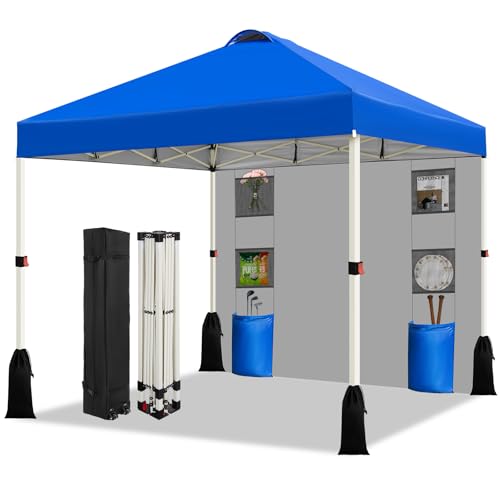
WEIZE 10x10 Pop Up Canopy Tent, 1-Button Push Setup Canopy Tent with 1 Sidewall, Adjustable Height Instant Portable Shelter,Portable Roller Bag, Easy Outdoor Sun Shade for Events,4 Weight Bags,Blue
Included for 'Best Canopy Tents for Events, Camping, and Backyard Shade' because the listing specifies 1-Button Push Setup Canopy Tent with 1 Sidewall and Adjustable Height Instant Portable Shelter, details this guide uses to compare options.
View on Amazon
Pone·vora 10x10 One Push Pop Up Canopy Tent with Vented Roof, White
Included for 'Best Canopy Tents for Events, Camping, and Backyard Shade' because the listing specifies White, details this guide uses to compare options.
View on AmazonCompare canopy sizes and heights
Canopy dimensions generally describe the outside footprint. A straight-leg model provides more cover than a slant-leg model with the same stated dimensions, though it takes up more space and can be heavier. Peak height is the height at the top of the roof; ceiling clearance at the edges is lower and matters when people walk around the perimeter.
| Typical footprint | Approximate area | A practical fit | Check before buying |
|---|---|---|---|
| 6 × 6 ft | 36 sq ft | One small table, a compact campsite cooking area, or a narrow patio | Limited room for chairs and circulation; measure the table and chair pullback |
| 8 × 8 ft | 64 sq ft | Two chairs and a small table, or a market stall with a compact display | Often more practical for transport than a full-size event canopy |
| 10 × 10 ft | 100 sq ft | A typical pop-up serving area or modest backyard seating group | Confirm leg-to-leg dimensions and edge clearance, not just roof size |
| 10 × 20 ft | 200 sq ft | Long dining tables, event registration, or a larger covered gathering | Needs more setup help, storage space, and carefully planned anchoring |
As a planning example, a 6 ft banquet table is about 30 inches deep. Add roughly 24–30 inches on each side for chairs and enough space to pull them out, and the working area approaches 8–9 ft across. A 10 × 10 ft canopy can cover that arrangement, but leaves little room for extra furniture or generous walkways. For a larger group, use multiple canopies or a larger model rather than packing seats against the legs.
Many pop-ups offer peak heights around 9–11 ft, with adjustable leg positions. Check the listed maximum peak and the usable clearance under the valance. Tall guests, sports equipment, or a standing display may need more headroom than seated dining.
Choose by use, not just footprint
| Your situation | A sensible choice | Why it fits |
|---|---|---|
| Backyard meals and occasional parties | 10 × 10 ft straight-leg pop-up with adjustable height | Useful coverage for a table or seating group without the storage burden of a large event tent |
| Frequent market or event setup | Commercial-style frame, replaceable canopy top, and wheeled carry bag | Designed for repeated assembly; replacement parts can extend service life |
| Car camping or a compact campsite | Lightweight 6 × 6 or 8 × 8 ft model, or a purpose-built camping shelter | Smaller packed size is easier to carry and fit in a vehicle; verify packed dimensions |
| Large family gathering or long buffet | 10 × 20 ft canopy, ideally assembled by two or more adults | Provides a longer covered zone, but demands more space and more secure anchoring |
| Wind-exposed lawn, beach, or open field | A low-profile shelter rated for the intended conditions, with compatible anchors | Large roof area catches wind; no ordinary pop-up should be treated as windproof |
Frame, fabric, and weather protection
| Component | Typical trade-off | What to inspect |
|---|---|---|
| Steel frame | Usually sturdy for the price, but heavier and vulnerable to rust if its coating is damaged | Joint fit, finish, replacement parts, and the packed weight |
| Aluminum frame | Lighter to carry and corrosion-resistant, though strength varies with tubing size and design | Tube dimensions, braces, locking pins, and any stated use limitations |
| Polyester canopy fabric | Common and relatively light; coatings and seam construction affect water resistance | UV protection, water-resistance claims, reinforced corners, and care instructions |
| Coated or heavier-duty fabric | Can offer more protection or durability, but may add weight and retain heat | Whether the coating is waterproof or merely water-resistant, plus ventilation needs |
A canopy top that sheds a brief shower is not necessarily suitable for prolonged rain. Water can pool if the roof sags or the frame is not level, adding load and risk of collapse. Choose a design with a peaked or sloped roof, keep the fabric taut, and clear standing water promptly. For hot weather, sidewalls may block low-angle sun but reduce airflow; removable panels give you more flexibility.
Wind is often the more serious hazard. A large canopy acts like a sail, and a stronger frame does not make an unanchored tent safe. Follow the manufacturer’s wind and setup guidance, take the canopy down when conditions exceed its limits, and never leave it unattended in changing weather.
Setup, portability, and anchoring realities
Pop-up frames are convenient, but setup is usually easier with two people, especially for larger sizes. Allow space to spread the legs before extending the frame, and avoid forcing joints that are not aligned. A wheeled bag helps over pavement but may not roll across grass, sand, steps, or gravel. Compare packed length as well as weight with your vehicle, storage closet, and route to the setup site.
Anchoring depends on the surface. On firm soil, use stakes of the type and length recommended by the manufacturer, attached at the designated points. On concrete or a patio, use purpose-made canopy weights secured to each leg. Sandbags can help on suitable surfaces, but improvised weights may shift or damage the frame. Do not assume that a few small weights are adequate for a large roof in gusty conditions.
- Set up on level ground and keep exits and walkways clear.
- Secure every leg before adding sidewalls or hanging decorations.
- Keep grills, open flames, and hot appliances away from canopy fabric.
- Dry the canopy fully before storage to reduce mildew and corrosion.
- Inspect pins, joints, stitching, and the frame coating before each use.
What makes the best canopy tents for your needs?
For occasional backyard shade, prioritize a 10 × 10 ft footprint, adjustable height, straightforward locking joints, and a top you can replace. For frequent event work, favor serviceable construction and manageable transport over the lowest initial price. For camping, packed size and weight may matter more than maximum coverage. In every case, measure the setup area, check the actual clearance and packed dimensions, and plan anchoring before the tent arrives.