Our Top Picks
 MusicNomad The Humitar ONE Acoustic Guitar Humidifier &The Humitar ONE4.06 x 3.18 x 1.76 inches0.1 PoundsCheck on Amazon
The best humidifier for guitars, if you keep them on stands or on a wall rather than only in cases, is a room humidifier with a built-in humidistat, paired with a separate hygrometer and two-way humidity packs in the case. A guitar needs steady humidity, not just more humidity: the maker guidance most guitar owners follow is to hold the room at roughly 40 to 50 percent relative humidity (RH). A unit that can read and hold a target does that job better than one that simply pushes out mist.
Key takeaways
- Think in layers: a room humidifier for the space, a hygrometer to check it, and a case-level pack for travel and storage.
- Choose a humidifier with a humidistat; without one, a closed room can swing from too dry to too damp in a day.
- Evaporative units avoid the white mineral dust that ultrasonic units can leave when filled with hard tap water.
- Place the humidifier away from the guitars, not beside them, and keep wooden surfaces dry to the touch.
Quick Comparison: Humidifiers, Hygrometers and Packs for a Guitar Room
| Product | Type | Control | Best role | Price tier |
|---|---|---|---|---|
| AIRCARE Mini-Console Evaporative | Console evaporative | Dial or digital, by model | Steady humidity for a whole room | Mid |
| DREO 6L (HM524) | Ultrasonic, top fill | Precise humidity control, 60-hour runtime listed | Dedicated guitar room, 28 dB listed | Low to mid |
| Levoit OasisMist 4.5L Warm and Cool | Ultrasonic, warm or cool | Smart app control, 45-hour runtime listed | Cold, dry winter rooms | Mid |
| Honeywell Top Fill Tower | Cool mist tower | Digital humidistat | Simple, small footprint | Mid |
| Govee H5075 Hygrometer | Bluetooth hygrometer | App readings, 164 ft range listed | Monitoring the room from your phone | Low |
| Boveda 49% Guitar Humidifier Kit | Two-way pack | Passive, 49% RH | Inside the case | Low |
| MusicNomad Humitar ONE | Soundhole humidifier plus gauge | Passive, with hygrometer | Guitar on a stand, between room checks | Low |
Why a Guitar Room Needs Its Own Humidity Plan
A solid-wood acoustic guitar top is thin, and wood takes up and gives off moisture as the air changes. In dry winter air with a furnace running, tops can sink, fret ends can stick out from the edge of the board, and in the worst cases the wood can crack. In a damp summer, the opposite happens: the top swells, action rises, and the tone goes dull. Makers such as Martin, Taylor, and Gibson all publish care guidance for this, and the figure you will see most often is the 40 to 50 percent RH range.
MusicNomad The Humitar ONE Acoustic Guitar Humidifier & Hygrometer (MN311) | Humidifier & Hygrometer in One to Protect Your Acoustic Guitar
Picked as a relevant option in this category.
View on Amazon
O Oasis OH-5 Humidifier for Acoustic Guitars
Picked as a relevant option in this category.
View on Amazon
Boveda 49% Guitar Humidifier Kit, 3 Packs + 2 Holders – Large Instruments | A complete kit to protect your large wooden instruments. Includes humidity control and fabric holders for easy setup
Chosen because it specifies 3 Packs + 2 Holders and Large Instruments.
View on Amazon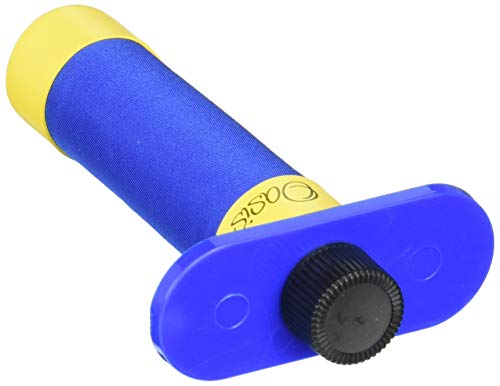
Oasis Guitar Humidifier OH-1 - For Soundhole
Chosen because it specifies For Soundhole.
View on AmazonCase humidifiers handle a guitar that lives in its case. A room humidifier handles a guitar that lives on a stand, which is how most people keep an instrument they play every day. This article is about that second situation, and about the checking tools and case-level extras that make it work.
How We Chose These Products
This is a research-based guide. We did not personally use these products or measure humidity with them. Picks come from manufacturer specification pages and retailer listings, and the numbers quoted (tank size, runtime, noise level, range) are what the listings state. Listings change, so check the current page for the exact model before you buy. We favoured products that:
- Include a humidistat or hygrometer, because holding a target matters more than raw output.
- Come from established brands with replacement filters and manuals that are easy to find.
- Cover different room sizes and different water-handling styles (evaporative and ultrasonic).
- Offer an easy way to check humidity at the instrument itself.
Best Humidifier for Guitars: How Much Output Does a Room Actually Need?
The most useful piece of arithmetic is how much water a humidifier must add. As a worked example, take a spare bedroom used as a guitar room, 12 by 14 feet with an 8-foot ceiling. That is 1,344 cubic feet. A listing that claims a 6-litre tank lasting 60 hours implies an average output of about 0.1 litre (100 millilitres) per hour on the lowest setting: 6 litres divided by 60 hours. On a high setting that same tank might last only a day or two, which is why a humidistat that cycles the unit on and off is so useful.
| Listed tank | Listed runtime | Implied average output | Refill rhythm at that setting |
|---|---|---|---|
| 6 litres (DREO HM524) | 60 hours | about 100 mL per hour | Roughly every 2.5 days |
| 4.5 litres (Levoit OasisMist 4.5L) | 45 hours | about 100 mL per hour | Roughly every 1.9 days |
Two units with the same implied output are not equal in a real room: an ultrasonic unit that is oversized for a small space will push relative humidity past 50 percent quickly unless a humidistat is switched on. That is why the control method is more important than the tank size.
1. AIRCARE Mini-Console Evaporative Humidifier: Best for Steady Whole-Room Humidity
- Console-style evaporative humidifier
- Uses a wick filter and a fan rather than ultrasonic mist
- Whole-house console format; check the listing for the model’s rated coverage
- Wood-effect cabinet suits a living space
Best for: A guitar room or open-plan space where steady humidity matters and where you do not want white dust settling on the instrument or the furniture. Evaporative units only release water as vapour, and they slow down as the air approaches saturation, which limits overshoot.
Skip if: You have a very small room or a tight budget. Console units are bulky, and the wick filter needs periodic replacement.
Pros:
- No white mineral dust from ultrasonic misting
- Self-limiting as humidity rises
- Large tank means fewer refills
- Furniture-style housing
Cons:
- Large footprint
- Wicks need replacing and cleaning
- Fan noise at higher speeds
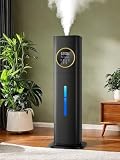
2. DREO 6L Humidifier (HM524): Best Dedicated Guitar-Room Unit with Humidity Control
- 6-litre top-fill tank
- 60-hour runtime listed
- 28 dB noise level listed
- Precise humidity control and easy-clean design per the listing
Best for: A mid-sized room where you want to dial in a target around 45 percent and let the unit cycle itself. The top-fill tank makes daily refills simple, and the quiet rating suits a room where you also practise.
Skip if: Your tap water is hard and you do not want white dust. Use distilled or demineralised water, or choose an evaporative unit.
Pros:
- Humidistat-style control reduces overshoot
- Large tank for the money
- Quiet operation, per the listing
- Easy top fill
Cons:
- Ultrasonic mist needs clean water
- Tank and base need regular cleaning to avoid biofilm
3. Levoit OasisMist 4.5L Warm and Cool Mist: Best for Cold, Dry Winter Rooms
- 4.5-litre top-fill tank, 45-hour runtime listed
- Warm and cool mist options
- Smart app control
- Designed for bedrooms and large rooms, per the listing
Best for: A cold-climate home where winter indoor air gets very dry. The warm-mist setting can feel less chilling in a cold room, and the app lets you set a target from the sofa.
Skip if: The guitar room is small or you do not want an app-connected device. The unit is aimed at larger spaces.
Pros:
- Warm or cool mist for different seasons
- App control and scheduling
- Top fill, easy to refill
Cons:
- Warm mist uses more power
- Smaller tank than the DREO
- Ultrasonic design, so water quality matters
4. Honeywell Top Fill Tower Humidifier: Best Slim Tower with a Digital Humidistat
- Cool mist tower
- Digital humidistat per the listing
- Top-fill design
- Compact footprint suits a corner
Best for: A smaller or oddly shaped room where floor space is tight. A tower can sit in the corner away from the guitars while the humidistat holds the target.
Skip if: The room is large. A tower’s output may not keep up with open-plan space.
Pros:
- Slim and easy to place
- Recognised brand with available filters
- Digital readout makes setting a target simple
Cons:
- Smaller coverage than console units
- Cool mist only
5. Govee H5075 Hygrometer: Best for Monitoring the Room from Your Phone
- Indoor thermometer and hygrometer
- Bluetooth app with history, per the listing
- 164-foot remote range listed
- Small enough to sit on a shelf near the guitar stand
Best for: Anyone who wants to see the real humidity at guitar height rather than trust the humidifier’s own sensor. The history graph shows overnight swings.
Skip if: You dislike apps. A basic dial or digital hygrometer shows the same information at a glance.
Pros:
- Logs readings over time
- Remote reading
- Inexpensive
Cons:
- Consumer hygrometers can differ from one another by a few percent; compare two units when accuracy matters
- Needs a phone for history
6. Boveda 49% Guitar Humidifier Kit: Best Two-Way Pack for the Case
- Kit with 3 packs and 2 holders, sized for large instruments
- Two-way humidity control at 49% RH
- Passive, with no water to fill and no leaks
- Replace the packs when they harden, per the maker
Best for: The case: when you travel, store the guitar for the season, or step outside the controlled room. Two-way packs release moisture when the case is dry and absorb it when the case is damp.
Skip if: You expect it to condition a whole room. It is a case-level tool only.
Pros:
- Works in both directions
- No water filling
- Holders keep packs off the finish
Cons:
- Packs need periodic replacement
- Limited capacity in a large, poorly sealed case
7. MusicNomad Humitar ONE: Best Soundhole Humidifier with a Gauge
- Acoustic guitar humidifier combined with a hygrometer
- Sits in the soundhole when the guitar is on a stand
- Reusable, refillable design
- Gauge shows humidity inside the body
Best for: A guitar that sits on a stand between sessions. You can see the humidity inside the instrument without relying on room-level readings.
Skip if: You already use a room humidifier and a separate hygrometer, and prefer not to add something in the soundhole.
Pros:
- Humidifier and gauge in one
- Targets the instrument directly
- Low cost
Cons:
- Small reservoir needs frequent attention
- Not suitable for a whole room
Also Consider
- BREEZOME 6L Humidifier with Smart Humidistat: A budget top-fill unit with a 60-hour runtime and a 25 dB rating on the listing.
- TempPro TP50 Digital Hygrometer: A cheap spot-check gauge for the case or a shelf.
- Oasis OH-6 Guitar Case Humidifier: A case-specific humidifier for guitars that travel.
- D’Addario Humidipak: A two-way pack system for case storage.
Buying Guide: Choosing a Humidifier for a Guitar Room
Pick the type by water quality
Ultrasonic humidifiers vibrate water into a fine mist and are quiet, but the minerals in hard water leave a white dust on nearby surfaces. Evaporative humidifiers pull air through a wet wick, which traps the minerals in the filter. If your water leaves limescale on kettles, choose evaporative or plan to use distilled water in an ultrasonic unit.
Size the unit to the room
Look at the listed coverage in square feet, and treat it as a ceiling. A 12-by-14-foot room is about 170 square feet, so even a small unit covers it on paper. The danger in a small room is overshoot, so favour humidistat control over raw capacity. For open-plan spaces of several hundred square feet, a console-style evaporative unit is the safer choice.
Insist on a humidistat
A humidistat measures humidity and switches the unit on and off. Without one, the unit runs until the tank is empty, and a closed room can end up above 60 percent RH, which is bad for guitars and for the house. If you cannot get a humidistat, pair the humidifier with a hygrometer and check it twice a day.
Use a separate hygrometer
The sensor in a humidifier sits near the unit, where the air is often wetter than elsewhere in the room. Put a hygrometer on a shelf or stand at guitar height and use that as your reference. Compare it with a second cheap gauge once; if they differ by more than about 5 points, trust neither blindly and use the average.
Place it correctly
- Keep the humidifier at least a few feet from the guitars and away from walls.
- Do not point the mist at wood, instruments, or electronics.
- Raise ultrasonic units off the floor to disperse the mist.
- Wipe any condensation on windows or sills; it means the setting is too high.
Cleaning schedule
Empty and dry the tank every few days, descale monthly if you use tap water, and replace wicks or filters on the schedule the maker lists. A dirty tank can grow a slimy film that gets sprayed into the room.
Add case-level protection
Even with good room control, the case matters when you travel or step out of the room. Two-way packs such as Boveda hold a fixed RH and work in both directions, so they do not over-humidify in a damp climate. Replace them when the maker says they have hardened.
Best Humidity for Guitars: Targets and Warning Signs
| Relative humidity | What it means for an acoustic guitar | What to do |
|---|---|---|
| Below 35% | Dry: risk of sunken top, sharp fret ends, cracks | Raise humidity gradually; add a case pack |
| 40 to 50% | Target range in common maker care guidance | Hold steady; log with a hygrometer |
| 50 to 60% | Slightly damp: action may rise, tone dulls | Lower the humidistat setting; improve ventilation |
| Above 60% | Too damp: swelling, glue stress, mold risk | Use a dehumidifier or open the room; remove the humidifier |
Bring humidity up slowly. A sudden jump, such as adding a very large humidifier to a bone-dry room, can stress the wood just as dryness does. Raise the target a few percentage points a day and watch the guitar for signs of change.
Your First Week: A Step-by-Step Setup Plan
Setting up a guitar-room humidity system is slow on purpose. Wood moves gradually, so the plan below raises humidity in small steps and uses the hygrometer to confirm each one.
- Day 1: measure first. Put the hygrometer at guitar height, away from windows and vents, and note the reading morning and evening. Do not turn the humidifier on yet. This is your baseline.
- Day 2: fill with the right water. Use distilled or demineralised water in an ultrasonic unit, or clean tap water in an evaporative unit. Place the humidifier at least a few feet from the guitars and from the walls.
- Day 2: set a modest target. If the baseline is 30 percent, set the humidistat to around 35 percent, not 45. Close the door to the room so the unit works against a small volume of air.
- Days 3 to 5: raise the target by about 3 to 5 points a day. Check the hygrometer each morning. If the reading overshoots the target by more than a few points, lower the setting and open the door for ventilation.
- Day 6: reach the range. Once the hygrometer sits between 40 and 50 percent, leave the setting alone for a few days and keep logging.
- Day 7: add the case layer. Fit two-way packs in the case so the instrument stays protected when you carry it out of the room.
After the first week, check the reading when the weather changes, when the heating season starts, and after long absences. A guitar room is not a set-and-forget space; it is a small system that needs a glance every few days.
Mistakes That Undo a Good Humidifier
- Running it open-loop. Using a unit without a humidistat in a closed room can push humidity past 60 percent overnight.
- Trusting the unit’s own readout. A sensor next to the mist outlet will always show a higher number than the air at the guitar.
- Placing the mist near the instrument. Droplets landing on a finish or a hardware plate cause stains and corrosion.
- Forgetting to clean the tank. A film in the tank and base can spread through the room.
- Using the same setting year-round. Outdoor humidity changes with the seasons. Winter often needs a higher output, while humid summers may need a dehumidifier instead.
- Skipping the case. A guitar that lives in a well-controlled room still faces dry air in a car, a venue, or an airport.
Frequently Asked Questions
What is the best humidity level for guitars?
Maker care guidance for acoustic guitars generally centres on 40 to 50 percent relative humidity, with a small tolerance on either side. Check your guitar’s manual, because some makers publish a slightly different range.
Do I need a room humidifier if I use a soundhole humidifier?
Not always. A soundhole humidifier can protect a single guitar, but it needs regular refilling and does nothing for the neck, back, or other wood in the room. A room unit is easier if you have several instruments or live in a very dry climate.
Can I use any humidifier near my guitars?
Any humidifier works if it is kept away from the instrument and used with a hygrometer. Choose a unit with a humidistat, avoid blowing mist at the wood, and use clean or demineralised water in ultrasonic units.
Is warm mist or cool mist better for guitars?
Neither is better for the guitar; what matters is steady humidity. Warm mist can feel more comfortable in a cold room, while cool mist uses less power. The control method matters more than the mist temperature.
How do I know if my guitar is too dry?
Typical signs include a sunken top, a high fret edge that you can feel when sliding your hand along the neck, buzzing, and a visible gap at the binding. Measure the room with a hygrometer and see a technician if you notice cracks.
How often should I refill a room humidifier?
It depends on tank size and setting. A 6-litre tank rated for 60 hours implies roughly 100 millilitres per hour, so refilling every two to three days is typical at low settings. In a very dry house at high settings, you may refill daily.
Can a humidifier damage wood floors or furniture?
If set too high, yes: moisture can cup floors and cause mold on surfaces. Keep relative humidity below about 50 percent, wipe condensation from windows, and avoid placing the unit against walls or furniture.
Which One Should You Buy?
- Steadiest control for a whole room: AIRCARE Mini-Console evaporative.
- Dedicated guitar room, good value: DREO 6L (HM524).
- Cold winters, warm mist: Levoit OasisMist 4.5L.
- Small room, slim footprint: Honeywell Top Fill Tower with digital humidistat.
- Checking the real number: Govee H5075 hygrometer.
- Travel and storage: Boveda 49% Guitar Humidifier Kit.
- A guitar on a stand, with a gauge: MusicNomad Humitar ONE.
If you are only buying one thing this week, buy the hygrometer. It costs little, it tells you whether you have a problem at all, and it makes every later decision (which humidifier, what target, how often to refill) a matter of reading a number instead of guessing. Many homes in mild climates sit comfortably in range for most of the year and only need a case pack in winter.
Most owners do best with three pieces: a humidistat-equipped room unit, a hygrometer at guitar height, and a two-way pack in the case. Add them in that order, and adjust slowly.
Sources
Martin Guitar care guidance; Taylor Guitars care guidance; Gibson care guidance; Boveda product information; DREO, Levoit, Honeywell, AIRCARE, Govee and MusicNomad listing specifications.
Last updated: October 2026