Our Top Picks
 California Design Den Soft 100% Cotton Sateen QueenQueen11.2 x 9.2 x 3.75 inches4.85 poundsCheck on Amazon
For most sleepers, a long-staple cotton sheet set in a percale weave suits hot sleepers who like a crisp, cool feel, a sateen weave suits those who want a smooth, slightly heavier drape, and brushed cotton (flannel) suits cold bedrooms. Thread count matters far less than fibre length, weave and finishing, so those are the details worth comparing first.
Cotton Sheet Types at a Glance
| Type | Best for | Feel as makers describe it | Limits |
|---|---|---|---|
| Percale | Warm sleepers, summer | Crisp, matte, breathable | Wrinkles easily; can feel dry to some |
| Sateen | Those who like a soft, silky hand | Smooth with a slight sheen, slightly warmer | Can snag or pill sooner if low-grade |
| Brushed cotton or flannel | Cold rooms, winter | Fuzzy surface, warm | Too warm for many in summer; lint in early washes |
| Jersey cotton | T-shirt-like comfort, easy care | Stretchy knit | Can pill; not crisp |
| Organic cotton | Buyers who prefer certified fibre | Varies by weave | Certification claims differ; check the label |
| Egyptian or Pima/Supima cotton | Buyers seeking long-staple cotton | Softer and often more durable | Origin claims should match certification |
What Matters More Than Thread Count
Thread count is the number of threads woven into a square inch of fabric, and it is frequently inflated by counting multi-ply yarns. Many bedding guides suggest that a range of roughly 200 to 400 for percale and 300 to 600 for sateen is where most good cotton sheets sit. Beyond that, a higher number tells you little. What shapes the feel and the lifespan of cotton sheets are the following:
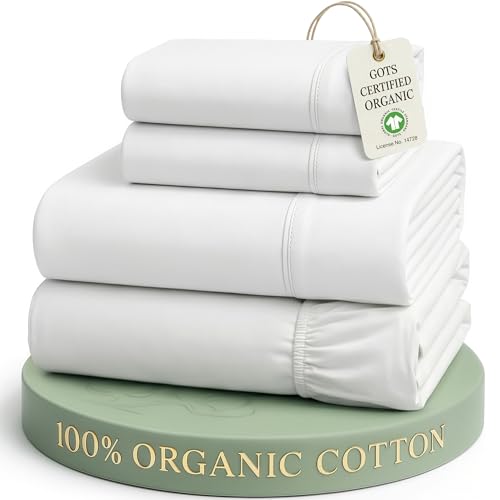
LANE LINEN Queen Sheets 100% Organic Cotton 4pc Percale Cooling - White | Queen Sheet Set, GOTS Certified Organic Cotton Percale - Crisp, Cool & Breathable, For Hot Sleepers, All-Season Comfort
Chosen because it specifies White and Queen Sheet Set.
View on Amazon
Casa Platino 100% Cotton 6 Pc Queen Sheets Set with 4 Pillowcases, 15" Deep Pocket, Durable Percale Weave Naturally Cooling Queen Bedding Set, Ultra Soft & Cozy, Fit, Oeko Tex Certified – Blue Sky
Chosen because it specifies 15" Deep Pocket and Durable Percale Weave Naturally Cooling Queen Bedding Set.
View on AmazonCalifornia Design Den Soft 100% Cotton Sateen Queen Bed Sheets Set, White | 400 Thread Count Backed by Good Housekeeping Seal, 16" Deep Pocket, All-Around Elastic, Durable, Easy Care
Chosen because it specifies White and 400 Thread Count Backed by Good Housekeeping Seal.
View on Amazon
Queen Size 4 Piece Sheet Set - Comfy Breathable & Cooling Sheets - White | Hotel Luxury Bed Sheets for Women, Men, Kids & Teens, Deep Pockets, Easy-Fit, Extra Soft & Wrinkle Free Sheets, Oeko-Tex
Chosen because it specifies Comfy Breathable & Cooling Sheets and White.
View on Amazon- Staple length. Longer cotton fibres produce smoother, stronger yarn. Egyptian, Pima and Supima are the best-known long-staple types, and the Supima name is a trademark with its own licensing programme, so a label using it should be consistent with the brand’s statement.
- Weave. Percale is a one-over-one-under weave, sateen floats more threads across the surface, and twill is a diagonal weave. Each has a different temperature and texture profile.
- Finishing. Washing and softening treatments affect the first-wash feel. Some makers wash their sheets to pre-soften them.
- Construction. Deep pockets, elastic that spans the full corner, and neat seams contribute to a sheet set that stays put.
Sizes and Fit
Standard US sizes include twin, twin XL, full, queen, king and California king, and makers list the flat sheet, fitted sheet and pillowcase sizes for each set. The most important fit figure is pocket depth. Mattresses range from thin to over 15 inches with toppers, so look at the maker’s stated pocket depth and add your topper to the mattress height before choosing. If you use an adjustable base, check whether the maker lists the sheets as compatible with split or adjustable configurations. Split king sets are sold for beds that use two twin XL mattresses.
Notable Cotton Sheet Brands to Compare
Makers frequently mentioned by bedding reviewers include Brooklinen, Parachute, Boll and Branch, Coyuchi, Cuddledown, L.L.Bean, Lands’ End and Utopia Bedding at the budget end. Each publishes the fibre, weave and care instructions on its product pages. Because ranges and fabric names change from season to season, treat the brand as a starting point and read the current listing for the weave, the cotton type and any certification the maker states. Certifications mentioned by makers include OEKO-TEX Standard 100 (tested for harmful substances) and the Global Organic Textile Standard (GOTS) for organic claims; both are defined by third-party bodies, and an informed buyer should confirm that the certificate applies to the exact product.
Budget Tiers
| Tier | What you usually get | Trade-off |
|---|---|---|
| Budget | Standard-staple cotton or blends, simple percale or jersey | May pill sooner; lighter weight |
| Mid-range | Long-staple or combed cotton, deeper pockets, good finishing | The best balance for most households |
| Premium | Egyptian, Pima or organic cotton, detailed stitching, long warranties | Higher cost; hand-wash or gentle-cycle care may be asked |
Care and Longevity
Follow the care label first. As a general rule, makers advise washing sheets in cool or warm water with a mild detergent, avoiding bleach and fabric softener (which can coat fibres and reduce breathability), and drying on low heat. Over-drying makes cotton brittle and wrinkled. Remove sheets while slightly damp if you want fewer creases. Rotate between two sets to extend life. New sheets are usually washed once before use; some dyes can release in early washes, so launder dark colours separately.
Sheets last as long as the yarn holds up. Pilling, thinning in the centre and loose seams are the common end-of-life signs. If you have sensitive skin, rashes or allergies, choose a fragrance-free detergent and speak with a doctor or allergist about persistent symptoms rather than relying on bedding alone.
Pick X If… Decision Table
| Pick this | If you… |
|---|---|
| Percale | sleep hot and like a crisp feel |
| Sateen | want softness and a silky drape, and sleep neutral or cool |
| Flannel or brushed cotton | have a cold bedroom in winter |
| Jersey | prefer a stretchy, T-shirt feel and low ironing |
| Organic certified cotton | prefer a certified supply chain and can confirm the certificate |
| Budget cotton blend | need guest-room or dorm sheets quickly |
| Deep-pocket set | have a thick mattress or topper |
Alternatives to Cotton
- Linen: Highly breathable and gets softer with washing; tends to wrinkle and has a looser, textured look.
- Tencel lyocell: A plant-derived fibre often marketed as cool and smooth; check the care label.
- Bamboo-derived viscose: Soft and drapey, but a different environmental and care profile than cotton.
How to Read a Product Page
Look for the cotton type, weave, stated thread count range, pocket depth, set contents (some sets omit the flat sheet), colour and care instructions. Check whether the maker discloses where the cotton is grown and where the sheets are made. Marketing phrases such as “luxury” and “hotel quality” have no fixed definition, so prefer measurable details. A return window that allows you to try the set on your own bed is more useful than a promise of softness.
Matching Sheets to Your Sleeping Habits
People who sleep hot often prefer percale or a lighter weight of cotton, and may find sateen warmer. People who sleep cold, or who keep the thermostat low, tend to enjoy brushed cotton or a heavier sateen. If you share a bed with someone whose preferences differ, a neutral choice such as a mid-weight percale with a wash finish is a sensible compromise, and layering with a separate blanket on each side solves the rest. Sheets also interact with the mattress: a cooling topper or a very plush mattress changes how a given fabric feels, so think about the whole bed rather than the sheet alone.
Households with children or pets benefit from darker or patterned sheets that hide marks, from sets sold with extra pillowcases, and from fabrics that tolerate frequent washing. Guest rooms are a good place for budget cotton, while the main bedroom is where upgrading to long-staple cotton pays off through daily use.
Common Mistakes
- Chasing the highest thread count rather than comparing fibre and weave.
- Ignoring pocket depth when using a topper.
- Using fabric softener repeatedly, which can reduce breathability.
- Drying on high heat and weakening the fibres.
- Assuming that organic or Egyptian on a label is proven without reading the certification details.
Storing Sheets and Rotating Sets
Keep spare sets folded in a cool, dry cupboard, ideally with a breathable cotton bag or pillowcase wrapper rather than plastic. A sprig of cedar or a cotton sachet can help a cupboard smell fresh, but avoid heavy fragrances that may bother sensitive noses. Rotating two or three sets spreads wear evenly, and many households find that buying one extra set costs less over time than replacing a single set that is washed weekly and worn out faster. Wash new and old sets separately at first so that dye from the new set does not transfer, and inspect elastic and seams occasionally; a loose thread caught early can be trimmed rather than pulled. When a set finally thins, it can often be reused as drop cloths, pet bedding or cleaning rags.
Frequently Asked Questions
Is a higher thread count always better?
No. Very high counts are often achieved by twisting multiple thin plies together, which does not necessarily improve the sheet. Fibre length, weave and finishing are better indicators of comfort and durability.
Percale or sateen for hot sleepers?
Percale is generally recommended for warm sleepers because its open, matte weave tends to feel cooler. Sateen drapes more softly but is typically a little warmer.
How often should I wash cotton sheets?
Many bedding guides suggest about once a week, or every two weeks at the longest, depending on how you sleep and whether pets share the bed. Follow the care label and your comfort level.
Do I need to wash new sheets before using them?
Yes, a first wash is usually advised to remove finishing residue and let the fibres relax. Wash bold colours separately.
What does OEKO-TEX on sheets mean?
OEKO-TEX Standard 100 is a third-party certification stating that the product was tested for certain harmful substances. It does not by itself say anything about fibre quality, so use it alongside weave and cotton details.
How long do cotton sheets last?
With regular care and two sets in rotation, good cotton sheets can last several years. Thin spots, pilling and weakened seams signal replacement time.