Our Top Picks
 Beach Blanket Waterproof Sandproof Large 78''X81''/10'X9' Beach Towel78"X81"7.4 x 4.7 x 1.7 inches11 ouncesCheck on Amazon
For most beach days, a large sand-resistant blanket made of quick-drying fabric with corner pockets or stakes is the best all-round choice, while a compact microfibre towel-blanket suits travelers and a thick, oversized quilted style suits families who want comfort. The right pick depends on how many people will sit on it, how windy your beach is, and how small it needs to pack.
Beach Blanket Types at a Glance
| Type | Best for | Typical construction as makers describe it | Limits |
|---|---|---|---|
| Sand-resistant parachute-nylon blanket | Families and windy beaches | Lightweight nylon or polyester, often with corner pockets and stakes | Less cushion; synthetic feel |
| Quick-dry microfibre blanket | Travelers, packing light | Thin microfibre that folds small | Smaller sizes; sand clings in some weaves |
| Oversized woven cotton blanket | Lounging, picnics | Cotton or cotton blend, sometimes fringed | Slow to dry; holds sand |
| Quilted or padded outdoor mat | Comfort on rough ground | Padded top with water-resistant backing | Bulky to carry |
| Beach towel | Solo sunbathers | Terry cotton or microfibre | Small; sand sticks to terry |
| Waterproof-backed picnic blanket | Beach plus park use | Fleece or fabric top, water-resistant backing | Less breathable; check maker care notes |
Sand-Free Claims: What They Really Mean
Many beach blankets are marketed as “sand free” or “sand proof”. These claims usually refer to a woven fabric that lets sand slide off when shaken, or to a double-layer design where sand falls through a mesh into a lower layer. Brands such as CGear, famous for its Sand-Free Mat, promote a woven polypropylene design with a cleanable surface; other makers use parachute nylon or polyester. No fabric can be completely sand-free in every conditions, particularly when wet. Treat the label as “easier to shake clean” and read the maker’s description. If you plan to sit with wet swimsuits, look for water-resistant backing and a fabric that dries quickly.
Beach Blanket Waterproof Sandproof Large 78''X81''/10'X9' Beach Towel Mat | Oversize Soft Blanket for Beach,Suits 1-8 Adult Compact Sand Free,Lightweight Picnic Camping Rug with Stakes,Beach Essentials
Chosen because it specifies Oversize Soft Blanket for Beach and Suits 1-8 Adult Compact Sand Free.
View on Amazon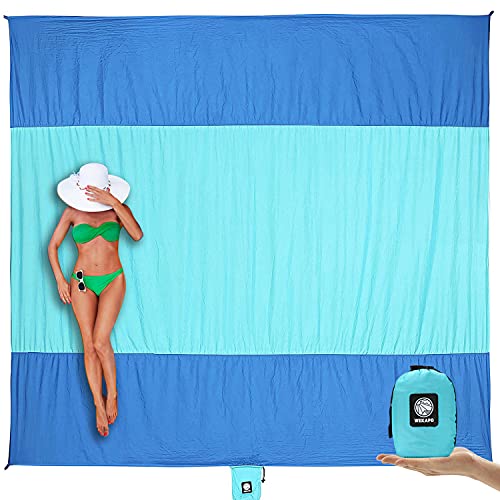
WEKAPO Beach Blanket Sandproof, Extra Large Beach Mat, Big & Compact Sand Free Mat Quick Drying, Lightweight & Durable with 6 Stakes & 4 Corner Pockets (Blue, 7x7 FT (1~3 Person))
Chosen because it specifies Extra Large Beach Mat and Big & Compact Sand Free Mat Quick Drying.
View on AmazonWEKAPO Beach Blanket Sandproof, Extra Large Oversized 10'X 9' for 7 Adults Beach Mat, Big & Compact Sand Free Mat Quick Drying, Lightweight & Durable with 6 Stakes & 4 Corner Pockets
Chosen because it specifies Extra Large Oversized 10'X 9' for 7 Adults Beach Mat and Big & Compact Sand Free Mat Quick Drying.
View on Amazon
Beautiful Extra Large Beach Blanket with Tassels - Soft Turkish Towel | Oversized Quick-dry Picnic Blanket and Mat for Adults - Lightweight and Soft for Relaxing Beach Days with the Whole Family
Chosen because it specifies Soft Turkish Towel and Oversized Quick-dry Picnic Blanket and Mat for Adults.
View on AmazonSize: How Big Should It Be?
- Solo or couple: Around 5 by 6 feet or smaller is enough for two people to sit or lie down.
- Family of four: A blanket in the range of about 7 by 9 feet or larger is common; makers often state how many adults it seats.
- Group or tailgate: Oversized options of 9 by 10 feet and larger exist, usually in lightweight nylon so they remain packable.
Measure the folded size too. Packable blankets often fold into a small pouch roughly the size of a water bottle, while padded mats are bulky. If you walk a long way to the beach, weight matters as much as size.
Features That Make a Difference
- Corner pockets or stakes: Fill the pockets with sand or use stakes to hold the corners down in wind.
- Water-resistant backing: Helps keep damp ground from soaking through. Follow the maker’s wash instructions, since coatings can be sensitive to heat.
- Quick-dry fabric: Nylon, polyester and thin microfibre dry faster than cotton.
- Carry strap or pouch: A built-in strap or stuff sack makes transport easier, particularly with kids.
- UV-protection claims: Some blankets state a UPF-rated fabric, but these claims relate to the fabric and do not replace sunscreen, shade and other sun-safety measures.
- Colour and pattern: Light colours stay cooler in direct sun; darker ones hide stains.
Materials Compared
| Material | Strengths | Trade-offs |
|---|---|---|
| Ripstop nylon or polyester | Light, quick-drying, packs small | Slippery on sand; can flap in wind without anchors |
| Microfibre | Compact, soft, absorbent | Sand may cling; thin cushioning |
| Cotton or cotton blend | Soft and comfortable | Heavy when wet; slow to dry |
| Woven polypropylene | Easy to shake out; wipeable | Stiffer feel; larger when folded |
| Fleece with waterproof backing | Warm on cool evenings | Not breathable; avoid for hot days |
Budget Tiers
| Tier | What you typically get | Trade-off |
|---|---|---|
| Budget | Thin nylon or polyester with basic corner pockets | May tear or fray sooner; fewer extras |
| Mid-range | Larger sizes, reinforced corners, stakes and a carry bag | The best balance for most families |
| Premium | Heavier woven fabrics, designer patterns, padded or waterproof construction | Heavier and costlier |
Care and Safety
Shake the blanket out thoroughly, rinse with fresh water if it has been in salt water, and let it dry completely before packing to prevent mildew. Most nylon and microfibre blankets can be machine washed on a gentle cycle with cool water, but follow the maker’s label, especially for coated or waterproof backings. Avoid high heat, which can damage coatings. Use sun protection such as shade, hats and sunscreen, since a blanket is not a substitute. When using stakes, keep them away from other beachgoers, and check local rules for digging or anchoring on public beaches. At the water’s edge, keep young children within sight and follow local lifeguard advice.
Pick X If… Decision Table
| Pick this | If you… |
|---|---|
| Parachute-nylon blanket with pockets | go to a windy beach with family |
| Compact microfibre blanket | travel by plane or walk far |
| Woven sand-resistant mat | want something easy to shake clean and wipe |
| Oversized cotton blanket | want comfort and plan a long, relaxed day |
| Padded outdoor mat | sit on rough or pebbly ground |
| Waterproof-backed blanket | use it on damp grass as well as sand |
Alternatives
- Beach towel or oversized towel: Best for solo sunbathing; consider microfibre for faster drying.
- Beach mat with a pillow: Rolls up and gives a bit of head support.
- Low beach chair: Keeps you off the sand entirely, which suits those with back or mobility concerns.
Packing and Use Tips
Lay the blanket with the open side away from the wind, and put heavier bags on corners as well as the pockets. Place shoes and towels at the edge rather than the centre so sand does not track onto the sitting area. Keep a small brush or an old towel to brush off feet before stepping back on. Fold the blanket sand-side in on your way out, and shake it away from the group. A small mesh bag helps separate wet items from the dry blanket.
Choosing for Specific Situations
Windy coasts reward heavier fabrics and secure anchoring: a blanket with pockets on all four corners and a few stakes stays flat far better than a thin sheet with a single anchor point. Rocky or pebbly beaches favour padded or thicker woven mats, since a thin parachute fabric transmits every stone. Lakeside and park outings often involve damp grass, so a water-resistant backing earns its place there. For toddlers who crawl and eat on the blanket, a wipeable surface and a size large enough to keep snacks away from the sand edge make the day easier. Travelers who carry only a daypack should weigh the folded size and weight against comfort, because the lightest blanket that fits the group is usually the one that actually gets used.
Think too about shade. A blanket on its own offers none, so pair it with an umbrella or tent that is rated for wind, and follow the maker’s anchoring directions. Light-coloured blankets reflect heat and stay more comfortable on bare skin, while dark ones can get hot at midday. If you share the beach with a dog, a tougher woven fabric resists claws better than thin nylon, and shaking it out before leaving keeps sand out of the car.
Common Mistakes to Avoid
- Buying on size alone and ignoring folded dimensions, then leaving the blanket at home because it is bulky.
- Assuming a sand-free claim covers wet sand and wet swimsuits.
- Packing the blanket damp, which can cause odours and mildew.
- Using hot dryer settings on coated or waterproof-backed fabrics.
- Skipping stakes or pockets on a windy day and chasing the blanket down the shore.
Storing and Extending the Life of Your Blanket
Salt, sunscreen and sand are hard on fabric. Rinse the blanket with fresh water after seaside use, wash it according to the label a few times each season, and dry it fully in the shade or on a line, since long sun exposure can fade dyes and weaken synthetic fibres. Store it loosely folded in a breathable bag rather than a sealed plastic one, and keep it away from damp garages. Check seams, corner pockets and stake loops before each trip; a small repair with strong thread is easier than losing a corner in the wind. Sunscreen and oil can leave marks, so pre-treat spots with mild soap as the care label allows. A blanket cared for this way tends to last several seasons, which matters when comparing budget and mid-range options.
Finally, think about the whole kit. A blanket, a wind-rated shade, a small bin bag for rubbish, and a spare towel make the beach tidier and safer for everyone, and they keep the sand out of the car on the way home.
Frequently Asked Questions
What size beach blanket is best for a family?
A blanket of roughly 7 by 9 feet or larger usually suits a family of four. Makers often indicate how many adults it seats, so read the product listing for guidance.
Are sand-free beach blankets really sand free?
They shed sand more easily than traditional blankets, but no fabric is entirely sand free, especially when wet. Expect a shake-and-go experience rather than a guarantee.
How do I stop a beach blanket blowing away?
Use corner pockets filled with sand, stakes if supplied, or weight the corners with bags and shoes. Facing the open side away from the wind also helps.
Can I machine wash a beach blanket?
Many nylon, polyester and microfibre blankets can be washed on a gentle cycle in cool water, but coatings and backings may be sensitive to heat. Follow the care label.
Does a beach blanket protect against the sun?
Some blankets state a UPF fabric rating, but this does not replace sunscreen, shade or protective clothing. Follow local sun-safety guidance.
Which material dries fastest?
Thin nylon, polyester and microfibre generally dry faster than cotton or padded constructions. Shake off water, hang to dry, and store only when fully dry.