Our Top Picks
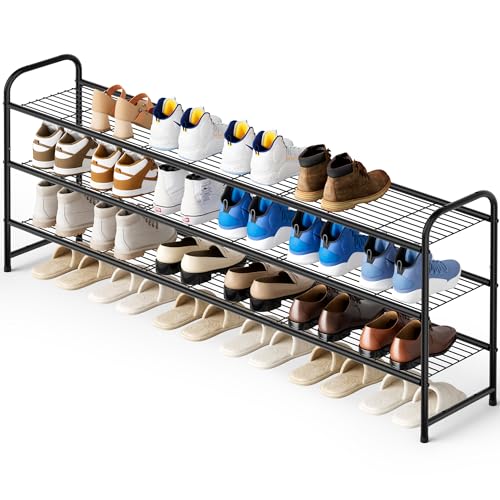 KEETDY 3-Tier Long Shoe Rack for Closet Metal11.4x43x24.411.4 x 43 x 24.4 inches1 poundsCheck on Amazon
The best shoe rack depends on your entryway: a slim tiered rack such as IKEA’s TRONES cabinets suits tight halls, an open metal or bamboo rack from makers like SONGMICS or Simple Houseware suits households that want airflow and quick access, and a stackable or over-the-door option suits renters and small closets. This guide covers capacity, materials, sizing and the trade-offs by budget tier so you can match a rack to your space.
At a Glance: Shoe Rack Types
| Type | Example makers | Best for | Limits |
|---|---|---|---|
| Slim shoe cabinet with flip-down doors | IKEA (TRONES line) | Narrow hallways, hiding clutter | Shallow depth; bulky boots may not fit |
| Open tiered metal rack | Simple Houseware, Whitmor | Garages, mudrooms, wet shoes | Visible clutter, light frames can wobble |
| Bamboo or wood bench rack | SONGMICS and others | Entryways that need seating | Check bench weight rating |
| Over-the-door organizer | Various makers | Dorms, rentals, closets | Can stop a door from closing fully |
| Stackable modular cubes | Various makers | Growing collections | Stability depends on assembly |
Makers are named as examples of those that sell each type. Specifications change between production runs, so confirm dimensions and load limits on the maker’s own page.

VTRIN 10 Tier Shoe Rack Tall Large Capacity Wide Shoe Organizer with Two Hooks Sturdy Metal Shoe Shelf for Entryway, Closet, Bedroom
Chosen because it specifies Closet and Bedroom.
View on Amazon
Kitsure Shoe Rack - Non-Woven Shoe Rack Shelf, 27.5" Wide - 3 Tier, Black | Shoe Organizer for Closet, Entryway, Garage, Stackable Shoe Shelves, college dorm&apartment essentials
Chosen because it specifies Non-Woven Shoe Rack Shelf and 27.5" Wide.
View on AmazonKEETDY 3-Tier Long Shoe Rack for Closet Metal Shoe Organizer for Entryway, Wide Stackable Shoe Storage Shelf with Sturdy Wire Grid for Closet Floor, Bedroom, Black
Chosen because it specifies Bedroom and Black.
View on Amazon
SONGMICS Shoe Rack, 3-Tier Shoe Organizer, Metal Storage Shelf | for Entryway, Upright or Upside Down, for 16-20 Pairs, Stackable, 11.8 x 36.2 x 21.7 Inches, Black ULSA303B02
Chosen because it specifies 3-Tier Shoe Organizer and Metal Storage Shelf.
View on AmazonHow Many Pairs Do You Need to Store?
Count the shoes you wear weekly and add a buffer for guests. A common rule of thumb in organizing guides is to plan on one slot per pair, with extra space for boots. Most makers state capacity in pairs, but the figure usually assumes standard adult sneakers or flats. High heels, hiking boots and wide shoes take more room, and some tiers can hold fewer pairs than the headline number suggests.
Measure the longest shoe you own and the tallest boot. A rack shelf depth must clear the shoe length, and for boots you need either a tall shelf or a boot-specific section. If the maker lists internal clearance per tier, use that, not the overall height.
Space and Placement
Narrow entryways
Slim cabinets with flip-down drawers are designed for shallow spaces. Check the maker’s listed depth against the clearance you want for people to pass. Remember that flip-down doors need room to open.
Closets and bedrooms
Stackable cubes and over-the-door racks use vertical space. Over-the-door organizers need a door that can take the extra thickness. Measure the gap between the door and the frame before buying.
Garages and mudrooms
Open metal or plastic racks tolerate wet or muddy shoes better than wood. Look for slatted shelves that let water drain and be wiped clean.
Materials
- Metal: Strong and easy to wipe, but thin tubing can flex. Powder-coated finishes resist rust better than bare metal, according to many makers’ descriptions.
- Bamboo: Often sold as a lighter, natural-looking option. It can scratch and may be sensitive to standing water. Wipe spills promptly.
- Engineered wood: Common in cabinets and benches. Edges can chip and moisture can cause swelling, so keep wet shoes off it.
- Plastic: Light, waterproof and cheap. It can look basic and may crack under heavy loads.
- Fabric or canvas organizers: Good for closets, but they may sag if overloaded.
Stability and Safety
Tall, narrow cabinets and racks can tip, particularly when loaded unevenly or when a child climbs on them. Follow the maker’s anchoring instructions and use any supplied wall fixings. Place heavier items on lower shelves. Benches should be used only within their stated weight limit, and never stand on a rack that is not designed for it.
Budget Tiers
Budget
Simple Houseware and Whitmor-style metal racks and plastic stacking units sit here. They give good capacity for a low outlay and are easy to move. Expect a basic look, thin frames and sometimes minor assembly frustrations. They work well in garages, closets and kids’ rooms.
Mid-range
This tier includes bamboo racks, slim cabinets and bench combinations from makers such as SONGMICS and IKEA. You usually gain better finishes, sturdier joints and hidden storage. These are the usual pick for visible entryways.
Premium
Premium racks use solid wood, thick panels or designer finishes. They suit long-term hallways and open-plan homes where the rack is part of the decor. The practical benefit is durability and a cleaner appearance, though capacity per space is not necessarily higher.
Pick X If… Decision Table
| Pick this if… | Choose |
|---|---|
| Your hallway is very narrow | A slim flip-down cabinet |
| Shoes are often wet or muddy | An open metal or plastic rack with slatted shelves |
| You want somewhere to sit and put on shoes | A bench-style rack with a stated weight rating |
| You rent and cannot drill | A freestanding or over-the-door organizer |
| Your collection is growing | Modular stackable cubes |
| You own tall boots | A rack with adjustable shelves or a boot section |
Alternatives
- Wall-mounted shoe shelves: Keep floors clear, but require secure wall fixing.
- Under-bed shoe boxes: Good for out-of-season pairs, with the drawback of slower access.
- Entryway storage bench: Combines seating with closed storage, ideal when you also need space for bags.
Care and Maintenance
Let shoes dry before putting them on wood or bamboo. Wipe metal and plastic with a damp cloth and mild soap. Check screws and joints periodically, since loose fasteners cause wobble. For cabinets, leave doors ajar or choose ventilated designs so damp shoes can air out and odors do not build up. Shoe deodorizer products should be used per their labels.
Buying Checklist
Measure the entry space, the longest shoe and the tallest boot before browsing. Note whether the floor is tile, wood or carpet, because lightweight racks can slide on smooth floors and wobble on thick carpet. Decide whether you want closed storage or open airflow, and whether seating matters. Write down your must-haves before comparing models, so marketing language does not steer you. Read the maker’s dimensions, weight limits and care instructions, and compare at least two independent reviewers’ comments on durability and ease of use. Brand names in this guide are examples of makers in the category, and specifications can change between production runs, so rely on the maker’s current page for final numbers.
Common Mistakes to Avoid
Buying a rack by pair count alone is a frequent error, since the stated capacity usually assumes small flat shoes. Another is ignoring door swing and flip-down clearance in a hallway. Skipping anchoring on tall units is a safety miss, and placing damp shoes on untreated wood can cause lasting marks. Finally, check the assembly: many racks are flat-pack, and loose screws are a common cause of wobble reported by buyers, so keep a small screwdriver handy and retighten after the first few weeks.
Taking a few minutes to measure, read the manual and match the shoe rack to your actual routine usually prevents most of these problems, and it keeps you from paying for features that you will not use. If you are torn between two options, choose the one that suits your space and cleaning habits over the one with the longer feature list.
Final Considerations
Think about how the item will be used day to day rather than how it looks in a product photo. Household routines, floor type, the number of people sharing the space and how often you are willing to clean or empty it all affect satisfaction more than a long specification list. Where a maker publishes a warranty or care guide, read it, because it often explains which cleaning methods and load limits the product is designed for. If reviewers from independent outlets disagree about a model, look for the specific complaint, such as flimsy hinges, weak seams or poor fit, and decide whether it would matter in your home. When two options seem equal, the one with simpler parts and clearer instructions is usually easier to live with over time.
Frequently Asked Questions
How many pairs does a typical shoe rack hold?
Makers state capacity in pairs, often for standard adult shoes. Bulky boots, heels and wide sneakers take more room, so real capacity may be lower. Check the shelf spacing and depth on the maker’s page.
Are shoe cabinets better than open racks?
Cabinets hide clutter and suit visible entryways, while open racks provide airflow and quick access. If shoes are damp, open racks help them dry. Many households use a cabinet for everyday pairs and an open rack for wet ones.
What is the best material for wet shoes?
Metal with a protective finish or plastic with slatted shelves handles moisture best. Wood and bamboo can warp or stain if left wet. Use a tray under the rack to catch drips.
Do tall shoe racks need to be anchored?
Tall, narrow racks can tip if overloaded or climbed on, so follow the maker’s anchoring guidance. Anchoring is especially sensible when children or pets are present. Put heavier items on the lowest shelves.
How much space should I leave in front of a shoe cabinet?
Leave enough room for flip-down doors to open fully and for a person to stand or pass. Check the maker’s depth and the door’s open depth. Narrow halls may need a shallower cabinet or a wall-mounted option.
Can a shoe rack fit in a closet?
Yes, if the rack height and depth fit under hanging clothes or on the closet floor. Measure the clearance, including the door swing. Stackable or adjustable racks are easiest to fit.