Our Top Picks




A good reusable ice pack earns its freezer space twice over. The same gel pack that calms a twisted ankle on Monday can keep a lunch bag cold on Friday, and a sturdy cooler block can replace bag after bag of melting ice on camping trips. The catch is that injury care and cooler duty ask for different things: therapy packs need to stay soft and mold around joints, while cooler packs need maximum cold output over many hours in a rigid, leakproof shell.
This guide brings both jobs together. Below you will find five well-proven options, from the clinic-standard Chattanooga ColPac to phase-change cooler packs that hold food cold for up to two days. Each pick lists the specs that actually matter, like size, fill material, freeze time and how long the cold lasts, so you can match a pack to the way you will really use it.
Disclosure: As an Amazon Associate, we earn from qualifying purchases.
Chattanooga ColPac Reusable Gel Ice Pack, Standard 11 x 14
Specs
- Size: 11 x 14 inches (Standard size, model 00-1500)
- Fill: Non-toxic silica gel in a blue vinyl cover
- Latex-free construction
- Delivers up to 30 minutes of cold therapy per use
- Freeze time: about 2 hours flat in the freezer
- Stays pliable when frozen for better body contact
The ColPac is the pack physical therapy clinics have relied on for decades, and it remains the benchmark for straightforward cold therapy at home. The silica gel fill stays soft straight out of the freezer, so the 11 x 14 sheet drapes over a knee, shoulder or lower back instead of bridging across it like a rigid block. Keep it frozen flat, lay a thin towel between the vinyl and your skin, and you get a full half hour of even cold for sprains, swelling and sore muscles.
FlexiKold Gel Ice Pack by NatraCure, Medium 7.5 x 11.5
Specs
- Size: 7.5 x 11.5 inches (Medium, model 6303)
- Proprietary gel fill that stays pliable when frozen
- Double-sealed seams with an extra thick nylon exterior
- Weight: 1.45 pounds
- Cold only; not for microwave heating
- Also sold in a larger 10.5 x 14.5 inch size
FlexiKold builds its packs for people who ice the same spot every day, such as after knee surgery or for a recurring shoulder problem. The double-sealed seams and heavy nylon shell are the details that matter here, because seam leaks are the usual failure point on cheaper gel packs. The medium size wraps ankles, elbows and wrists neatly, and the gel core holds its cold through a full therapy session without turning stiff.
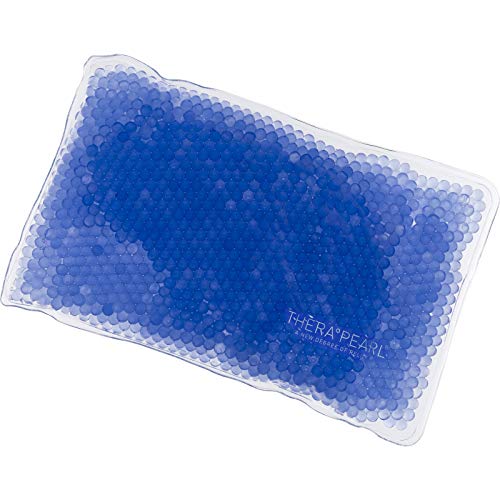
TheraPearl Reusable Hot and Cold Therapy Sports Pack
Specs
- Pearl bead gel fill that conforms to the body, even frozen
- Dual use: freezer for cold, microwave for heat
- Holds temperature for about 20 minutes per session
- Freeze for at least 2 hours; microwave about 30 to 40 seconds for heat
- Non-toxic, BPA-free and phthalate-free beads
- Compact sports size for knees, elbows and ankles
TheraPearl is the flexible all-rounder of this list because one pack covers both sides of therapy. Chill it for fresh sprains and swelling, then microwave it when you need warmth for stiff muscles or a sore back. The bead fill is the secret: instead of one solid gel slab, hundreds of small pearls shift and settle into the hollow behind a knee or around an ankle, and the pack stays drapable even at freezer temperature.
Cooler Shock Reusable Ice Packs for Coolers, Large 3-Pack
Specs
- Size: 11 x 15 inches each, pack of 3 with built-in handles
- Phase-change gel freezes at 18 degrees F (-8 degrees C)
- Keeps cooler contents cold for up to 48 hours
- Fill with water once to activate the dry gel mix, then reuse
- Non-toxic gel formula
- UPC 860010058015
When the job is a weekend cooler instead of a sore joint, Cooler Shock plays a different game. Its gel freezes at 18 degrees F, well below the freezing point of water, so the packs keep absorbing heat and holding the cooler cold long after ordinary ice has melted into slush. You add water once through the fill port, freeze them flat, and then line the cooler walls with the large sheets; the built-in handles make the frozen packs easy to pull out and rearrange.
YETI Thin ICE Refreezable Reusable Cooler Ice Pack, Small
Specs
- Slim, low-profile block sized for lunch bags and soft coolers
- Also available in Medium and Large sizes
- Refreezable and reusable hard-shell design
- Custom shape engineered to freeze faster than a plain block
- Impact-resistant, food-safe shell
- Made to fit YETI soft coolers and most other brands
YETI Thin ICE solves the everyday problem of the weekday lunch bag, where a thick block crowds out the food. The thin profile slides along the wall of a soft cooler or lunch tote, freezes quickly thanks to its wide, flat shape, and shrugs off drops that would crack a bargain pack. It is the cooler pick to grab when you want one durable block that lives in the freezer and goes out the door every morning.
How to Choose
Start with the job. For injury care, flexibility matters most: gel and bead packs that stay pliable when frozen make full contact with a joint, and full contact is what delivers even cold. For coolers, flexibility barely matters at all. There, look at freeze point and surface area, because phase-change packs that freeze below 32 degrees F and large flat sheets that line the cooler walls will outlast small soft packs every time.
Size comes next. A therapy pack should be a little larger than the area you treat, so an 11 x 14 inch sheet suits backs, thighs and shoulders, while a 7.5 x 11.5 inch pack is easier to control on ankles, elbows and hands. In a cooler, measure the interior first and buy packs that match the walls; two large sheets usually beat a pile of small ones because they leave fewer warm gaps.
Check the shell and seams before anything else. Double-sealed seams, thick nylon or vinyl covers and hard impact-resistant shells all point to a pack that survives hundreds of freeze cycles. Thin single-seal pouches are the ones that split in the freezer and leak gel over your food, so construction quality is worth more than a slightly longer cold claim.
Think about freeze time and rotation. Most therapy packs need about two hours to chill fully, and cooler packs do best with a full day in the freezer before a trip. If you ice an injury twice a day, buy two therapy packs and rotate them so one is always ready. The same trick works for coolers: a spare set frozen and waiting means you never leave with half-chilled packs.
Finally, match the pack to safe use habits. Always place a thin cloth between a frozen therapy pack and bare skin, keep sessions to about 20 to 30 minutes, and never sit or lie on a gel pack, since body weight can burst the seams. Cooler packs that freeze below zero, like phase-change formulas, should stay inside the cooler and off skin entirely.
Conclusion
For most households, the Chattanooga ColPac is the freezer staple to own first: clinic-proven, pliable and big enough for the injuries that actually happen. The FlexiKold is the tougher daily-use alternative, and the TheraPearl adds microwave heat when you want one pack for both therapy styles. When the destination is a cooler instead of a couch, Cooler Shock delivers multi-day cold for trips, while YETI Thin ICE keeps weekday lunches sorted. Pick by job, size and shell quality, and a single purchase should serve you for years.
More from Amazon
Programs that pair well with the guide above. Offers and eligibility are set by Amazon and may change.
Collect the home and kitchen items you want in one registry that guests can shop from.
Create a wedding registrySet up recurring deliveries of everyday items on eligible products. Terms and savings are set by Amazon.
Explore Subscribe & SaveFree shipping on eligible items, Prime Video and more. Eligible new members can start with a free trial.
Start a Prime free trialAudiobooks and podcasts to listen to on the go. Eligible new members can start with a free trial.
Try Audible freeAs an Amazon Associate we earn from qualifying purchases.