Our Top Picks
 Yes4All Versatile Wooden Wobble Balance Trainer Board with15.75 inches15.5 x 15.5 x 3.3 inches3.08 poundsCheck on Amazon
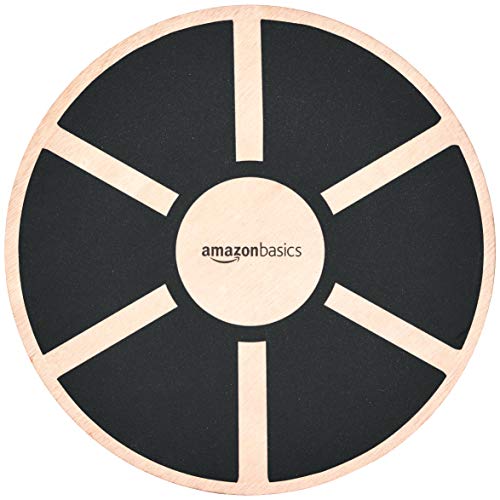 Amazon Basics Wood Wobble Balance Trainer Board15.75 x 15.75 x 3.15 inches15.75 x 15.75 x 3.15 inches3.44 poundsCheck on Amazon
 BOSU Balance Ball Exercise Trainer with Workout Guide24.6 x 24.6 x 6 inches8.8 poundsCheck on Amazon
Balance boards look simple, but they ask a lot of your ankles, knees, hips and core. A few minutes a day on an unstable surface can sharpen coordination, strengthen the small stabilising muscles around your joints, and turn ordinary exercises like squats and planks into a much bigger challenge. The same boards have also found a second life under standing desks, where a gentle rock or tilt keeps your legs working while you type.
The category splits into a few distinct designs. Rocker boards tilt in one direction and suit beginners, round wobble boards move in every direction at once, roller boards pair a deck with a separate cylinder for a surf-like ride, and inflatable domes offer a softer, more forgiving surface. The five picks below cover each style, so you can match the board to your goals, your floor space and your experience level.
Disclosure: As an Amazon Associate, we earn from qualifying purchases.
Revbalance 101 v2 Balance Board Sports Trainer

Specs
- Roller-style trainer: the deck rides on a separate roller for side-to-side movement
- Adjustable stoppers let you limit how far the board travels, or remove them for a free ride
- Item weight: 6.8 lb
- Part number 4C-YZAA-G304 (Blue finish)
- Textured grip surface for training in shoes or bare feet
The Revbalance 101 v2 is the pick for anyone who wants balance training to feel like a board sport. Because the deck moves over a roller rather than pivoting on a fixed base, it mimics the shifting feel of surfing or snowboarding and keeps challenging you as your skills improve. The adjustable stoppers are the key feature for home use: start with them set close together for a short, controlled travel distance, then widen or remove them as your confidence grows.
StrongTek Professional Wooden Balance Board
Specs
- Dimensions: 17.5 x 13.5 x 3 in
- Material: Lauan hardwood plywood
- Weight capacity: 350 lb
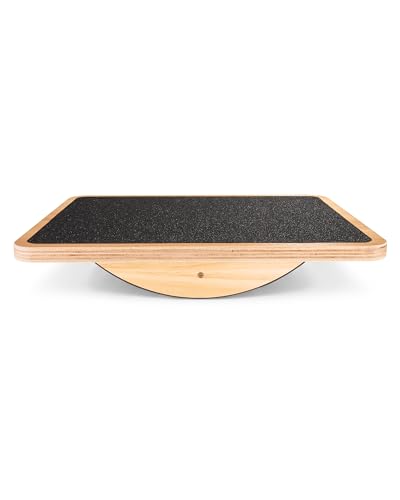
- Rocker design with anti-slip surface on the deck
- Crossed base option in the range for a more advanced 360-degree challenge
StrongTek’s wooden rocker board is a favourite under standing desks because its movement is calm and predictable: it tilts fore and aft rather than spinning in every direction, so you can keep working while your calves and core stay quietly engaged. The hardwood plywood build feels solid underfoot and the anti-slip top keeps shoes planted. It doubles as a light training tool for squats and ankle mobility work, making it one of the most versatile boards on this list.
Yes4All Wooden Wobble Balance Board
Specs
- Diameter: 15.75 in
- Material: wood with a non-slip top surface
- 360-degree rotation with multi-directional tilt
- Weight capacity: 300 lb
- Round format stores flat in a closet or under a sofa
A round wobble board is the classic physical therapy tool, and this Yes4All version covers the basics well. The fixed dome underneath lets the deck tilt in any direction, which is ideal for ankle rehabilitation, single-leg balance drills and adding instability to push-ups and planks. At just under 16 inches across it is easy to tuck away, and the wooden construction feels sturdier than many plastic equivalents at this size.
Amazon Basics Wood Wobble Balance Board
Specs
- Dimensions: 16.2 x 16.2 x 3.6 in
- Material: wood, black finish
- Model number: IR97339-BK
- Round wobble design for full 360-degree movement
- Low profile suited to desks, living rooms and small home gyms
If you want a straightforward wobble board without paying for extras, the Amazon Basics model is the sensible starting point. Its round deck and central pivot deliver the same multi-directional tilt used in clinics and gyms, in a slightly larger 16.2-inch format that gives bigger feet more room. It works for standing balance practice, seated core work with your feet on the deck, and gentle movement at a standing desk.
BOSU Home Balance Trainer, 65 cm
Specs
- Diameter: 65 cm (26 in)
- Two-sided design: inflatable dome on one side, flat platform on the other
- Includes a hand pump and access to guided workouts
- Weight capacity: 300 lb
- Burst-resistant dome material with a non-slip base
The BOSU trainer is not a board in the traditional sense, but it earns its place here because it covers balance work nothing else on this list can. Stand on the dome for a soft, unstable surface, or flip it over and stand on the flat platform for a wobble effect with handles built into your workout. It supports everything from step-ups and lunges to push-ups and core work, and the included pump and guided workout access make it easy to get started on day one.
How to Choose
Start with the style of movement you want. Rocker boards tilt in a single plane and are the easiest to learn, which makes them the best fit for standing desks and for older users working on everyday stability. Round wobble boards add movement in every direction and are the standard choice for ankle and knee rehabilitation, proprioception drills and general balance practice. Roller boards are the most demanding option: the deck can travel as well as tilt, so they reward board-sport athletes but need more floor space and a soft landing area while you learn. Inflatable domes sit at the forgiving end of the scale and double as general exercise platforms.
Next, check the deck size against your stance and your space. A round board around 15 to 16 inches suits most adults for standing work, while rectangular rocker boards in the 17 to 24 inch range give wider stances more room and feel calmer under a desk. Roller boards need a clear run of floor roughly the length of the deck plus your falling-off zone, so measure before you buy.
Weight capacity matters more than many buyers expect, because dynamic moves load a board well beyond your static body weight. Look for a board whose stated weight capacity comfortably exceeds your body weight, especially if you plan to hold dumbbells or perform jump drills. Wooden decks generally feel firmer and last longer than plastic ones, while a textured or grip-taped top is worth prioritising if you train barefoot.
Think about noise and flooring too. Roller boards and hard wobble boards can be loud on bare wood or tile, so a mat underneath protects both the floor and your downstairs neighbours. If the board will live at your desk, a rocker with a limited tilt range keeps movement subtle enough to type through. Finally, consider who else will use it: adjustable stoppers, like those on the Revbalance, let one board serve a household from cautious beginner to confident teenager.
Conclusion
The right balance board depends on where you will use it most. Choose the Revbalance 101 v2 for a sporty, progressive challenge, the StrongTek rocker for calm desk-friendly movement, either round wobble board for therapy-style training and compact storage, and the BOSU trainer if you want one tool for balance work and full exercise sessions. Whichever style you pick, start next to a wall or sturdy chair, keep early sessions short, and build up gradually — a few steady minutes a day will do more for your balance than one heroic session a week.
More from Amazon
Programs that pair well with the guide above. Offers and eligibility are set by Amazon and may change.
Collect the home and kitchen items you want in one registry that guests can shop from.
Create a wedding registrySet up recurring deliveries of everyday items on eligible products. Terms and savings are set by Amazon.
Explore Subscribe & SaveFree shipping on eligible items, Prime Video and more. Eligible new members can start with a free trial.
Start a Prime free trialAudiobooks and podcasts to listen to on the go. Eligible new members can start with a free trial.
Try Audible freeAs an Amazon Associate we earn from qualifying purchases.