Key takeaways
- Seat depth: Look for a seat that supports most of your thighs without pressing behind your knees. Adjustable seat depth is especially useful when more than one person uses the chair.
- Backrest height: A high back should support your shoulders and upper back, while a headrest is helpful if you regularly recline. Check that the headrest adjusts rather than simply adding height.
- Weight capacity: Choose a chair with a comfortably higher rating than your body weight. Reinforced bases, strong casters, and a wide frame contribute to real-world stability.
- Armrest position: Flip-up or height-adjustable arms make it easier to pull close to a desk. Extra width is valuable for broad-shouldered users, but confirm that the arms will clear your desktop.
- Climate and cushioning: Mesh keeps air moving in warm rooms, while pocket-spring or thick foam seats provide a more substantial feel. Consider your room temperature and typical sitting duration.
What's inside
Shopping for a tall-person office chair is less about finding the largest seat and more about getting the proportions right. A chair can advertise generous weight capacity yet still leave a long-legged user with a cramped seat pan, a low backrest, or armrests that sit awkwardly below the desk.
This guide focuses on the details that matter during long workdays: seat depth, back height, lumbar adjustment, armrest clearance, stability, and breathable materials. The selections cover mesh task chairs, cushioned executive designs, and a gaming-style option that can also serve as a home-office chair.
As an Amazon Associate we earn from qualifying purchases.


How to Choose a/an Office Chair For Tall People (2026)
- Seat depth: Look for a seat that supports most of your thighs without pressing behind your knees. Adjustable seat depth is especially useful when more than one person uses the chair.
- Backrest height: A high back should support your shoulders and upper back, while a headrest is helpful if you regularly recline. Check that the headrest adjusts rather than simply adding height.
- Weight capacity: Choose a chair with a comfortably higher rating than your body weight. Reinforced bases, strong casters, and a wide frame contribute to real-world stability.
- Armrest position: Flip-up or height-adjustable arms make it easier to pull close to a desk. Extra width is valuable for broad-shouldered users, but confirm that the arms will clear your desktop.
- Climate and cushioning: Mesh keeps air moving in warm rooms, while pocket-spring or thick foam seats provide a more substantial feel. Consider your room temperature and typical sitting duration.
The Best Office Chair For Tall People (2026)s Reviewed
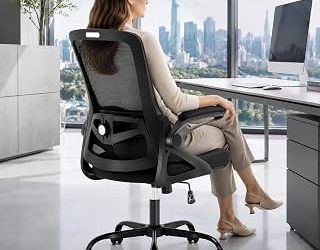
Ergonomic High-Back Mesh Chair
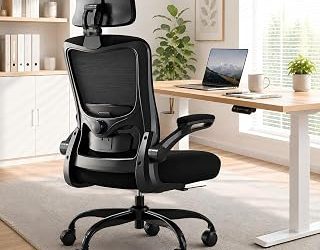
This high-back mesh chair is a practical starting point for tall users who want airflow and a straightforward ergonomic setup. Its wide cushion, headrest, flip-up arms, and 90–120-degree tilt range give it useful flexibility for both focused work and short reclined breaks.
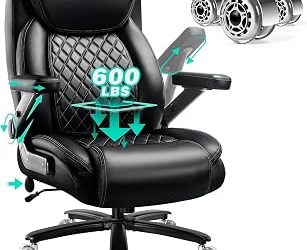
600-LB Heavy-Duty Executive Chair
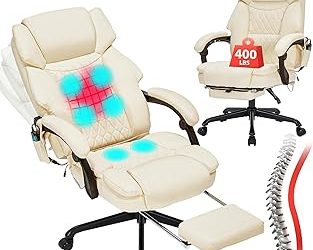
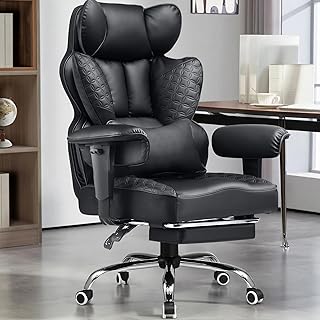
The 600-LB Large Heavy Duty Office Chair is built for users who prioritize a broad, substantial seat. Its 5D flip arms, pocket-spring cushion, lumbar support, and dual rubber wheels suggest a sturdy executive-style platform that should feel planted on hard floors.
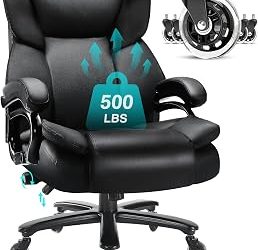
500-LB Big and Tall Executive Chair
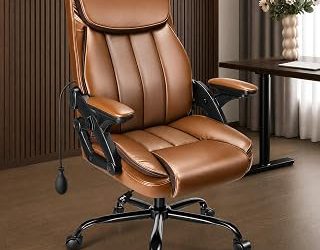
This 500lbs Big and Tall Office Chair combines a high back with adjustable lumbar support and a pocket-spring cushion. It is a good fit for buyers who prefer the supportive, padded character of an executive chair but still want quieter rubber wheels for a home workspace.
500-LB Extra-Wide Office Chair
The extra-wide 500lbs Big and Tall Office Chair is aimed at users who need more lateral room as well as stronger construction. A thick armrest pad, heavy-duty base, upgraded wheels, and adjustable lumbar support make it worth considering for long sessions where pressure points quickly become distracting.
X100 Ergonomic Mesh Chair with Footrest
The X100 stands out for its mesh construction, footrest, 5D flip-up arms, and adjustable 3D lumbar support. It offers a more adaptable posture setup than many oversized chairs, making it appealing to tall users who alternate between upright typing and reclined breaks.
Frequently Asked Questions
What seat height is best for a tall person?
There is no single ideal height because leg length and desk height vary. Your feet should rest flat while your knees remain roughly level with or slightly below your hips; a footrest can correct the fit when the chair must be raised to reach a tall desk.
Is a mesh chair better than a cushioned chair?
Mesh is usually the cooler choice and can provide responsive support, particularly around the back. Cushioned chairs often feel more forgiving under the thighs and hips, so the better option depends on room temperature, sitting habits, and how much structure you prefer.
Do tall users need a headrest?
A headrest is not essential for upright typing, but it can be valuable when you recline for reading, calls, or planning work. Adjustability matters more than the mere presence of a headrest, since a poorly positioned pad can push your head forward.
What weight capacity should an office chair have?
Use the published capacity as a baseline, not a target. A chair rated well above your weight generally offers a more reassuring margin, but also inspect the seat width, base construction, caster design, and warranty before deciding.
Final Thoughts
For breathable everyday support, the X100 Ergonomic Mesh Chair is a versatile pick, while the 600-LB Heavy-Duty Executive Chair is the strongest choice for users who want maximum room and substantial cushioning. If you need a balanced padded option with a high weight rating, the 500-LB Big and Tall Executive Chair is a sensible middle ground.