Key takeaways
- Give a compressed foam topper time to expand in a well-ventilated room before sleeping on it, following the manufacturer’s instructions.
- Test alignment by lying in your usual position: your hips should not sink markedly lower than your shoulders, and your lower back should not feel unsupported.
- Use a waterproof, breathable mattress protector to guard the topper from sweat and spills without adding excessive stiffness.
- Rotate the topper periodically if the care guide allows it; do not flip a contoured or layered model unless the manufacturer specifically recommends doing so.
What's inside
A bad back can turn an otherwise comfortable bed into a nightly endurance test. The right mattress topper may ease pressure at the hips and shoulders, smooth out a too-firm sleep surface, or add support when an older mattress has lost some resilience. It cannot repair a sagging mattress or treat an underlying condition, but it can be a practical upgrade—much like fine-tuning a sleeping system before a long trip outdoors.
This guide explains how to choose the best mattress topper for back pain in 2026, with attention to support, pressure relief, cooling, fit, and ease of care. Our recommended picks cover several sleep styles, from dense memory foam for contouring to lofty pillow tops for a softer feel, plus a compact Twin XL option suited to college rooms and guest spaces.
As an Amazon Associate we earn from qualifying purchases.


Start With Your Mattress, Not the Topper
A topper changes the feel of the mattress beneath it, so first identify the problem you are trying to solve. If your mattress feels hard and creates pressure around your hips or shoulders, a memory foam or plush pillow-top layer may help distribute weight more evenly. If it feels soft, hammock-like, or visibly dipped, adding a topper is unlikely to provide lasting support; replacing the mattress is the more reliable fix.
For most back sleepers, the goal is neutral alignment: your spine should remain level rather than curving downward at the waist or bending upward around the hips. Side sleepers often need more cushioning at the shoulder and hip, while stomach sleepers generally do better with a thinner, more stable surface. Take a few minutes to assess your current mattress before shopping.
Choose the Right Topper Material and Thickness
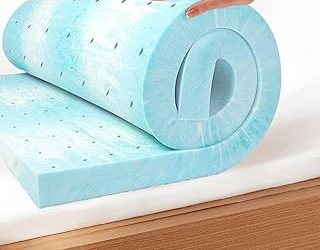
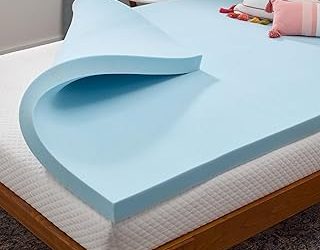
Memory foam is usually the strongest all-around choice for pressure relief. It molds around the body and reduces the sharp “pressure points” that can make turning uncomfortable. A 2-inch layer, such as the Sleepyhead Twin XL 2 Inch Cooling Gel Memory Foam Topper, changes the feel without dramatically raising the sleeping surface. It can be a sensible choice for a college dorm, a guest bed, or anyone who wants moderate cushioning.
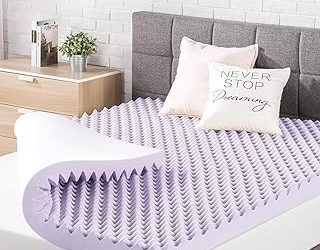
A 3-inch topper offers a more noticeable adjustment. The JSELF 3 Inch Gel Memory Foam Mattress Topper combines a dual-layer construction with a wave-textured surface intended to encourage airflow and soften pressure. The 3 Inch Ultra-Fluffy Memory Foam Mattress Topper Queen takes a plusher approach, pairing memory foam with a pillow-top feel and breathable mesh sides. These are worth considering when a firm mattress needs more give.
Thicker is not automatically better. A 5-inch layer, such as the SHOUREN 5 Inch Memory Foam Mattress Topper Queen, can provide substantial contouring, but it also changes bed height, edge feel, and ease of movement. Extra depth may suit heavier sleepers or very firm mattresses, but can feel unstable if the base mattress is already soft.
Balance Pressure Relief With Temperature Control
Traditional memory foam can retain warmth, particularly for people who sleep deeply in the mattress rather than on top of it. Look for gel-infused foam, ventilated or wave-textured designs, breathable covers, and fabrics that can be removed for washing. These features cannot make foam cold like an air mattress, but they may reduce the trapped, stuffy sensation.
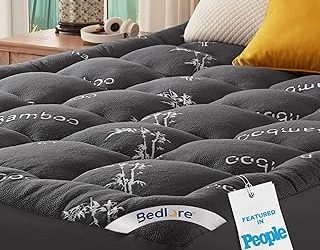
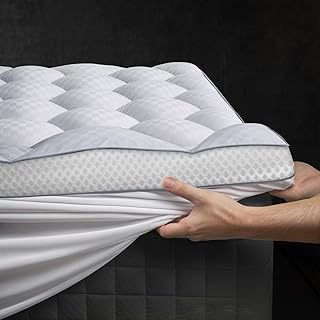
If you sleep hot or prefer a buoyant, less enveloping feel, a down-alternative pillow top may be more comfortable. The Extra Thick Pillow Top Mattress Pad with 1000GSM Down Alternative Fill is designed for plush cushioning and uses a deep-pocket construction for taller mattresses. The BEDLORE Queen Mattress Topper in Viscose Bamboo is another soft, breathable option with stretchable pockets. Both may feel more like a traditional padded bed than a contouring foam layer, though they generally provide less precise spinal support.
Also consider the rest of your sleep setup. Breathable cotton sheets, a lightweight blanket, and adequate room ventilation can make as much difference as a cooling topper.
Check Fit, Stability, and Certifications
A topper that shifts during the night can create uneven support. Measure the mattress width, length, and depth, then compare those measurements with the topper’s stated dimensions. Deep-pocket skirts or fitted sides are useful on tall mattresses. The Ultra-Fluffy model lists pockets for mattresses from 6 to 21 inches, while BEDLORE’s stretchable pockets are designed for mattresses from 6 to 18 inches.
Straps and non-slip surfaces provide extra security, especially on adjustable beds or slick mattress covers. The SHOUREN topper uses four-way straps, and the JSELF topper includes a non-slip design. Even so, place the topper on a clean, dry mattress and use a properly fitted sheet over both layers.
For foam products, certifications such as CertiPUR-US can provide useful information about emissions and material testing. The JSELF and Sleepyhead toppers carry CertiPUR-US references; always check the current product listing for the exact certification and cover-care instructions.
Tips
- Give a compressed foam topper time to expand in a well-ventilated room before sleeping on it, following the manufacturer’s instructions.
- Test alignment by lying in your usual position: your hips should not sink markedly lower than your shoulders, and your lower back should not feel unsupported.
- Use a waterproof, breathable mattress protector to guard the topper from sweat and spills without adding excessive stiffness.
- Rotate the topper periodically if the care guide allows it; do not flip a contoured or layered model unless the manufacturer specifically recommends doing so.
Frequently Asked Questions
What thickness is best for back pain?
For most people, 2 to 3 inches is a practical starting point. It adds pressure relief without completely disguising the feel of the mattress. Choose a thicker topper only when you need a major comfort change and the base mattress is still structurally sound.
Is soft or firm better for a bad back?
Neither is universally best. A surface that is too firm can create pressure, while one that is too soft can allow the pelvis to sink and strain alignment. Aim for supportive cushioning: enough softness at pressure points, with enough resistance to keep your spine level.
Can a mattress topper fix a sagging mattress?
No. A topper may temporarily make a shallow dip less noticeable, but it cannot restore worn-out springs or weakened foam. If you can feel a pronounced trough, or if the mattress is beyond its useful life, replacement is the better long-term solution.
Which topper is best for a hot sleeper with back pain?
Consider a ventilated or gel-infused memory foam model with a washable, breathable cover, such as the JSELF 3 Inch topper. If you dislike the hugging feel of foam, a breathable bamboo or down-alternative pillow top may feel cooler, although its support will be less body-contouring.
Conclusion
The best mattress topper for a bad back is the one that corrects your current bed’s specific weakness without creating a new one. Start with a 2- or 3-inch layer for a measured change, choose memory foam for contouring or a pillow top for airy softness, and verify fit and stability before buying. If the mattress is sagging, treat the topper as a short-term comfort upgrade—not a substitute for a properly supportive sleep surface.