Key takeaways
- Outdoor furniture: Start around 500 to 1,200 PSI, especially on painted wood, wicker, composite, and delicate finishes. Use a wide fan nozzle and keep the spray moving.
- Cars and bicycles: About 1,200 to 1,900 PSI is generally suitable. Use a broad spray pattern, avoid blasting seals, and never hold the tip close to the paint.
- Wood decks and fences: Begin near 1,000 to 1,500 PSI with a 25- or 40-degree nozzle. Soft wood can gouge surprisingly easily.
- Vinyl siding: Around 1,300 to 2,000 PSI is usually sufficient. Spray downward and avoid forcing water behind panels.
- Concrete and pavers: Approximately 2,000 to 3,000 PSI can remove embedded dirt and algae. Test older or cracked surfaces first.
What's inside
Choosing the best PSI for a pressure washer is less about finding the biggest number and more about matching cleaning power to the surface. Too little pressure can leave outdoor furniture, patios, and fences looking dull; too much can strip paint, scar wood, damage cushions, or force water into joints and electrical components.
This guide explains how PSI and GPM work together, what pressure ranges suit common household jobs, and how to select a washer and accessories for safer outdoor cleaning in 2026. It also highlights a few practical options for homeowners who want dependable equipment without buying more machine than their property requires.
As an Amazon Associate we earn from qualifying purchases.


What PSI Means for Outdoor Cleaning
PSI, or pounds per square inch, describes the force of the water leaving the spray tip. GPM, or gallons per minute, measures how much water the machine delivers. PSI helps break up grime, while GPM carries loosened dirt away. A washer rated at 2,500 PSI and 1.76 GPM may clean differently from one rated at 3,400 PSI and 2.6 GPM, even though both can handle routine household work.
Manufacturers usually advertise maximum PSI, which is often measured under ideal conditions rather than during ordinary spraying. Working pressure may be lower. For most homes, a machine in the 1,500-to-2,500-PSI range is versatile enough for outdoor furniture, vehicles, siding, garden paths, and light patio cleaning. Higher-output gas machines are useful for large driveways and heavily weathered hardscape, but they demand more care.
Best PSI by Surface
- Outdoor furniture: Start around 500 to 1,200 PSI, especially on painted wood, wicker, composite, and delicate finishes. Use a wide fan nozzle and keep the spray moving.
- Cars and bicycles: About 1,200 to 1,900 PSI is generally suitable. Use a broad spray pattern, avoid blasting seals, and never hold the tip close to the paint.
- Wood decks and fences: Begin near 1,000 to 1,500 PSI with a 25- or 40-degree nozzle. Soft wood can gouge surprisingly easily.
- Vinyl siding: Around 1,300 to 2,000 PSI is usually sufficient. Spray downward and avoid forcing water behind panels.
- Concrete and pavers: Approximately 2,000 to 3,000 PSI can remove embedded dirt and algae. Test older or cracked surfaces first.
These are starting points, not rigid rules. The nozzle angle, distance, detergent, water temperature, and condition of the surface all affect cleaning force. A wider nozzle and greater distance make a given machine gentler; a narrow nozzle and close range concentrate its impact.
Electric or Gas: Which Is Better?
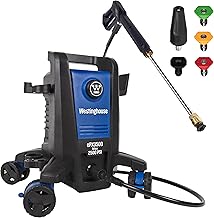
Electric pressure washers are convenient for most furniture and home-maintenance jobs. They start instantly, produce no exhaust at the cleaning site, and are typically lighter and quieter. The Westinghouse ePX3500 Electric Pressure Washer, rated at 2,500 maximum PSI and 1.76 maximum GPM, is the type of compact option that suits patios, cars, fences, and routine furniture care.
Gas models provide stronger flow and greater mobility for large properties, long driveways, and jobs far from an outlet. The Westinghouse WPX3400 Gas Pressure Washer delivers 3,400 PSI and 2.6 GPM, while the DeWalt DXPW3300-S offers 3,300 PSI and 2.4 GPM. These machines can save time on broad concrete areas, but they are usually excessive for delicate furniture and require fuel, ventilation, and more maintenance.
Nozzles, Distance, and Accessories Matter
The nozzle often matters as much as the washer’s headline PSI. A 40-degree white nozzle is a sensible starting point for cushions-free outdoor furniture, painted surfaces, and vehicles. A 25-degree green nozzle is more suitable for tougher grime. Reserve a 15-degree yellow nozzle for durable hard surfaces, and use a zero-degree tip only with exceptional caution; it can cut into wood, paint, and masonry.
Keep the wand moving in overlapping passes, beginning several feet away and moving closer only if necessary. Do not pressure-wash cushions, fabric upholstery, delicate wicker, or furniture with loose veneers. A foam cannon can improve cleaning while allowing less aggressive pressure. The Pressure Washer Accessory Short Wand Foam Cannon kit is useful where a shorter, more controllable tool is preferable, provided its connector matches your washer.
Replacement guns can also improve handling when the original trigger or fittings wear out. The Sooprinse High Pressure Washer Gun is rated up to 3,000 PSI, while the GDHXW High Power Washer Gun is marketed for machines up to 5,000 PSI. Confirm hose threads, quick-connect size, maximum working pressure, and compatibility before attaching any accessory; a higher-rated gun does not make a washer itself more powerful.
How to Clean Furniture Without Damage
Remove loose debris with a soft brush, then test the spray on an inconspicuous area. Apply a mild detergent designed for the material, allow short dwell time, and rinse from top to bottom using a wide fan pattern. Keep the wand at least 12 inches away to begin, adjusting distance rather than immediately switching to a narrower nozzle.
After rinsing, let furniture dry completely before replacing cushions or covers. Check metal fasteners for trapped water, and avoid directing spray into bearings, electrical controls, drawer seams, or the underside of upholstered pieces. On sealed wood, inspect the finish after drying; raised grain or pale streaks indicate that the pressure or proximity was too aggressive.
Tips
- Read the washer’s working-pressure information, not just its maximum PSI rating.
- Use detergent and dwell time to loosen grime instead of compensating with excessive pressure.
- Never use a pressure washer indoors, near open electrical equipment, or around people and pets.
- Inspect fittings and O-rings before use; leaks can reduce performance and create unsafe hose movement.
Frequently Asked Questions
Is 2,000 PSI enough for outdoor furniture?
Yes, but it should be used carefully. Set the machine to its gentlest practical setting, choose a wide nozzle, and maintain a generous distance. Many furniture surfaces need far less than the washer’s full output.
Is higher PSI always better?
No. Higher PSI can shorten cleaning time on durable concrete, but it also increases the chance of gouging wood, removing paint, or damaging seals. Adequate GPM, detergent, and the correct nozzle often matter more than maximum pressure.
Can I pressure-wash cushions?
It is usually safer to clean removable cushion covers according to their care labels. High-pressure water can drive moisture deep into foam and seams, leading to slow drying, mildew, or fabric damage.
What PSI is best for a driveway?
For sound concrete, roughly 2,000 to 3,000 PSI is a practical range. Start lower, use a consistent sweeping pattern, and avoid concentrating the spray on cracks, damaged edges, or decorative coatings.
Conclusion
For most homeowners, the best pressure washer is one that provides controllable power rather than the highest advertised PSI. An electric model around 2,000 to 2,500 maximum PSI is a strong all-purpose choice for furniture and general outdoor upkeep, while a 3,300-to-3,400-PSI gas machine makes sense for larger, tougher surfaces. Choose the right nozzle, keep your distance, and let detergent do part of the work for cleaner results with fewer repairs.