Key takeaways
- Measure the footprint: Record the table’s length and width, then leave roughly 36 inches around frequently used sides for pulling out chairs and walking comfortably. In tight rooms, a smaller table with clear circulation feels more useful than a larger one that constantly interrupts traffic.
- Choose adaptable seating: Drop leaves, extension panels, benches, and nesting seating let one table serve daily meals and occasional guests. Benches can also slide beneath the tabletop, keeping the room visually open when they are not in use.
- Consider table height and legroom: Check the position of the legs, center base, and any support rails. These details affect whether chairs tuck fully underneath and whether diners can sit comfortably along the ends.
- Match the finish to real life: Kitchens and dining spaces see spills, heat, and frequent cleaning. Wood and MDF surfaces should be treated according to the manufacturer’s instructions, while darker finishes may help disguise small marks between cleanups.
- Plan for movement: If you carry meals from the kitchen to a porch, deck, or patio, prioritize a manageable layout and sturdy construction. A table that does not wobble and leaves a clear route is more valuable than one that simply looks spacious.
What's inside
Small dining areas ask a lot from a single piece of furniture. The table must provide a comfortable place to eat, work, or host a friend without blocking walkways, crowding a kitchen, or making an adjacent patio door difficult to use. In compact homes, every inch matters—and flexibility is often more valuable than a larger fixed surface.
This guide evaluates small-space dining tables with an outdoor-living specialist’s eye: footprint, traffic flow, durability, seating flexibility, and how easily each piece could support casual indoor-outdoor living. The lineup includes compact two-person tables, expandable designs, bench sets, and complete dining packages for apartments, breakfast nooks, and smaller homes.
As an Amazon Associate we earn from qualifying purchases.



How to Choose a/an Dining Room Table For Small Space (2026)
- Measure the footprint: Record the table’s length and width, then leave roughly 36 inches around frequently used sides for pulling out chairs and walking comfortably. In tight rooms, a smaller table with clear circulation feels more useful than a larger one that constantly interrupts traffic.
- Choose adaptable seating: Drop leaves, extension panels, benches, and nesting seating let one table serve daily meals and occasional guests. Benches can also slide beneath the tabletop, keeping the room visually open when they are not in use.
- Consider table height and legroom: Check the position of the legs, center base, and any support rails. These details affect whether chairs tuck fully underneath and whether diners can sit comfortably along the ends.
- Match the finish to real life: Kitchens and dining spaces see spills, heat, and frequent cleaning. Wood and MDF surfaces should be treated according to the manufacturer’s instructions, while darker finishes may help disguise small marks between cleanups.
- Plan for movement: If you carry meals from the kitchen to a porch, deck, or patio, prioritize a manageable layout and sturdy construction. A table that does not wobble and leaves a clear route is more valuable than one that simply looks spacious.
The Best Dining Room Table For Small Space (2026)s Reviewed
HIPIHOM 70.9-Inch Dining Table Set
The HIPIHOM set is the roomiest option here, pairing a long walnut-finish table with two benches for flexible seating. Its 70.9-inch length suits households that regularly host several diners, while the benches can be pushed in to reduce visual clutter. Measure carefully before choosing it: this is better for a generous dining zone than a truly compact breakfast nook.
Hinged Drop Leaf Dining Table
This round drop-leaf design is a smart choice when the table must earn its floor space every day. Its tabletop can shift between a compact 22-inch profile and a larger 36-inch surface, making it useful beside a kitchen wall, in an apartment, or near a doorway that needs to remain clear. The dark brown finish also gives it a grounded, furniture-like presence.
Gizoon Dining Table Set for 4
The Gizoon five-piece set is a practical apartment package, combining a wood-top table with upholstered chairs. Because the seating is designed as part of the set, it removes the guesswork of matching chair widths and table proportions. It is a strong fit for diners who want a complete setup rather than a table-only purchase, especially in a compact kitchen or dining corner.
47.2–63-Inch Extendable Dining Room Table
This walnut rectangular table offers a useful middle ground between everyday compactness and guest-ready capacity. At its shorter length, it can suit a small dining room or kitchen; the removable extension leaf allows more seating when company arrives. The straightforward rectangular shape is also easy to position against a wall when floor space is limited.
Solid Wood Expandable Dining Table for 2–6
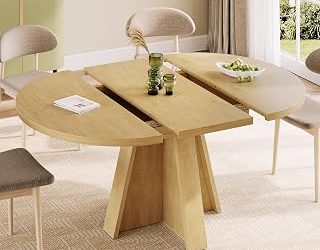
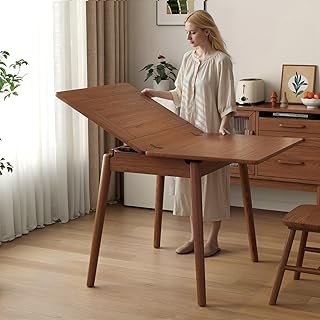
With a size range of approximately 23.6 to 47.2 inches, this table is designed around changing needs rather than permanent bulk. Its compact setting works well for two people, while the expanded configuration can accommodate a small gathering. The solid-wood construction makes it appealing for buyers who want a warmer, more substantial feel in a kitchen, living area, or apartment.
Frequently Asked Questions
What table shape works best in a small dining room?
Round tables are often easiest to navigate because they eliminate sharp corners and create a smoother path around the furniture. Rectangular tables can be equally effective when placed against a wall or when the room is long and narrow.
Is a drop-leaf table a good choice for an apartment?
Yes. A drop-leaf table can function as a narrow console-like surface during the day and expand for meals. It is particularly useful when the dining area shares space with a kitchen, living room, or entry route.
Are benches better than chairs for small spaces?
Benches can save visual and floor space because they often slide completely beneath the tabletop. Chairs may provide easier individual access, so the best option depends on how often diners need to enter and leave their seats.
How much room should be left around a dining table?
Aim for about 36 inches around the active sides of the table whenever possible. If a side sits against a wall and is rarely used, that clearance can be tighter, but avoid blocking doors, appliances, or the main route to an outdoor space.
Final Thoughts
The Hinged Drop Leaf Dining Table is the most naturally space-conscious pick, while the 47.2–63-Inch Extendable Table offers the best balance for households that occasionally host. For buyers who want a compact daily setup with a more substantial natural-material feel, the Solid Wood Expandable Dining Table for 2–6 is a particularly versatile choice.