Key takeaways
- Coverage: Measure the parking bay or work area before buying. A full-size mat suits a single vehicle, while interlocking tiles let you build around posts, cabinets, and irregular edges.
- Drainage: Choose perforated or raised tiles if rain, snow, pool water, or frequent washing reaches the garage. Open designs help moisture move away from shoes and tires.
- Traction: Textured surfaces are valuable when floors are wet or gritty. Look for non-slip finishes that remain comfortable underfoot without creating difficult-to-clean grooves.
- Load handling: Vehicle tires and jack stands concentrate substantial weight. Check the stated load capacity and install tiles on a reasonably level, sound concrete floor.
- Maintenance: Mats contain spills, while modular tiles can be lifted for cleaning underneath. For garages that double as mudrooms or workshops, removable sections are especially convenient.
What's inside
A garage floor has to handle far more than parked vehicles. Snowmelt, muddy boots, oil drips, road salt, dropped tools, and tire heat can quickly turn an ordinary concrete slab into a stained, slippery work zone. The right flooring can make cleanup easier while adding comfort and a more finished look.
This guide compares practical garage flooring ideas for 2026, with an emphasis on outdoor-living realities: wet weather, drainage, traction, durability, and seasonal maintenance. You’ll find options for full-vehicle coverage, modular upgrades, workshop areas, and spaces that connect directly to patios, gardens, or pool decks.
As an Amazon Associate we earn from qualifying purchases.



How to Choose a/an Garage Flooring Ideas (2026)
- Coverage: Measure the parking bay or work area before buying. A full-size mat suits a single vehicle, while interlocking tiles let you build around posts, cabinets, and irregular edges.
- Drainage: Choose perforated or raised tiles if rain, snow, pool water, or frequent washing reaches the garage. Open designs help moisture move away from shoes and tires.
- Traction: Textured surfaces are valuable when floors are wet or gritty. Look for non-slip finishes that remain comfortable underfoot without creating difficult-to-clean grooves.
- Load handling: Vehicle tires and jack stands concentrate substantial weight. Check the stated load capacity and install tiles on a reasonably level, sound concrete floor.
- Maintenance: Mats contain spills, while modular tiles can be lifted for cleaning underneath. For garages that double as mudrooms or workshops, removable sections are especially convenient.
The Best Garage Flooring Ideas (2026)s Reviewed
Garage Mats Oversize Parking Mat
This oversized 8.8-by-22-foot mat is designed to create a broad parking surface beneath a vehicle, helping catch oil, road grime, and melting snow before they spread across the slab. Its absorbent, waterproof construction makes it a sensible choice for drivers dealing with winter weather, though it needs a flat installation area and periodic cleaning to stay fresh.
Interlocking Modular Plastic Floor Tiles
The 12-by-12-inch interlocking tiles offer a flexible way to cover a garage in sections rather than committing to a single permanent surface. With a listed 40,000-pound load capacity and resistance to oil and stains, this 48-piece set is well suited to drivewayside workshops, storage bays, and utility areas where durability matters more than a plush feel.
VEVOR Double-Sided Texture Garage Tiles
VEVOR’s polypropylene tiles combine an interlocking format with a double-sided textured surface intended to improve grip and withstand routine garage abuse. The red finish can define a work zone or add visual energy to a dark space, while the modular design makes damaged or heavily soiled sections easier to remove than a fixed floor covering.
VEVOR Interlocking Drainage Mat
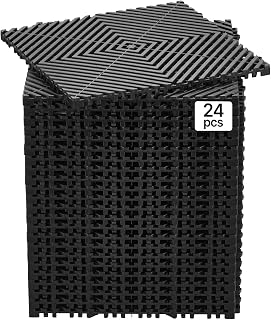
These 12-inch drainage tiles are a strong fit for damp locations where keeping standing water away from footwear is a priority. The 24-piece set works in garages, garden areas, kitchens, and other transitional spaces, and its cushion-like polypropylene design can soften hard concrete without blocking water movement.
Jocoevol 60-Piece Self-Drainage Tile
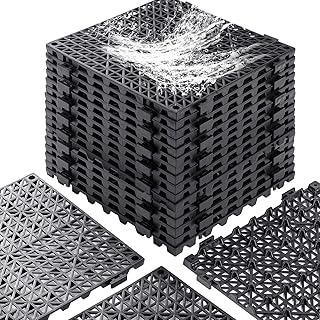
Jocoevol’s 60-piece system provides generous coverage for a garage, patio, pool surround, or multipurpose utility area. The open, self-draining structure is particularly useful for wet climates and outdoor-connected rooms, while the heavy-duty polypropylene construction offers a practical balance of resilience, traction, and easy reconfiguration.
Frequently Asked Questions
What is the best garage flooring for a wet climate?
Drainage tiles are usually the most adaptable choice when rain, snow, or pool water regularly enters the space. Their raised, perforated structure helps moisture move away from walking surfaces, but the underlying concrete should still have a path for water to escape.
Are interlocking garage tiles difficult to install?
Most snap-together systems are approachable for a careful DIY installation. Sweep and dry the slab first, lay out the pattern, and use a compatible cutting tool for perimeter pieces. Allow room for expansion where the manufacturer recommends it.
Can a garage mat replace modular flooring?
Yes, when the main concern is containing vehicle drips and seasonal mess beneath one car. A mat is faster to deploy and easier to move, while modular tiles provide broader coverage and are better for garages used as workshops, gyms, or storage rooms.
How should garage flooring be cleaned?
Begin by removing loose grit with a broom or shop vacuum. Wash compatible mats and tiles with mild detergent and water, then let them dry fully. Lift modular sections occasionally so trapped moisture, salt, and debris do not remain against the concrete.
Final Thoughts
For whole-vehicle spill control, the Garage Mats Oversize Parking Mat is a practical starting point. Choose the interlocking modular plastic tiles for a robust workshop surface, or select the Jocoevol self-drainage tiles when wet-weather traction and water management are the bigger priorities.