Key takeaways
- Airflow: Check delivered CFM at the working pressure, not just the motor rating. Small nozzles may run on modest airflow, while cabinet and pressure blasting often need substantially more.
- Pressure: Most light blasting work operates around 60–100 PSI, but the compressor should maintain that pressure continuously without excessive cycling.
- Tank size: A larger receiver helps absorb short bursts and smooths pressure fluctuations, although tank capacity cannot replace adequate continuous CFM.
- Moisture control: Compressed air produces condensation, especially during long outdoor sessions. A dryer, water separator, or frequent draining helps prevent abrasive clogging and surface contamination.
- Power and placement: Confirm voltage, phase, noise, ventilation, and available floor space before buying. Industrial rotary screw units may require dedicated electrical service and professional installation.
What's inside
Sand blasting puts very different demands on an air compressor than inflating tires or running a nail gun. The blast nozzle can consume air continuously, so a small tank may empty quickly, pressure can sag, and an otherwise capable-looking compressor may leave you with a weak, uneven stream of abrasive. For furniture restoration, outdoor metalwork, and occasional surface preparation, matching compressor output to the blasting tool matters more than choosing the biggest motor on the page.
This guide compares compressor systems and compatible blasting equipment for home workshops, garages, and small restoration spaces. We focus on usable airflow, pressure stability, electrical requirements, duty cycle, moisture control, and the practical limits of each setup—so you can choose equipment that suits your projects rather than simply chasing horsepower.
As an Amazon Associate we earn from qualifying purchases.




How to Choose an Air Compressor For Sand Blasting (2026)
- Airflow: Check delivered CFM at the working pressure, not just the motor rating. Small nozzles may run on modest airflow, while cabinet and pressure blasting often need substantially more.
- Pressure: Most light blasting work operates around 60–100 PSI, but the compressor should maintain that pressure continuously without excessive cycling.
- Tank size: A larger receiver helps absorb short bursts and smooths pressure fluctuations, although tank capacity cannot replace adequate continuous CFM.
- Moisture control: Compressed air produces condensation, especially during long outdoor sessions. A dryer, water separator, or frequent draining helps prevent abrasive clogging and surface contamination.
- Power and placement: Confirm voltage, phase, noise, ventilation, and available floor space before buying. Industrial rotary screw units may require dedicated electrical service and professional installation.
The Best Air Compressor For Sand Blasting (2026)s Reviewed
40HP VSD Rotary Screw Compressor
This 40HP variable-speed rotary screw compressor is a serious industrial option, delivering a stated 185 CFM at 125 PSI for sustained blasting, production work, and automotive use. Its 480V three-phase requirement makes it excessive for most home furniture shops, but it is a strong fit for a commercial facility with the electrical infrastructure and ventilation to support it.
7.5KW 10HP Rotary Screw Compressor System
The 10HP rotary screw system is a more approachable heavy-duty choice, combining a 35 CFM output, 80-gallon ASME tank, and integrated air dryer. It can support demanding cabinet blasting and repeated shop use more comfortably than a portable piston compressor, though buyers still need to verify three-phase power availability and the actual CFM requirements of their nozzle.
Light-Duty Air Sandblaster Gun Kit
This siphon-and-gravity-feed gun kit is suited to small furniture hardware, brackets, hinges, and spot repairs where portability matters more than production speed. Its ceramic nozzle and metal body offer a practical starting point for paint and rust removal, but it requires a separate compressor capable of maintaining the gun’s airflow demand.
Inokraft Portable Sand Blaster Gun Kit
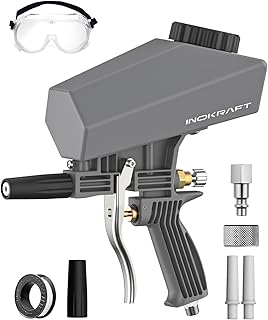
The Inokraft leak-proof portable kit is a convenient option for occasional cleanup around the garage or garden workshop. Designed for 60–120 PSI compressors and compatible with media such as aluminum oxide and soda, it is best for localized work rather than stripping large panels or running continuously.
40 Gallon Bench Top Sandblasting Cabinet
This heavy-duty steel cabinet is the most contained option in the group, helping keep abrasive media and dust away from the surrounding workspace. With a supplied gun, four nozzles, and a stated 6–25 CFM range at 60–125 PSI, it can be a sensible choice for small metal parts—provided your compressor can sustain the selected nozzle size and the cabinet is paired with suitable dust extraction.
Frequently Asked Questions
What size compressor is best for sand blasting?
For occasional spot blasting, a compressor that can genuinely sustain roughly 6–12 CFM at the tool’s working pressure may be adequate. Larger nozzles, pressure pots, and continuous cabinet work can require 20 CFM or considerably more, so always compare the tool manufacturer’s CFM specification with delivered compressor output.
Can a small pancake compressor run a sandblaster?
It may run a small gun briefly, but the compressor will likely cycle constantly and lose pressure as the tank empties. That can produce slow, inconsistent cleaning and increase wear, making a larger receiver and higher-CFM machine a better experience for recurring projects.
Is an airbrush compressor suitable for sand blasting?
The PointZero 1/5 HP airbrush compressor is designed for quiet, low-volume airbrushing, with a tank, regulator, gauge, and water trap. It is not an appropriate choice for conventional abrasive blasting, whose airflow demand is far higher; reserve it for airbrush work, detailing, or other low-consumption tools.
Does sand blasting require an air dryer?
A dryer is not mandatory for every short session, but moisture control is strongly recommended. Condensation can make abrasive media clump, interrupt the feed, and leave freshly cleaned metal more vulnerable to flash rust, particularly in humid outdoor conditions.
Final Thoughts
For serious continuous blasting, the 7.5KW 10HP rotary screw system offers the most practical balance of airflow, tank capacity, and integrated drying. Commercial facilities may justify the 40HP VSD unit, while occasional furniture and hardware restoration is better served by the Light-Duty Air Sandblaster Gun Kit or Inokraft portable gun paired with a compressor that meets its CFM requirement.