Key takeaways
- Capacity: Count your current hand tools, power-tool accessories, and specialty equipment, then leave room for future additions. Drawer quantity helps, but usable depth and width are just as important.
- Mobility: Large casters and a solid handle make a full chest easier to reposition across concrete, pavers, or a garage threshold. Locking wheels help keep it steady while you work.
- Construction: Look for sturdy steel panels, reinforced drawer slides, and a worktop that can tolerate vise work, parts cleaning, or routine assembly without flexing.
- Organization: Full-extension drawers, liners, pegboards, hooks, and divided trays reduce time spent hunting for sockets and fasteners. A well-arranged chest also makes missing tools easier to notice.
- Security and power: Lockable drawers are valuable in shared garages and outdoor-adjacent workshops. Integrated outlets or charging stations can keep cordless tools ready without adding another extension cord.
What's inside
A dependable tool chest does more than tidy a garage. It keeps the tools you reach for most within arm’s length, protects them from dust and moisture, and gives you a stable base when a repair turns into an all-day project. For mechanics who work in open garages, detached workshops, or flexible outdoor spaces, mobility and weather-conscious storage matter just as much as drawer count.
This guide focuses on practical details that affect everyday use: rolling performance, worktop strength, drawer organization, security, power access, and how well each chest fits a working garage rather than a showroom. The selections below cover compact carts, mobile workbenches, and large-format cabinets so you can match the chest to your tools, workspace, and repair routine.
As an Amazon Associate we earn from qualifying purchases.




How to Choose a Tool Chest For Mechanics (2026)
- Capacity: Count your current hand tools, power-tool accessories, and specialty equipment, then leave room for future additions. Drawer quantity helps, but usable depth and width are just as important.
- Mobility: Large casters and a solid handle make a full chest easier to reposition across concrete, pavers, or a garage threshold. Locking wheels help keep it steady while you work.
- Construction: Look for sturdy steel panels, reinforced drawer slides, and a worktop that can tolerate vise work, parts cleaning, or routine assembly without flexing.
- Organization: Full-extension drawers, liners, pegboards, hooks, and divided trays reduce time spent hunting for sockets and fasteners. A well-arranged chest also makes missing tools easier to notice.
- Security and power: Lockable drawers are valuable in shared garages and outdoor-adjacent workshops. Integrated outlets or charging stations can keep cordless tools ready without adding another extension cord.
The Best Tool Chest For Mechanics (2026)s Reviewed
8-Drawer Rolling Tool Chest
This assembled rolling chest is a practical choice for home mechanics who want a manageable footprint without giving up useful separation between tools. Its detachable top box, hooks, tray divider, and liners support a flexible setup, while the wheeled base makes it easier to move between a garage bay and a nearby work area.
Garvee 60-Inch Rolling Tool Chest
The Garvee 60 in Rolling Tool Chest is built around the mobile workbench concept, pairing 10 drawers with a pegboard and charging station. Its broad surface and high stated load capacity make it appealing for a busy workshop where larger tools, parts bins, and an active repair project need to coexist.
HAUTMEC 72-Inch Rolling Tool Chest
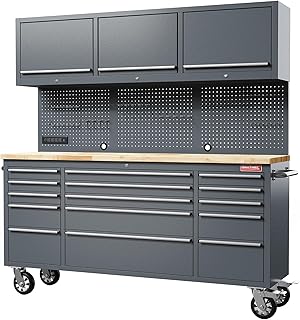
HAUTMEC’s 72-inch model suits serious home workshops that need substantial storage and a generous work surface. Fifteen lockable drawers, upper cabinets, a solid oak top, power strip, pegboard, and included hooks create a comprehensive station for mechanics who prefer to keep most equipment in one organized location.
72-Inch Rolling Tool Chest with Solid Wood Top
This 72-inch rolling chest emphasizes bench space as much as storage, with 15 drawers, a thick solid wood top, pegboard, and power access. It is a strong fit for garage projects involving frequent assembly, though its larger footprint deserves careful measuring before purchase—especially in a compact or multipurpose workspace.
Garage Storage Cabinet with Dual Pegboards
This metal rolling cabinet offers a useful middle ground between a basic cart and a full-size workbench. The two pegboards and 10 hooks keep frequently used tools visible, while the included workbench liner helps protect the surface and reduce sliding during hands-on repairs.
Frequently Asked Questions
What size tool chest is best for a home mechanic?
A compact five- to eight-drawer cart works well for routine maintenance and limited garage space. If you service multiple vehicles, use larger power tools, or want a permanent workbench, a 60- or 72-inch chest provides more useful capacity and surface area.
Are rolling tool chests suitable for outdoor workshops?
They can be, provided they are used in a covered, dry area and protected from rain, condensation, and prolonged humidity. Steel cabinets should be kept off wet floors, and tools should be wiped down before storage if they have been used outdoors.
Should a mechanics tool chest have a wood worktop?
A wood top is helpful for general assembly, parts layout, and projects where a cold metal surface is inconvenient. It can also be refinished, but it still needs protection from oil, standing water, and harsh chemicals.
How can I keep a tool chest organized?
Assign each drawer a purpose, such as sockets, wrenches, electrical tools, or fasteners. Use liners, dividers, and pegboard hooks for small items, and return tools to the same position after every job.
Final Thoughts
For a versatile home setup, the Garvee 60 in Rolling Tool Chest balances workbench space, mobility, and organization. Choose the HAUTMEC 72-inch model for a more complete professional-style station, or the 8-Drawer Rolling Tool Chest when a smaller, more movable solution fits your garage and outdoor-living routine better.