Key takeaways
- Tooth count: Choose 60 to 80 teeth for smooth plywood crosscuts and visible edges; lower counts generally remove material faster during long rips.
- Tooth design: Alternate-top-bevel teeth are a strong all-around choice for plywood because they slice fibers cleanly and help limit surface tear-out.
- Blade diameter: Match the blade to your saw’s specifications. A 10-inch blade cannot replace an 8-1/4-inch blade unless the saw is designed for it.
- Arbor and clearance: Confirm the arbor size, maximum RPM, and available clearance before installation. A correct fit is essential for safe, steady cutting.
- Project demands: For painted shop furniture or outdoor utility work, prioritize durability and speed; for exposed cabinet edges, prioritize a high-tooth-count finish blade.
What's inside
Choosing a table saw blade for plywood is less straightforward than it looks. A blade that cuts cleanly through a cabinet panel may struggle with fast rips, while an aggressive general-purpose blade can leave splintered edges that show up immediately on furniture, shelving, and outdoor projects. Tooth count, carbide geometry, kerf, arbor size, and the type of plywood all influence the result.
This guide focuses on blades suited to home workshops and practical furniture building, with an outdoor-living perspective: clean cuts for patio storage, planter boxes, workbenches, and built-ins, plus enough versatility for everyday lumber. The recommendations cover fine-finish blades, value multipacks, and options for users who switch between plywood, MDF, hardwood, and composite materials.
As an Amazon Associate we earn from qualifying purchases.


How to Choose a Table Saw Blade for Plywood (2026)
- Tooth count: Choose 60 to 80 teeth for smooth plywood crosscuts and visible edges; lower counts generally remove material faster during long rips.
- Tooth design: Alternate-top-bevel teeth are a strong all-around choice for plywood because they slice fibers cleanly and help limit surface tear-out.
- Blade diameter: Match the blade to your saw’s specifications. A 10-inch blade cannot replace an 8-1/4-inch blade unless the saw is designed for it.
- Arbor and clearance: Confirm the arbor size, maximum RPM, and available clearance before installation. A correct fit is essential for safe, steady cutting.
- Project demands: For painted shop furniture or outdoor utility work, prioritize durability and speed; for exposed cabinet edges, prioritize a high-tooth-count finish blade.
The Best Table Saw Blades for Plywood (2026) Reviewed
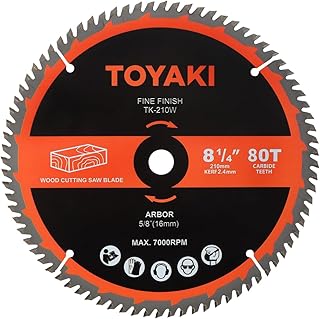
8-1/4-Inch 80-Tooth Ultra-Fine Finish Blade
This compact 80-tooth blade is aimed at delicate finish work where plywood edges need to look presentable without extensive sanding. Its 5/8-inch arbor suits many table saws, miter saws, and circular saw setups, making it a practical option for smaller workshops building shelves, planter panels, or lightweight outdoor furniture. Its fine tooth pattern favors clean crosscuts over fast ripping.
KENDO 10-Inch Two-Blade Set
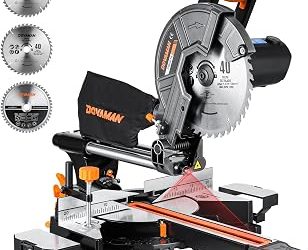
The KENDO set offers a useful pairing: a 40-tooth blade for faster ripping and a 60-tooth blade for plywood, MDF, and laminate finish cuts. That division of labor is particularly handy for furniture builders who break down full sheets one day and fit visible components the next. It is a sensible value choice for a home workshop that wants more flexibility than a single all-purpose blade provides.
Benchmark Abrasives 8-1/2-Inch 60-Tooth Blade
Designed for plywood, hardwood, MDF, and general wood cutting, this 60-tooth tungsten-carbide-tipped blade balances surface quality with usable feed speed. The 8-1/2-inch format can suit compact saws and smaller cutting stations, which is helpful when working in a garage, shed, or covered outdoor workspace. It is a versatile choice for utility cabinetry and built-in project parts that need a clean but not ultra-polished edge.
10-Inch 80-Tooth Red Fine-Finish Blade
This 10-inch, 80-tooth blade is built around fine crosscutting and is a strong candidate for plywood parts that will remain visible. Its carbide teeth and 5/8-inch arbor make it compatible with many common miter and table saws, while the stated 7,000 RPM maximum provides an important specification to check against your equipment. Use it when edge appearance matters more than rapid material removal.
FOXBC 10-Inch 80-Tooth Table Saw Blade
The FOXBC blade takes a straightforward ultra-finish approach, with 80 teeth intended to reduce roughness on wood and plywood cuts. It fits the needs of makers producing cabinet faces, drawer components, trim, and outdoor furniture panels where a clean edge saves time at the sanding stage. As with any high-tooth-count blade, use a controlled feed rate and avoid expecting it to be the fastest option for deep ripping.
Frequently Asked Questions
What tooth count is best for cutting plywood?
A 60-tooth blade is a strong general choice for plywood, offering a useful balance of clean edges and reasonable cutting speed. An 80-tooth blade is better when the cut will be highly visible or when minimizing splintering is the priority.
Is a plywood blade suitable for solid wood?
Often, yes, especially for crosscutting boards and making clean trim cuts. However, a high-tooth-count plywood blade may feed slowly or load up during long rips, so a 40-tooth or dedicated ripping blade is usually more efficient for cutting solid lumber lengthwise.
How can I reduce plywood tear-out?
Support the sheet well, keep the blade sharp, and use a steady feed rather than forcing the cut. A zero-clearance insert, a high-tooth-count blade, and cutting with the finished face positioned appropriately for your saw can also improve the edge.
Can I use these blades on a miter saw or circular saw?
Several of these products are marketed for multiple saw types, but compatibility still depends on diameter, arbor size, guard clearance, and the tool’s maximum RPM. Always compare the blade specifications with the saw manual before fitting it.
Final Thoughts
For the cleanest exposed plywood edges, the 8-1/4-inch 80-tooth blade and the FOXBC 10-inch 80-tooth blade are compelling finish-focused picks. The KENDO two-blade set is the most flexible choice for a workshop that moves between fast ripping and polished plywood cuts, making it especially useful for ongoing furniture and outdoor-living projects.