Key takeaways
- Weight and hand: Look for medium to heavy weight, roughly 9 oz per square yard and up. Anything with the drape of apparel fabric will pill and thin over a padded seat within a year. A fabric that feels substantial and slightly stiff off the roll is what you want.
- Cleanability over prettiness: Polyester and PU-coated fabrics release food soils far better than cotton or linen blends. If you host often or have young kids, prioritize a wipeable or solution-cleanable surface and accept a slightly less luxurious texture.
- Yardage math with a buffer: Budget roughly half a yard per standard drop-in seat, three-quarters for a seat plus back panel, and add 15 to 20 percent if the fabric has a repeating pattern you need to align. Dye lots shift, so buy the whole job in one order.
- Light exposure: Sun-facing dining rooms fade fabric surprisingly fast. Mid-tone neutrals, sands, and greys hold their look far longer than saturated navies and reds, which show fading as uneven blotching rather than gentle softening.
- Stretch and workability: Fabric with slight give wraps a curved foam seat cleanly. Rigid jacquards and faux leathers need relief cuts at the corners, so give yourself extra margin and a good staple gun before committing to them.
What's inside
Dining chairs take a beating that most furniture never sees. Spilled vinaigrette, chair backs dragged against a wall, a kid’s heels drumming the seat rail, sunlight pouring through a west-facing window all summer. I spend most of my working year speccing fabrics for covered patios, screened porches, and poolside dining sets, and the lesson that carries indoors is simple: dining seats fail at the same three points every time. The weave abrades where thighs pivot, the fibers go chalky where the sun lands, and the surface stains because nobody wiped fast enough. Choose for those three stresses and a reupholstery job lasts a decade instead of a season.
The trouble is that fabric listings rarely tell you what you actually need to know. Yardage and color are easy; abrasion resistance, weight, and cleanability are usually buried or missing. This guide sorts through the upholstery fabrics worth buying for dining chair seats and backs in 2026, explains the specs that predict real-world wear, and matches each option to a use case, whether you are recovering four thrifted side chairs or a full set of eight that host holiday dinners.
As an Amazon Associate we earn from qualifying purchases.


How to Choose a Fabric For Reupholstering Dining Room Chairs (2026)
- Weight and hand: Look for medium to heavy weight, roughly 9 oz per square yard and up. Anything with the drape of apparel fabric will pill and thin over a padded seat within a year. A fabric that feels substantial and slightly stiff off the roll is what you want.
- Cleanability over prettiness: Polyester and PU-coated fabrics release food soils far better than cotton or linen blends. If you host often or have young kids, prioritize a wipeable or solution-cleanable surface and accept a slightly less luxurious texture.
- Yardage math with a buffer: Budget roughly half a yard per standard drop-in seat, three-quarters for a seat plus back panel, and add 15 to 20 percent if the fabric has a repeating pattern you need to align. Dye lots shift, so buy the whole job in one order.
- Light exposure: Sun-facing dining rooms fade fabric surprisingly fast. Mid-tone neutrals, sands, and greys hold their look far longer than saturated navies and reds, which show fading as uneven blotching rather than gentle softening.
- Stretch and workability: Fabric with slight give wraps a curved foam seat cleanly. Rigid jacquards and faux leathers need relief cuts at the corners, so give yourself extra margin and a good staple gun before committing to them.
The Best Fabrics For Reupholstering Dining Room Chairs (2026) Reviewed
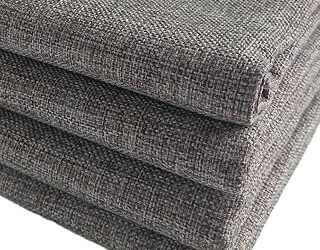
TinaKim Thick Upholstery Fabric, Faux Linen
The two-yard cut at 57 inches wide covers four standard drop-in seats with margin to spare, and the faux linen texture reads as natural fiber without the fuzzing that real linen develops at seat edges. The grey blue is a genuinely useful mid-tone that hides crumbs and shadows better than a pale neutral.
Faux Linen Needlework Fabric, 3.3 Yards
Best value per yard in this lineup if you are doing a set of six or more, since the 3.3-yard length lets you cut all your panels from a single piece and keep the grain running the same direction. The tighter needlework surface also takes a staple cleanly without the weave shifting.
LaSilk Premium Upholstery Fabric by the Yard
The thickened faux linen has noticeably more body than budget alternatives, which matters on a chair with a thin seat pad because it resists showing every foam contour. Sold by the single yard, so it is the right pick for one or two accent chairs rather than a full dining set.
Yutong 9 oz 100% Polyester Upholstery Fabric
This is the spec-driven choice: 9 oz all-polyester construction resists staining and abrasion better than any linen-look blend here, and the solid ivory suits formal rooms. Pair it with a fabric protector spray and it becomes genuinely low-anxiety around red wine.
Wento Thick Faux Leather Fabric, 2 Yards
My default recommendation for households with kids or frequent messy meals, because a damp cloth handles almost anything the table drops. The soft skin grain PU has enough flexibility to wrap a rounded seat, though you will want relief cuts at the corners and a slow, deliberate stapling pace.
Frequently Asked Questions
How much fabric do I need for six dining chairs?
Plan on three to four yards for simple drop-in seats at 57 inch width, or five to six yards if you are also covering the chair backs. Measure the widest point of your seat, add four inches on every side for wrapping and stapling, then multiply.
Is faux leather better than woven fabric for dining chairs?
For cleanability, yes. For breathability and comfort during long meals, woven fabric wins. If your dining room doubles as a workspace where people sit for hours, a heavy polyester weave is the more comfortable compromise.
Do I need to remove the old fabric first?
On drop-in seats you can often staple over one existing layer if it is clean and taut, but any more than that creates bulk that stops the seat from seating properly in the frame. Strip it back if the foam is compressed or smells at all musty.
Will a patterned fabric like damask look dated?
Not if you use it sparingly. A jacquard damask on two head chairs with plain seats elsewhere reads as intentional; the same pattern on all eight tips into period-costume territory.
Final Thoughts
For most dining rooms, the TinaKim faux linen hits the best balance of coverage, texture, and forgiving color for a four-chair set, while the Yutong 9 oz polyester is the pick if durability specs matter more to you than a natural look. Households with kids should skip straight to the Wento faux leather and spend the saved cleaning time elsewhere, and if you want one pair of chairs to carry the room, the Damask jacquard by the yard is the restrained way to do it.