Key takeaways
- Joinery over hardware: Look for mortise-and-tenon or doweled leg-to-apron connections. Chairs held together only by bolts through a metal bracket will loosen under repeated load, no matter what the rating says.
- Frame species and grade: FAS-grade oak, solid rubberwood, and kiln-dried hardwood all handle sustained load well. Rubberwood is dense and takes fasteners cleanly; oak is stiffer and resists racking. Both beat softwood or engineered cores.
- Static rating versus dynamic use: A 400 lb rating is a static figure. Real seating involves leaning, tipping back, and dropping into the seat, so treat the number as headroom rather than a target you should sit at every day.
- Seat surface and cleanability: Upholstered seats are warmer and quieter, but need a tight weave or a performance finish if kids and sauce are in the picture. PU leather and vinyl wipe down instantly and hold up in high-traffic kitchens.
- Floor contact and leveling: Heavier chairs put more pressure through the leg tips. Add felt pads on hardwood, and check that all four legs land flat before you tighten the final bolts, since a rocking chair loads two legs instead of four.
What's inside
In outdoor living work, weight ratings are non-negotiable. Every deck chair, glider, and dining set I spec comes with a tested static load number, because a chair that fails on a raised deck is a liability, not an inconvenience. Indoor dining chairs have historically skipped that discipline entirely, which is why so many households end up replacing the same four chairs every eighteen months. Joints loosen, seat frames flex, a back leg splits at the mortise, and the whole set starts talking every time someone shifts their weight.
A 400 lb capacity rating changes the math. It signals thicker leg stock, real joinery instead of stapled corner blocks, and a seat platform built to carry load across the frame rather than through the fasteners. This guide covers the heavy duty dining chairs worth buying in 2026, what actually separates a commercial-grade frame from a marketing claim, and how to match construction to your room, your floors, and the way your family actually uses a table.
As an Amazon Associate we earn from qualifying purchases.



How to Choose a Heavy Duty Dining Room Chairs 400 Lbs (2026)
- Joinery over hardware: Look for mortise-and-tenon or doweled leg-to-apron connections. Chairs held together only by bolts through a metal bracket will loosen under repeated load, no matter what the rating says.
- Frame species and grade: FAS-grade oak, solid rubberwood, and kiln-dried hardwood all handle sustained load well. Rubberwood is dense and takes fasteners cleanly; oak is stiffer and resists racking. Both beat softwood or engineered cores.
- Static rating versus dynamic use: A 400 lb rating is a static figure. Real seating involves leaning, tipping back, and dropping into the seat, so treat the number as headroom rather than a target you should sit at every day.
- Seat surface and cleanability: Upholstered seats are warmer and quieter, but need a tight weave or a performance finish if kids and sauce are in the picture. PU leather and vinyl wipe down instantly and hold up in high-traffic kitchens.
- Floor contact and leveling: Heavier chairs put more pressure through the leg tips. Add felt pads on hardwood, and check that all four legs land flat before you tighten the final bolts, since a rocking chair loads two legs instead of four.
The Best Heavy Duty Dining Room Chairs 400 Lbs (2026)s Reviewed
Mid Century Modern Walnut Dining Chairs, Set of 4
FAS-grade oak with a walnut finish and a curved solid back panel, which is where most mid-century reproductions cut corners. The smoked brown upholstered seat is shallow enough to keep the profile light while the frame carries commercial-grade load, making this the best-balanced set here for open-plan rooms.
POWERSTONE Wood Dining Chairs, Set of 4
Solid rubberwood frames with a high back that gives genuine lumbar support during long meals. The side-chair geometry is restaurant-derived, meaning tight leg angles and a seat rail that resists racking better than most residential designs at this price.
Solid Oak Wood Dining Chairs, Set of 6
The most straightforward build in the group: natural oak, curved back, no upholstery to eventually reupholster. If you want a six-chair set that will still be tight in a decade, or chairs headed for a sunroom or enclosed porch where humidity swings, unfinished-look oak is the practical choice.
Black Patterned Dining Chairs, Set of 4
Nailhead trim, high back, and solid wood legs give this set the visual weight farmhouse tables need without going bulky. The patterned fabric is the real advantage, since it hides wear and everyday marks far better than a flat solid color.
PU Leather Side Chairs, Set of 2
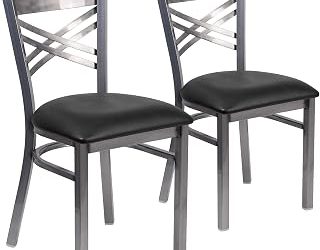
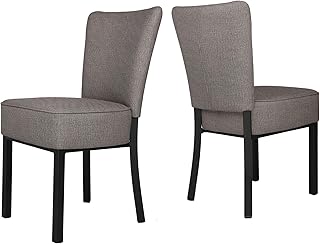
A metal-framed pair with a cushioned vinyl seat that wipes clean in one pass, which is why I recommend these for breakfast nooks, three-season rooms, and anywhere food gets eaten fast. The two-chair count also makes them useful for filling out an existing set.
Frequently Asked Questions
Is the 400 lb rating trustworthy?
It reflects a static load test, not a guarantee. Well-built chairs in this category use the rating as engineering headroom, so the honest read is that a 400 lb chair comfortably handles daily use by heavier adults with a real safety margin.
Wood frame or metal frame?
Wood distributes load through joinery and stays quiet as it ages. Metal is lighter, easier to clean around, and won’t move with humidity, though welds and bolt points become the wear items. For a permanent dining set, I lean wood.
Can these work in a sunroom or covered porch?
Unupholstered solid oak or sealed hardwood handles a covered, enclosed space well. Skip fabric seats anywhere condensation or blowing rain can reach them, and keep any wood chair off open decking where it will sit in standing water.
How do I keep heavy duty chairs tight over time?
Retighten all fasteners once about six weeks after assembly, then annually. That single habit prevents most of the wobble that eventually destroys chair joints, and it takes ten minutes for a full set.
Final Thoughts
For most dining rooms, the Mid Century Modern Walnut set is the strongest all-around buy, pairing FAS-grade oak construction with a profile that suits contemporary and transitional spaces. Larger households should look at the Solid Oak set of 6 for its longevity and low-maintenance surfaces, while the RNKSFX Upholstered set of 6 is the pick if you want oversized, softer seating with the same heavy-duty frame philosophy behind it.