Key takeaways
- Casters over everything: Wheel quality decides whether the cabinet is genuinely mobile. Look for 4-inch or larger casters with two locking swivels, and favor non-marking polyurethane or TPR if you roll across pavers, aggregate concrete, or a threshold lip. Small hard-plastic wheels stall on anything textured.
- Steel gauge and welds: Lower gauge numbers mean thicker steel. Somewhere around 19–21 gauge is the sweet spot for a garage cabinet that gets leaned on. Check whether the frame is welded or bolted; bolted frames need re-tightening after the first month of use.
- Drawer slides and stated load: Ball-bearing slides with a per-drawer rating (often 55–100 lbs) will outlast friction slides by years. Full-extension slides matter more than drawer count, since a shallow drawer you can’t fully open wastes its back third.
- Moisture and finish: Unheated garages and covered patios swing through humidity cycles. Powder-coated steel handles it well; bare-metal edges and unplated hardware are where rust starts. If the cabinet will sit near an open bay door, check for rust-resistant wheel hardware specifically.
- Work surface and security: A reinforced top turns the cabinet into a staging table for repotting, sharpening, or small repairs. Pair that with a keyed lock if you store anything sharp, powered, or expensive where kids and guests pass through.
What's inside
Most garages start out organized and end up as a holding pen for everything that doesn’t have a home: pruning shears on the same shelf as the socket set, extension cords tangled around a bag of potting soil, a cordless drill buried under seat cushions from last October. If you spend real time outside — building raised beds, servicing the mower, restaining the deck rail every other spring — the tools you reach for live in two worlds at once. They need a dry, lockable home, and they need to travel to wherever the work actually happens, which is rarely within reach of a wall-mounted pegboard.
That’s the case for a rolling tool cabinet. It’s a mobile base of operations that follows you from the workbench to the patio slab to the side yard, then rolls back against the wall when the truck needs to come in. This guide covers what separates a cabinet that stays tight after three seasons of gravel and threshold bumps from one that develops a wobble by June: caster quality, gauge of steel, drawer slide ratings, lock hardware, and whether the top surface can double as a work zone. Below are the models worth your attention in 2026, plus a short buying framework you can apply to anything you find on your own.
As an Amazon Associate we earn from qualifying purchases.


How to Choose a Rolling Tool Cabinet (2026)
- Casters over everything: Wheel quality decides whether the cabinet is genuinely mobile. Look for 4-inch or larger casters with two locking swivels, and favor non-marking polyurethane or TPR if you roll across pavers, aggregate concrete, or a threshold lip. Small hard-plastic wheels stall on anything textured.
- Steel gauge and welds: Lower gauge numbers mean thicker steel. Somewhere around 19–21 gauge is the sweet spot for a garage cabinet that gets leaned on. Check whether the frame is welded or bolted; bolted frames need re-tightening after the first month of use.
- Drawer slides and stated load: Ball-bearing slides with a per-drawer rating (often 55–100 lbs) will outlast friction slides by years. Full-extension slides matter more than drawer count, since a shallow drawer you can’t fully open wastes its back third.
- Moisture and finish: Unheated garages and covered patios swing through humidity cycles. Powder-coated steel handles it well; bare-metal edges and unplated hardware are where rust starts. If the cabinet will sit near an open bay door, check for rust-resistant wheel hardware specifically.
- Work surface and security: A reinforced top turns the cabinet into a staging table for repotting, sharpening, or small repairs. Pair that with a keyed lock if you store anything sharp, powered, or expensive where kids and guests pass through.
The Best Rolling Tool Cabinets (2026) Reviewed
Mobile Tool Storage Cabinet with 4 Drawers and Locking Door
This is the most practical hybrid layout of the group: four drawers for hand tools and fasteners, plus a tall locking compartment that swallows the awkward stuff — hedge trimmer, sprayer wand, oil jugs. Expect a real assembly session, but the mixed storage means fewer things end up loose on the floor.
WEN 52-Inch Premium Rolling Tool Cabinet (GG532B)
The 21-gauge powder-coated shell and 52-inch footprint make this the serious workshop pick, with enough drawer depth to organize by task rather than by whatever fits. It’s heavy and it wants a dedicated wall, so measure before you commit — but the build quality justifies the space.
GarveeHome Rolling Tool Cabinet with Adjustable Shelf
The adjustable shelf is the quiet advantage here, letting you rebalance interior height for tall bottles in spring and stacked bins in winter. Rust-resistant wheels and dual locks make it a sensible choice for garages that stay open to the weather most of the day.
72″ Rolling Tool Chest with Workbench and Pegboard
Ten drawers, three upper cabinets, an integrated pegboard, and a light strip add up to a full workstation rather than a storage box. Best suited to a permanent bay where you’ll roll it a few feet, not a cabinet you plan to walk across the yard weekly.
LCAOPC Lockable Metal Storage Cabinet with Wheels
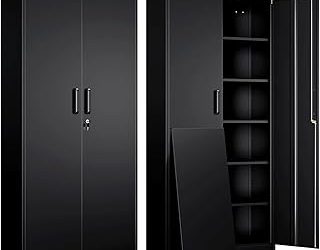
A clean, straightforward locking cabinet that works as well in a mudroom or shed as it does in the garage, which makes it the most flexible pick if your storage needs shift seasonally. Open interior over drawers means it favors bulk items and bins.
Frequently Asked Questions
Can a rolling tool cabinet live on a covered patio?
Under full cover with good airflow, a powder-coated steel cabinet holds up reasonably well. Keep it off direct-contact concrete where possible, leave the drawers slightly open during humid stretches, and add a silica or desiccant pack if you store anything with a cutting edge.
How many drawers do I actually need?
Fewer than most listings suggest. Two or three well-organized drawers plus one cabinet bay beats eight shallow drawers you have to search through. Match the layout to your tools: mostly hand tools favors drawers, mostly yard and power equipment favors cabinet space.
Will the wheels handle gravel or a driveway apron?
Only if they’re 4 inches or larger. Smaller casters bind on loose stone and stop dead at expansion joints. If your route includes anything rougher than a smooth slab, prioritize wheel diameter over drawer count.
Is assembly something I can do alone?
Most of these are single-person jobs with a couple of hours and a socket set, though a helper makes attaching the top panel and casters much easier. Retighten every bolt after two to four weeks of use — that first settling period is when wobble develops.
Final Thoughts
For a workshop where the cabinet stays put and earns its footprint, the WEN 52-Inch GG532B is the build-quality benchmark. If you want mobility and mixed storage for both tools and yard gear, the 4-drawer Mobile Tool Storage Cabinet with a locking door is the most versatile daily driver, and the GarveeHome model is the smarter bet for garages that stay open to the weather thanks to its adjustable shelf and rust-resistant wheels.