Key takeaways
- Head count versus rail length: Space heads roughly every 18 to 24 inches for even coverage. A 13-foot rail with 12 heads suits a galley run or long island; a 6.6-foot rail with 6 heads handles a standard 8-foot ceiling zone without visual clutter.
- Color temperature control: Kitchens do double duty as prep stations and gathering spots. Selectable-CCT kits let you run 4000K while chopping and drop to 2700K when the wine comes out, which is the indoor version of dimming a patio to dusk levels.
- CRI above 90: This is the spec I refuse to compromise on. Under 80 CRI, raw chicken and cooked chicken look identical, produce reads flat, and paint colors shift. Anything above 90 renders food honestly.
- Rail type and future expansion: H-type (Halo-compatible) track is the most widely stocked standard in North America, so replacement heads stay easy to source. Integrated one-piece bars look cleaner but lock you into that head count permanently.
- Bulb base versus integrated LED: E26 and GU10 sockets let you swap bulbs as tastes or technology change. Integrated LED arrays run slimmer and dim more smoothly, but the whole head is disposable when it fails.
What's inside
Twenty years of building outdoor kitchens teaches you one thing fast: light is the difference between a space people use and a space people admire from a distance. Under a pergola, we sweat the details of beam angle and glare because there’s no drywall to bounce a soft wash off. Step back indoors and the same physics apply, yet most kitchens are still lit by a single ceiling fixture that puts the cook’s own shadow directly on the cutting board. Recessed cans solve part of it, but they’re fixed, expensive to relocate, and unforgiving once your island moves six inches left.
Track lighting is the closest thing to the adjustable landscape fixtures I spec on patios: aim it, re-aim it, add heads as the layout changes. This guide covers what actually matters in 2026 kitchen track systems, from H-type rail compatibility to CRI ratings that let you judge a sear, plus reviews of the kits I’d put over a prep counter or a run of upper cabinets.
As an Amazon Associate we earn from qualifying purchases.



How to Choose a Kitchen Track Lighting (2026)
- Head count versus rail length: Space heads roughly every 18 to 24 inches for even coverage. A 13-foot rail with 12 heads suits a galley run or long island; a 6.6-foot rail with 6 heads handles a standard 8-foot ceiling zone without visual clutter.
- Color temperature control: Kitchens do double duty as prep stations and gathering spots. Selectable-CCT kits let you run 4000K while chopping and drop to 2700K when the wine comes out, which is the indoor version of dimming a patio to dusk levels.
- CRI above 90: This is the spec I refuse to compromise on. Under 80 CRI, raw chicken and cooked chicken look identical, produce reads flat, and paint colors shift. Anything above 90 renders food honestly.
- Rail type and future expansion: H-type (Halo-compatible) track is the most widely stocked standard in North America, so replacement heads stay easy to source. Integrated one-piece bars look cleaner but lock you into that head count permanently.
- Bulb base versus integrated LED: E26 and GU10 sockets let you swap bulbs as tastes or technology change. Integrated LED arrays run slimmer and dim more smoothly, but the whole head is disposable when it fails.
The Best Kitchen Track Lighting (2026) Reviewed
VANoopee 5-Color 12-Light Kit, 13FT Rails (Black)
The most complete system here, with enough rail to run a full island plus a perimeter counter and 800 lumens per head at CRI90+. The five selectable color temperatures and true dimming give it the layered flexibility I normally have to build from three separate outdoor fixtures.
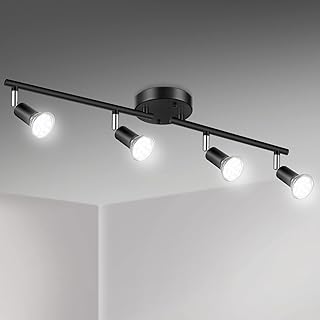
AUQUEE 8-Light Matte Black Track Fixture
A clean, single-bar design with eight rotating heads and a matte black finish that reads architectural rather than utilitarian. Bulbs aren’t included, which I count as a feature: you pick the GU10 wattage and beam spread your ceiling height actually calls for.
KEESFU 6-Light Industrial Track Fixture
The industrial-leaning head shape throws a tighter, more directional pool than domed heads, which makes it excellent for grazing a backsplash or highlighting open shelving. Six heads is the sweet spot for a mid-size kitchen or a laundry-to-entry hallway run.
VANoopee 5-Color 6-Light Kit, 6.6FT Rails (White)
Same CRI90+ optics and color-selectable engine as the 12-light version, scaled for apartments and single-zone kitchens. The white finish disappears against a white ceiling, which is the right call when you want the light noticed and not the hardware.
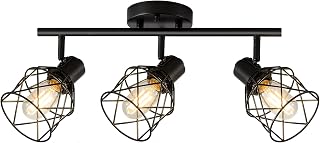
3-Light Farmhouse Island Track Light
The least aggressive option, with warmer farmhouse styling and standard E26 sockets that accept Edison-style or filament bulbs. Best treated as accent or ambient light over a small island rather than the sole source in a working kitchen.
Frequently Asked Questions
Can track lighting replace recessed cans in a kitchen?
Yes, for task and accent layers. A 6- to 8-head kit at 800 lumens per head roughly matches four to six recessed fixtures, with the advantage that you can re-aim every beam after the fact.
What does H-type track mean?
It refers to the rail’s internal contact geometry, the Halo standard. H-type heads only fit H-type rails, so confirm the type before buying replacement or additional heads.
Are these fixtures suitable for covered patios or outdoor kitchens?
Not as sold. Every kit here is dry-rated. Covered outdoor installations need damp-rated or wet-rated fixtures with gasketed housings, and I’d never take the shortcut on that one.
Do I need a dimmer switch?
Only if you want one, but it’s worth the hour of labor. Pair dimmable LED kits with a compatible LED dimmer, not a legacy incandescent model, to avoid flicker and buzz.
Final Thoughts
For most kitchens, the VANoopee 12-Light 13FT kit delivers the widest coverage and the best color rendering per dollar, while the 6-Light 6.6FT version in white is the smarter buy for compact spaces. If you’d rather choose your own bulbs and want the most restrained hardware, the AUQUEE 8-Light in matte black is the one I’d hang.