Key takeaways
- Grip material: EVA foam or high-friction rubber pads hold cedar, teak, and even slightly damp pressure-treated stock. Bare hard plastic slips on oily woods like ipe, which is precisely when you least want to lose control.
- Heel depth: The hook at the back needs to catch the trailing edge of your board without riding up. A shallow heel on a 1½-inch-thick bench leg does nothing but scratch the wood.
- Handle geometry: Dual handles let you apply downward and forward force at the same time, which is the whole point. Single-grip sticks push but don’t hold the workpiece flat against the table.
- Length and reach: Around 16 inches keeps your hand well clear of the blade guard on wide rips. Shorter sticks are fine for jointing but leave you uncomfortably close on a full-length rip.
- Sacrificial or replaceable: Push sticks are meant to be nicked by the blade. Wood versions can be trimmed and reused; multi-packs mean a chewed-up tip never becomes an excuse to freehand it.
What's inside
Anyone who has ripped a stack of cedar slats for a patio bench knows the moment: the offcut narrows, your fingers creep closer to the blade, and you start pushing with your palm because it feels like the only way to keep pressure on the stock. That instinct is exactly how kickback injuries happen. Outdoor furniture work makes it worse than average, because the material list is full of narrow rips — 1×2 chair spindles, planter cleats, deck-rail trim — and those thin pieces are precisely the ones that want to twist, lift, and launch back at you.
A push stick is the cheapest insurance in the shop, but not all of them earn a spot on the wall. Some are slick plastic that skates across damp redwood. Some are too short to bridge a wide fence setup. Others have grip surfaces that shred after a season of pressure-treated dust. Below we compare the push sticks and push blocks that hold up in a working furniture shop through 2026, then break down what actually matters when you choose one for the kind of thick, resinous, occasionally warped lumber that outdoor projects demand.
As an Amazon Associate we earn from qualifying purchases.


How to Choose a Push Stick For Table Saw (2026)
- Grip material: EVA foam or high-friction rubber pads hold cedar, teak, and even slightly damp pressure-treated stock. Bare hard plastic slips on oily woods like ipe, which is precisely when you least want to lose control.
- Heel depth: The hook at the back needs to catch the trailing edge of your board without riding up. A shallow heel on a 1½-inch-thick bench leg does nothing but scratch the wood.
- Handle geometry: Dual handles let you apply downward and forward force at the same time, which is the whole point. Single-grip sticks push but don’t hold the workpiece flat against the table.
- Length and reach: Around 16 inches keeps your hand well clear of the blade guard on wide rips. Shorter sticks are fine for jointing but leave you uncomfortably close on a full-length rip.
- Sacrificial or replaceable: Push sticks are meant to be nicked by the blade. Wood versions can be trimmed and reused; multi-packs mean a chewed-up tip never becomes an excuse to freehand it.
The Best Push Stick For Table Saw (2026)s Reviewed
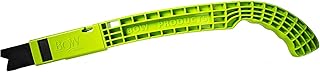
BOW Products PushPRO PP1
The EVA-tipped face is the standout here — it grabs rough-sawn cedar and planed hardwood equally well while damping the vibration that makes thin rips chatter. It reads as the most refined option in this group, and the one we reach for on visible outdoor furniture parts where a slipped push means a scarred surface.
POWERTEC Deluxe Push Stick 2PK (71338)
Two ergonomic handles give you genuine downforce plus forward drive, which is what keeps a narrow planter cleat from lifting off the table. Buying in pairs means one lives at the table saw and one at the jointer, so you never work around a missing tool.
16.5″ Red Hardwood Push Stick
At 16.5 inches long and just 0.4 inches thick, this wooden stick slides into tight fence-to-blade gaps that bulky plastic blocks simply cannot reach. It’s consumable by design — nick the tip, sand it back, keep working — and the bright red finish makes it easy to spot on a cluttered bench.
POWERTEC Deluxe Push Stick 2PK (71511)
A close sibling to the 71338 with a slightly different handle profile that suits larger hands and taller stock. Same broad compatibility across table saws, router tables, band saws, and jointers, which matters when a single Adirondack chair touches three of those machines.
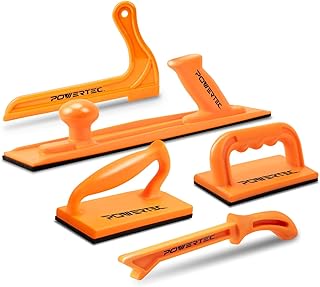
POWERTEC Push Block and Push Stick Set 5PK (71009V)
The most practical starting point for a shop that doesn’t own any of this yet: blocks for wide panel work, sticks for narrow rips, all in one purchase. Kickback resistance comes down to having the right shape within arm’s reach, and this set covers nearly every cut on an outdoor furniture build.
Frequently Asked Questions
What’s the difference between a push stick and a push block?
A push stick applies force behind and slightly above a narrow workpiece, keeping your hand off to the side. A push block sits flat on top of wider stock and presses down across a broad area, which is what you want for panel glue-ups and tabletop material.
Can I just make my own from scrap plywood?
You can, and many woodworkers do. Shop-made sticks lack the non-slip grip surface and molded handles that let you commit real downforce, so treat them as backups rather than replacements for a purpose-built tool.
Does a push stick replace a riving knife or blade guard?
No. It’s one layer in a system. The riving knife prevents the kerf from pinching the blade, the guard shields the blade, and the push stick keeps your hands out of the danger zone. Skipping any one of them raises your risk.
How do these handle wet or pressure-treated lumber?
Better than bare hands, but grip matters more. Damp deck boards and freshly treated stock leave a slick residue, so the EVA and rubber-faced options hold noticeably better than smooth plastic. Let outdoor lumber dry before ripping when you can.
Final Thoughts
For the best combination of grip and control on visible outdoor furniture parts, the BOW Products PushPRO PP1 is the one worth spending on. If you’re outfitting a shop from scratch, the POWERTEC 5PK block and stick set covers the widest range of cuts for the money, and a pair of the POWERTEC Deluxe 71338 sticks means every machine in the shop has one within reach — which is ultimately the only way any of this works.