Key takeaways
- Tooth count and grind: The classic combination layout is 50 teeth arranged in five ATB groups plus one flat raker, separated by a deep gullet. That flat tooth is what clears chips during rips, so a “50-tooth” blade without the raker is really just a general-purpose crosscut blade. For outdoor work in cedar, cypress, and softer hardwoods, 48T to 50T is the sweet spot.
- Kerf thickness: Thin kerf runs roughly .095″ to .102″ and removes less material, which matters enormously on a contractor saw or anything under 2 HP. Full kerf at 1/8″ is stiffer and tracks straighter in thick, wet, or wildly grained stock. Match kerf to motor, not to price.
- Coating and pitch resistance: Cedar, redwood, and pressure-treated pine gum up a blade fast. Nonstick coatings like Diablo’s Perma-Shield cut friction, resist resin buildup, and make cleaning a five-minute job instead of a soak-and-scrub session.
- Plate quality and anti-vibration: Look for a laser-cut plate around .071″ with expansion or anti-vibration slots. These control heat-induced warp and audibly reduce ringing, which shows up directly as cleaner edges on visible outdoor joinery.
- Carbide grade and resharpenability: Micrograin or high-density carbide holds an edge through more board feet and takes more resharpenings. On a blade you’ll sharpen three or four times, carbide grade decides the true cost per cut.
What's inside
Anyone building outdoor furniture knows the ritual: you swap to a rip blade for the frame stock, then swap again to a fine crosscut blade for the slats and mitered arm caps. On a cedar Adirondack or an ipe deck bench, that’s four or five blade changes before lunch, and every one of them costs you alignment, knuckle skin, and momentum. A good combination blade ends that cycle. It rips 2x cedar and white oak without bogging, then crosscuts a stack of teak slats clean enough to skip straight to finish sanding.
This guide covers the 10-inch combination blades worth putting on a jobsite or cabinet saw in 2026. We look at tooth count and grind geometry, kerf thickness and how it interacts with underpowered saws, coatings that resist the pitch buildup you get from resinous outdoor species, and where paying more actually buys you a better cut. Six blades made the shortlist, spanning premium industrial options to budget picks that punch well above their price.
As an Amazon Associate we earn from qualifying purchases.




How to Choose a/an 10-Inch Combination Table Saw Blade (2026)
- Tooth count and grind: The classic combination layout is 50 teeth arranged in five ATB groups plus one flat raker, separated by a deep gullet. That flat tooth is what clears chips during rips, so a “50-tooth” blade without the raker is really just a general-purpose crosscut blade. For outdoor work in cedar, cypress, and softer hardwoods, 48T to 50T is the sweet spot.
- Kerf thickness: Thin kerf runs roughly .095″ to .102″ and removes less material, which matters enormously on a contractor saw or anything under 2 HP. Full kerf at 1/8″ is stiffer and tracks straighter in thick, wet, or wildly grained stock. Match kerf to motor, not to price.
- Coating and pitch resistance: Cedar, redwood, and pressure-treated pine gum up a blade fast. Nonstick coatings like Diablo’s Perma-Shield cut friction, resist resin buildup, and make cleaning a five-minute job instead of a soak-and-scrub session.
- Plate quality and anti-vibration: Look for a laser-cut plate around .071″ with expansion or anti-vibration slots. These control heat-induced warp and audibly reduce ringing, which shows up directly as cleaner edges on visible outdoor joinery.
- Carbide grade and resharpenability: Micrograin or high-density carbide holds an edge through more board feet and takes more resharpenings. On a blade you’ll sharpen three or four times, carbide grade decides the true cost per cut.
The Best 10-Inch Combination Table Saw Blade (2026)s Reviewed
Diablo D1050X
The best all-round choice for outdoor furniture builders on a mid-power saw: 50 ATB teeth, a .098″ thin kerf, and a 15° hook that pulls stock through cedar and fir without strain. The Perma-Shield coating is the real differentiator here, shedding resin from treated lumber far better than uncoated plates.
Freud LU83R010 Industrial
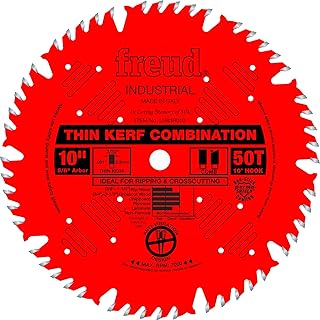
Freud’s industrial thin kerf pairs TiCo hi-density carbide with laser-cut anti-vibration slots, and the difference shows in glue-line rips on white oak and sapele. If you build furniture that lives outside and needs joinery to stay tight through seasonal movement, this is the blade to buy once and resharpen for years.
CMT Orange Tools 256.050.10
A properly configured 15+1 combination grind on a .102″ kerf, which gives it a touch more stability than the thinnest blades while staying friendly to smaller motors. Rip quality in 2x cedar is excellent, and the flat raker clears chips well enough to keep feed rates steady in deeper cuts.
US1048ATBFK
A USA-made 48-tooth full-kerf blade that trades some feed ease for plate rigidity, making it the pick if you’re pushing thick ipe, cumaru, or wet construction lumber through a cabinet saw. The heavier body resists deflection where thin kerf blades want to wander.
10-Inch 50-Tooth Thin Kerf Combination
A sensible budget entry with 50T ATB carbide, thin kerf, and a nonstick coating that keeps buildup manageable in resinous softwoods. Cut quality in plywood and hardwood is genuinely good for the money, though carbide life won’t match the industrial options.
Frequently Asked Questions
Is a combination blade good enough for finish-grade outdoor furniture?
Yes, for the vast majority of cuts. A well-tuned 50T combination blade leaves crosscuts that need only light sanding. For highly visible miters on arm caps or trim, an 80-tooth blade like the FOXBC will get you closer to a polished edge.
Thin kerf or full kerf for my saw?
Under 2 HP, choose thin kerf. The reduced material removal keeps the motor in its comfort zone and cuts burning in dense stock. With 3 HP or more and thick, wet lumber in the mix, full kerf gives you better tracking.
How often should I clean the blade?
When cutting cedar, redwood, or treated pine, inspect after every few projects. Pitch buildup increases friction and drag long before the carbide dulls, and many “dull” blades just need a soak in blade cleaner.
Does a 15° hook angle matter?
It’s the standard for table saw ripping and it does the work of pulling stock into the cut. Lower hook angles suit miter saws and sliders where aggressive feed would grab the workpiece.
Final Thoughts
For most people building benches, planters, and patio tables, the Diablo D1050X is the smart default: coated, thin kerf, and forgiving on mid-power saws. Step up to the Freud LU83R010 if you want industrial carbide and glue-ready rips in hardwoods, or go with the US1048ATBFK full kerf if your saw has the power and your stock is thick, dense, or damp.