Key takeaways
- Cure time versus dry time: These are different numbers and only one matters. A paint can feel dry in an hour and still need a week or two to reach full hardness. Leave drawers open and unloaded through the cure window or you will glue the box shut.
- Coverage math before you buy: A standard six-drawer dresser needs roughly 250 to 350 square feet of coverage across two coats once you count drawer fronts, sides, and the top. Small containers are for touch-ups and single drawers, not whole carcasses.
- Sheen matched to the surface: Matte hides old grain telegraphing and minor dents beautifully but scuffs more readily. Semi-gloss wipes clean and resists moisture better, which makes it the smarter call for a dresser near a bathroom, sunroom, or exterior door.
- Adhesion over convenience: “No sanding required” is honest on raw or previously painted wood. On factory laminate, glossy varnish, or anything oily, a light scuff with 220-grit and a degreaser wipe still buys you years of extra service life. Skip it only on bare or lightly sealed timber.
- Air quality where you work: Water-based, low-odor, non-toxic formulas let you paint indoors near living space without tenting off the room. Aerosols cut the labor but demand real ventilation and drop-cloth discipline, so plan the workspace before you plan the color.
What's inside
A wooden dresser lives a harder life than most people admit. It sits against an exterior wall where humidity swings, catches afternoon sun through a west-facing window, absorbs the damp that rolls in from a sliding door, and takes a beating from drawer runners, belt buckles, and lotion bottles. I spend most of my working life specifying finishes for porch furniture, potting benches, and screened-room built-ins, and the failures I see there (chalky bloom, edge peel, tacky drawer fronts that never fully cure) show up on indoor dressers too, just slower. Choosing paint based on color swatches alone is how you end up sanding the same piece back down in eighteen months.
This guide applies an outdoor-living standard to an indoor project. Below you will find the paints I reach for when a piece needs to look composed and survive real use, along with the specific traits that separate a finish that hardens into a shell from one that stays soft and prints every fingerprint. I cover small-batch touch-up options, sprayable one-coat formulas, larger volumes for full refinishes, and where a semi-gloss beats a matte.
As an Amazon Associate we earn from qualifying purchases.



How to Choose a Paint For Wooden Dresser (2026)
- Cure time versus dry time: These are different numbers and only one matters. A paint can feel dry in an hour and still need a week or two to reach full hardness. Leave drawers open and unloaded through the cure window or you will glue the box shut.
- Coverage math before you buy: A standard six-drawer dresser needs roughly 250 to 350 square feet of coverage across two coats once you count drawer fronts, sides, and the top. Small containers are for touch-ups and single drawers, not whole carcasses.
- Sheen matched to the surface: Matte hides old grain telegraphing and minor dents beautifully but scuffs more readily. Semi-gloss wipes clean and resists moisture better, which makes it the smarter call for a dresser near a bathroom, sunroom, or exterior door.
- Adhesion over convenience: “No sanding required” is honest on raw or previously painted wood. On factory laminate, glossy varnish, or anything oily, a light scuff with 220-grit and a degreaser wipe still buys you years of extra service life. Skip it only on bare or lightly sealed timber.
- Air quality where you work: Water-based, low-odor, non-toxic formulas let you paint indoors near living space without tenting off the room. Aerosols cut the labor but demand real ventilation and drop-cloth discipline, so plan the workspace before you plan the color.
The Best Paint For Wooden Dresser (2026)s Reviewed
DWIL Matte Finish Furniture Paint, 5 Oz White
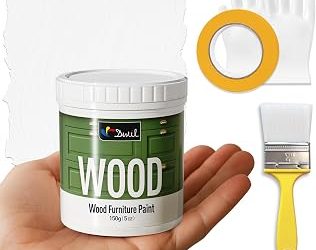
This is the jar I keep on the shelf for repairs rather than full projects: chipped drawer edges, a scratched top rail, or a single knob plate. The water-based matte lays flat with almost no brush signature, so a spot repair blends instead of announcing itself.
Rust-Oleum Chalked All-in-One Ultra Matte Spray, Linen White
Spray earns its place on turned legs, carved trim, and drawer profiles where a brush leaves pooling in the recesses. The one-coat claim holds up over previously finished wood if you keep the can moving in overlapping passes, and the fast set means you can rotate a piece within the same afternoon.
DWIL Matte Wood Paint, 32 Oz with Tools, Ivory White
My default for a complete dresser refinish. The 32-ounce volume covers a full six-drawer piece in two coats with margin to spare, and the included applicators mean nothing stalls the job mid-coat. Ivory white reads warmer than a stark white, which sits better against natural flooring.
DWIL Acrylic Semi-Gloss Wood Paint, Grey Blue
The one I specify for dressers in humid or high-traffic spots. Acrylic semi-gloss forms a tighter, more wipeable film than chalk-style mattes, so damp rings and dust wipe away rather than soak in. The grey blue is muted enough to work as a considered neutral.
Furniture Paint for Wood & Cabinets, 17.6 Oz White Matte
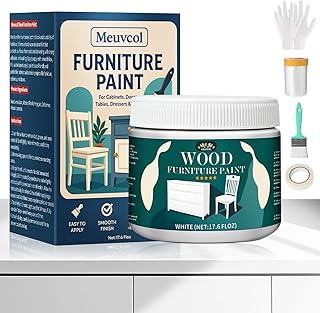
A sensible middle volume for a compact three-drawer dresser or nightstand pair. The no-sanding formula grips previously painted surfaces reliably, and the low odor makes it workable in a bedroom with a window cracked.
Frequently Asked Questions
Do I really need a primer?
Not with these all-in-one formulas on raw, previously painted, or lightly sealed wood. Reach for a stain-blocking primer only when you are covering knotty pine, mahogany, or water stains, since tannins will bleed pink or amber through white paint otherwise.
How many coats should I plan on?
Two, always. One coat may look acceptable while wet and reveal thin spots as it dries. Keep both coats thin rather than compensating with one heavy pass, which is what causes drips and soft, slow-curing film.
Should I seal the paint with a topcoat?
For matte finishes on the dresser top and drawer fronts, yes. A clear water-based sealer adds abrasion resistance where hands and objects land. Semi-gloss acrylics are durable enough on their own for most bedroom use.
Can I use these on laminate or veneer?
Veneer takes paint well as long as it is intact and not lifting. Laminate needs a scuff sand and a bonding primer first. A chalk paint set with a dedicated brush, like the 25.36 oz pure white kits sold with their own applicator, is a forgiving choice on tricky surfaces.
Final Thoughts
For a full dresser refinish, the DWIL 32 Oz Matte in Ivory White gives you the volume and the tools to finish the job in one sitting. If the piece lives somewhere humid or sees heavy daily use, the DWIL Acrylic Semi-Gloss in Grey Blue is the more durable specification. Keep a can of Rust-Oleum Chalked spray alongside either one for the carved and turned details a brush cannot reach cleanly.