Key takeaways
- Tooth count: Roughly 60 teeth handles general crosscutting and deck framing; 80 teeth is the sweet spot for furniture-grade cuts in cedar, oak, and teak; 100 to 120 teeth is for veneered plywood, thin trim, and any face that will be finished clear rather than painted.
- Kerf and saw power: Thin-kerf blades near 3/32″ reduce load on 15-amp saws and waste less stock, which matters when you’re cutting expensive hardwood. Full kerf around 1/8″ resists deflection better on long bevels through thick material.
- Hook angle: Look for a neutral or slightly negative hook on a miter saw. Positive-hook blades pull the workpiece into the fence and can climb, especially on sliding saws with a wide capacity.
- Grind geometry: An alternate top bevel scores wood fibers cleanly on both sides of the cut. A triple-chip grind is the right call for aluminum extrusion, composite decking, and PVC trim, where ATB teeth chip and gum up.
- Plate quality: Laser-cut expansion slots, a hardened tensioned plate, and thick carbide tips separate a blade you can resharpen three times from one you replace every season. Anti-friction coatings help on resinous softwoods.
What's inside
Anyone who has built a cedar bench for the patio or wrapped a pergola in trim knows the frustration: the cuts look fine until the pieces meet. Corners show hairline gaps, end grain comes off the saw fuzzy and torn, and paint sinks into the splinters instead of covering them. Nine times out of ten the saw isn’t the problem. The blade that shipped in the box is a general-purpose combination blade with 24 to 40 teeth, ground to move quickly through framing lumber, not to leave a glue-ready face on a sofa table leg or a mitered planter box.
Outdoor furniture punishes sloppy joinery harder than anything you build indoors. Cedar, redwood, thermally modified ash, and pressure-treated pine all move with humidity, so a joint that starts out tight has a fighting chance and one that starts out loose opens up by August. This guide covers ten 10-inch miter saw blades worth putting on a sliding or fixed compound saw in 2026, with notes on tooth counts, kerf, hook angle, and which blades earn their keep on softwoods, hardwoods, sheet goods, and aluminum stock for railing and screen frames.
As an Amazon Associate we earn from qualifying purchases.



How to Choose a 10 Miter Saw Blade (2026)
- Tooth count: Roughly 60 teeth handles general crosscutting and deck framing; 80 teeth is the sweet spot for furniture-grade cuts in cedar, oak, and teak; 100 to 120 teeth is for veneered plywood, thin trim, and any face that will be finished clear rather than painted.
- Kerf and saw power: Thin-kerf blades near 3/32″ reduce load on 15-amp saws and waste less stock, which matters when you’re cutting expensive hardwood. Full kerf around 1/8″ resists deflection better on long bevels through thick material.
- Hook angle: Look for a neutral or slightly negative hook on a miter saw. Positive-hook blades pull the workpiece into the fence and can climb, especially on sliding saws with a wide capacity.
- Grind geometry: An alternate top bevel scores wood fibers cleanly on both sides of the cut. A triple-chip grind is the right call for aluminum extrusion, composite decking, and PVC trim, where ATB teeth chip and gum up.
- Plate quality: Laser-cut expansion slots, a hardened tensioned plate, and thick carbide tips separate a blade you can resharpen three times from one you replace every season. Anti-friction coatings help on resinous softwoods.
The Best 10 Miter Saw Blade (2026)s Reviewed
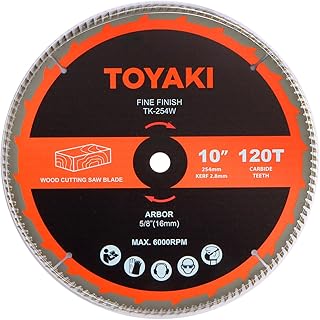
120-Tooth Fine-Finish Woodworking Blade, 5/8″ Arbor
With 120 teeth on a 10-inch plate, this blade leaves an almost burnished surface on hardwood ends, which is exactly what you want on exposed chair legs and mitered frame corners. Feed it slowly and keep it out of thick stock, since that many teeth clear chips poorly on deep cuts.
WEN BL1080 10-Inch 80-Tooth Carbide-Tipped
A sensible value pick that covers most outdoor furniture work, from cedar aprons to poplar trim, with carbide tips that survive occasional contact with painted salvage lumber. It won’t match premium industrial blades for runout, but the finish is clean enough to skip a step at the sander.
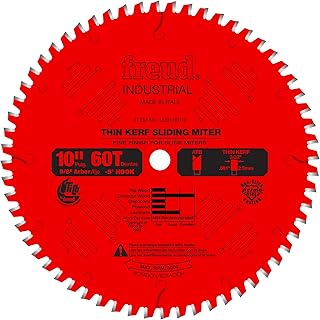
Freud LU91R010 Thin Kerf Sliding Compound Blade
Purpose-built for sliding saws, with a negative hook that keeps the blade from grabbing at the end of a stroke and a thin kerf that lets a mid-range motor hold speed through 4x cedar. If you own one blade for a slider, this is a defensible choice.
US1080-MTR 80-Tooth USA Made, 1/8″ Kerf
The full 1/8″ kerf and tooth geometry tuned for crosscuts and miters mean minimal deflection on compound bevels, which shows up as tighter picture-frame corners on planter boxes. Heavier cutting effort is the tradeoff on smaller saws.
TCG Aluminum-Working 120-Tooth Ultra-Fine Blade
The triple-chip grind is the reason to buy this one: it slices aluminum railing, screen frame stock, and composite decking without the chipping and grabbing an ATB blade produces. Use cutting wax and clamp your work, and it doubles as a respectable melamine blade.
Frequently Asked Questions
Will a higher tooth count always give a cleaner cut?
Only up to a point. Above about 80 teeth on a 10-inch blade, gullets get small and chips have nowhere to go, so thick stock burns rather than cuts. Match tooth count to material thickness.
Can I use a table saw blade on my miter saw?
Sometimes, but check the hook angle. Table saw blades often have a positive hook that causes self-feeding on a chop or slide cut, which is unsafe and leaves torn end grain.
How do I cut pressure-treated lumber without ruining a blade?
Let the stock dry a few weeks if possible, clean resin buildup with blade cleaner after each session, and reserve your fine-finish blade for dry hardwood. A coated 60-tooth blade is the better workhorse here.
Is resharpening worth it?
On blades with thick carbide and a quality plate, yes. Expect two or three sharpenings at a fraction of replacement cost. Thin-tipped budget blades rarely justify the trip.
Final Thoughts
For most outdoor furniture builds, the Freud LU91R010 is the blade to reach for first, especially on a sliding saw where its negative hook and thin kerf pay off immediately. Pair it with the WEN BL1080 as an affordable 80-tooth backup for painted and reclaimed stock, and keep the TCG aluminum-working blade on the shelf for railing, screen frames, and composite decking where wood-cutting geometry falls apart.