Key takeaways
- Tooth count: Fewer teeth clear more waste and cut faster; more teeth leave a cleaner face. For outdoor work, 40T handles rough cedar and framing stock, 60T suits plywood and painted trim, and 80T or higher earns its keep on teak, ipe, and anything getting a clear finish.
- Grind and hook angle: An alternate top bevel (ATB) grind slices wood fibers cleanly and is the default for miters. Look for a low or slightly negative hook angle on a miter saw, since aggressive positive hook wants to climb into the workpiece as the head drops.
- Kerf thickness: Thin-kerf plates remove less material, which reduces strain on smaller 15-amp saws and preserves precious hardwood. Full-kerf blades are stiffer and track straighter through thick, damp pressure-treated timbers.
- Arbor and plate quality: Confirm the 5/8-inch (16mm) arbor matches your saw, and favor blades with expansion slots, laser-cut bodies, and anti-vibration features. A flat, tensioned plate matters more than tooth count for burn-free cuts.
- Material match: Aluminum patio frames, gutter stock, and railing trim require a dedicated non-ferrous blade with a triple-chip grind and negative hook. Running a wood blade on metal is both dangerous and expensive.
What's inside
Anyone who has built a cedar planter box or a run of pergola rafters knows the moment: the miter looks tight on the saw, then you dry-fit the corner outdoors and daylight shows through the joint. Nine times out of ten the fence and the bevel scale are innocent. The blade is the culprit. Softwoods used in outdoor builds tear out along the grain, composite decking melts and gums the gullets, and pressure-treated stock is often still wet enough to bind a dull plate. The stock blade bundled with most 10-inch miter saws is a 24 to 40 tooth framing blade, engineered for speed on a job site, not for furniture-grade corners that have to survive a wet season.
This guide looks at 10-inch miter saw blades through the lens of outdoor furniture and structures, where joints move, finishes reveal every flaw, and a rough cut becomes a water trap. Below you will find current picks for fine finishing, plywood and sheet goods, general ripping, and non-ferrous metal, along with a plain-English rundown of tooth counts, kerf, hook angle, and arbor fit so you can match a blade to the material actually sitting on your saw stand.
As an Amazon Associate we earn from qualifying purchases.


How to Choose a 10 Inch Miter Saw Blade (2026)
- Tooth count: Fewer teeth clear more waste and cut faster; more teeth leave a cleaner face. For outdoor work, 40T handles rough cedar and framing stock, 60T suits plywood and painted trim, and 80T or higher earns its keep on teak, ipe, and anything getting a clear finish.
- Grind and hook angle: An alternate top bevel (ATB) grind slices wood fibers cleanly and is the default for miters. Look for a low or slightly negative hook angle on a miter saw, since aggressive positive hook wants to climb into the workpiece as the head drops.
- Kerf thickness: Thin-kerf plates remove less material, which reduces strain on smaller 15-amp saws and preserves precious hardwood. Full-kerf blades are stiffer and track straighter through thick, damp pressure-treated timbers.
- Arbor and plate quality: Confirm the 5/8-inch (16mm) arbor matches your saw, and favor blades with expansion slots, laser-cut bodies, and anti-vibration features. A flat, tensioned plate matters more than tooth count for burn-free cuts.
- Material match: Aluminum patio frames, gutter stock, and railing trim require a dedicated non-ferrous blade with a triple-chip grind and negative hook. Running a wood blade on metal is both dangerous and expensive.
The Best 10 Inch Miter Saw Blades (2026) Reviewed
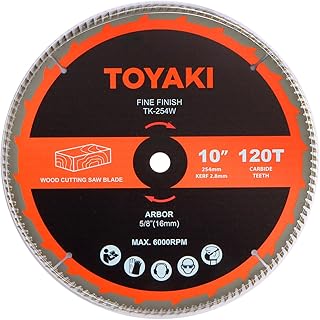
120-Tooth Fine-Finish Professional Blade
With 120 carbide teeth on a 5/8-inch arbor, this is the blade to fit when a mitered teak corner or an exposed bench end needs to come off the saw ready for oil. Feed slowly and let the tooth count do the work, since crowding a blade this fine will scorch light-colored hardwoods.
WEN BL1080 80-Tooth Carbide-Tipped
WEN’s 80-tooth plate is the practical middle ground for outdoor furniture: crisp enough for cabinetry-grade crosscuts, forgiving enough for cedar and redwood. It is a genuinely strong value for hobby shops that want one finishing blade rather than a rotating collection.
KENDO 40T + 60T Blade Set
Buying a 40T and a 60T ATB blade together covers most of a deck or pergola project in one purchase, with the coarser blade chewing through framing lumber and the finer one handling plywood, MDF, and laminate without chipping the veneer. Keep both on hand and swap by material instead of forcing one blade to do everything.
Benchmark Abrasives 100-Tooth TCT Non-Ferrous
Tungsten carbide teeth and a high count make this the right choice for cutting aluminum extrusion, railing components, and non-ferrous trim on patio builds. Clamp the stock firmly, use cutting wax, and wear a face shield, because aluminum throws hot chips.
WORKPRO 80T Thin-Kerf Ultra-Fine Finish
The thin kerf and ATB carbide teeth make this blade a friendly match for compact or older miter saws that bog down under a full-kerf plate. It leaves a smooth, paint-ready edge on plywood, trim, and cabinet-grade stock.
Frequently Asked Questions
How many teeth do I need for outdoor furniture?
For most patio and garden projects, 60 to 80 teeth is the sweet spot. Drop to 40T for bulk cutting of framing lumber and step up to 100T or more only when the cut face stays visible under a clear finish.
Can I cut composite decking with a standard wood blade?
Yes, but a high-tooth-count blade with a thin kerf performs best. Composite tends to melt and redeposit on the plate, so cut at a steady moderate feed and clean the blade with a resin remover afterward.
Will a 10-inch blade fit my 12-inch saw?
Do not do it. Undersized blades reduce cut capacity, alter the geometry the saw was designed around, and may not reach through the throat plate safely. Match the blade diameter to the manufacturer’s spec.
How often should a blade be sharpened?
Watch the cut, not the calendar. Burning, increased feed pressure, fuzzy edges, and a rising pitch in the motor all signal a dull carbide edge. Quality blades sharpen well several times before replacement.
Final Thoughts
For most outdoor-living builds, the WEN BL1080 80-tooth is the blade to reach for first, balancing finish quality with real-world durability in softwoods and sheet goods. Add the KENDO 40T and 60T set if you cut a lot of framing and plywood, and keep the Benchmark Abrasives 100-tooth TCT on the shelf for aluminum railing and frame work.