Key takeaways
- Tooth count: Blades with 80 to 100 teeth generally produce smoother crosscuts in trim, plywood, and furniture components, while lower tooth counts cut faster through thicker stock.
- Tooth geometry: Alternate-top-bevel (ATB) teeth are a dependable choice for clean wood crosscuts and help reduce splintering on finished boards.
- Arbor fit: Confirm that the blade’s arbor matches your miter saw, most commonly 1 inch on 12-inch models. Never rely on a loose or improvised fit.
- Kerf and plate: A thin-kerf blade can reduce waste and ease the load on some saws, while a heavier plate may feel steadier during demanding cuts.
- Material and finish: For outdoor projects, choose a blade suited to treated lumber or composite materials only when the manufacturer permits it; for furniture, prioritize polished, low-tear cuts.
What's inside
Choosing a 12-inch miter saw blade is less straightforward than it looks. Tooth count, carbide quality, kerf, arbor size, and the type of wood you cut all affect whether a blade leaves crisp edges or rough, splintered ones. A blade that excels on trim may be a poor choice for fast crosscuts through framing lumber.
This guide focuses on practical furniture-making and outdoor-living work, from building planters and benches to cutting cabinet parts and finished hardwood trim. We compare fine-finish blades, versatile combination sets, and budget-friendly options so you can match the blade to your saw, material, and preferred finish.
As an Amazon Associate we earn from qualifying purchases.


How to Choose a/an 12-Inch Miter Saw Blades (2026)
- Tooth count: Blades with 80 to 100 teeth generally produce smoother crosscuts in trim, plywood, and furniture components, while lower tooth counts cut faster through thicker stock.
- Tooth geometry: Alternate-top-bevel (ATB) teeth are a dependable choice for clean wood crosscuts and help reduce splintering on finished boards.
- Arbor fit: Confirm that the blade’s arbor matches your miter saw, most commonly 1 inch on 12-inch models. Never rely on a loose or improvised fit.
- Kerf and plate: A thin-kerf blade can reduce waste and ease the load on some saws, while a heavier plate may feel steadier during demanding cuts.
- Material and finish: For outdoor projects, choose a blade suited to treated lumber or composite materials only when the manufacturer permits it; for furniture, prioritize polished, low-tear cuts.
The Best 12-Inch Miter Saw Blades (2026)s Reviewed
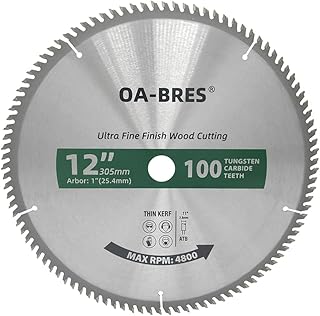
12-Inch 100-Tooth ATB TCT Blade
This ultra-fine-finish blade is aimed at detail work where clean edges matter more than speed. Its 100-tooth ATB design makes it a sensible option for trim, plywood, hardwood components, and carefully fitted furniture joints.
DEWALT DWA112100 100-Tooth Fine Finish Blade
DEWALT’s DWA112100 is built for smooth, controlled crosscuts and is a strong match for repeated finish work on a jobsite or in a home workshop. The high tooth count and carbide construction should appeal to makers cutting painted trim, hardwood edging, and visible project parts.
Diablo D1280X 80-Tooth Fine Finish Blade
The Diablo D1280X takes a slightly faster approach than a 100-tooth blade while retaining a fine-finish focus. Its high-density carbide and 80-tooth layout make it a well-rounded choice for furniture stock, shelving, molding, and general indoor or outdoor woodworking.
DEWALT DWA112CMB 40- and 60-Tooth Combo Pack
This two-blade set offers more flexibility than a single ultra-fine blade. Use the 40-tooth blade when you want faster general-purpose cuts and the 60-tooth blade for cleaner trim and crosscuts, making the pack useful for projects that range from rough construction to finished assembly.
FOXBC 12-Inch 100-Tooth Polished Finish Blade
The FOXBC 100-tooth blade is designed for polished-looking cuts in wood and can be attractive for budget-conscious furniture builders. It is best suited to finish-oriented crosscutting rather than fast, heavy stock removal, so pair it with a sharp, properly aligned saw for the cleanest results.
Frequently Asked Questions
Is a 100-tooth blade best for every project?
No. A 100-tooth blade can leave an exceptionally clean crosscut, but it usually removes material more slowly. For construction lumber, thick boards, or faster work, a 40- or 60-tooth blade may be more practical.
Can these blades cut treated lumber?
Check the individual manufacturer’s specifications before cutting treated or composite material. Outdoor lumber can contain chemicals, moisture, and abrasive particles that may affect blade life and may require a blade specifically approved for that application.
How do I reduce splintering on finished boards?
Use a sharp fine-finish blade, support the work securely, and keep the saw’s cutting action steady. Painter’s tape across the cut line and a sacrificial backing board can also help, especially with plywood and veneer.
When should I replace a miter saw blade?
Replace or professionally sharpen it when cuts become rough, burning appears, the saw requires noticeably more pressure, or the blade no longer tracks cleanly. Damaged, missing, or overheated carbide teeth are reasons to stop using the blade.
Final Thoughts
For the cleanest furniture cuts, the DEWALT DWA112100 and the 12-inch 100-tooth ATB blade are compelling finish-focused choices. The Diablo D1280X offers a useful balance of smoothness and cutting speed, while the DEWALT DWA112CMB is the better fit for workshops that need one set for both general cuts and finer outdoor-living projects.