Key takeaways
- Resin type: Water-based stays crystal clear and is the safer choice over white paint, maple, ash, or bleached tops. Oil-based adds a warm amber cast and cures slightly tougher, which suits walnut, cherry, and traditional stained oak.
- Sheen: Satin scatters light and quietly hides fine scratches and dust nibs, making it the workhorse for family tables. Gloss looks deeper and wipes cleaner, but it advertises every swirl mark.
- Film build: Standard polyurethanes go on thin, which means three to four coats on a tabletop. Self-leveling thick-bodied formulas reach the same protection in one or two, at the cost of being fussier around drips and vertical edges.
- Dry and recoat window: Your dining room is out of commission until the finish cures. Fast-dry water-based products allow multiple coats in a single day; oil-based generally wants overnight between passes and a week before heavy use.
- Test before committing: Small sizes exist for a reason. A half pint or a 100ml bottle is enough to coat an offcut and confirm the color and sheen on your actual wood before you open a quart.
What's inside
Anyone who spends their working life finishing outdoor furniture develops a particular respect for the dining room table. A cedar patio table takes weather; a dining table takes life. Condensation rings from iced glasses, a casserole dish set down a beat too early, homework, hot-glue crafts, a spray bottle of all-purpose cleaner wielded with real enthusiasm. The wood itself is rarely the problem. The film sitting on top of it is, and the wrong film either ambers over a pale oak top, scratches white under a plate slid across it, or peels at the edge where a damp cloth lingered.
This guide sorts the clear coats that genuinely hold up on a horizontal, high-contact surface from the ones better left for picture frames and bookshelves. Below you’ll find how water-based and oil-based formulas differ in color shift and toughness, which sheen forgives the most abuse, how many coats a tabletop actually needs, and honest notes on five finishes worth putting on a real table in 2026.
As an Amazon Associate we earn from qualifying purchases.


How to Choose a Polyurethane For Dining Room Table (2026)
- Resin type: Water-based stays crystal clear and is the safer choice over white paint, maple, ash, or bleached tops. Oil-based adds a warm amber cast and cures slightly tougher, which suits walnut, cherry, and traditional stained oak.
- Sheen: Satin scatters light and quietly hides fine scratches and dust nibs, making it the workhorse for family tables. Gloss looks deeper and wipes cleaner, but it advertises every swirl mark.
- Film build: Standard polyurethanes go on thin, which means three to four coats on a tabletop. Self-leveling thick-bodied formulas reach the same protection in one or two, at the cost of being fussier around drips and vertical edges.
- Dry and recoat window: Your dining room is out of commission until the finish cures. Fast-dry water-based products allow multiple coats in a single day; oil-based generally wants overnight between passes and a week before heavy use.
- Test before committing: Small sizes exist for a reason. A half pint or a 100ml bottle is enough to coat an offcut and confirm the color and sheen on your actual wood before you open a quart.
The Best Polyurethane For Dining Room Table (2026)s Reviewed
Minwax Polycrylic Protective Finish, Satin, Quart
This is the default answer for light-toned and painted tabletops because it dries genuinely clear with almost no amber shift, and the satin sheen is forgiving of a less-than-perfect brush technique. Keep coats thin, sand lightly with 320 grit between them, and plan on four passes for a surface that eats meals daily.
Minwax Fast Drying Polyurethane, Warm Satin
An oil-based classic that lays down a durable, slightly amber film with real depth on walnut, oak, and cherry. It’s more heat and moisture tolerant than most water-based options once fully cured, so it earns its place on a table that regularly sees serving dishes, provided you can ventilate the room and wait out the longer recoat times.
Varathane Triple Thick Polyurethane Gloss
Built for people who want the job finished this weekend, it flows out to roughly three normal coats in a single application and self-levels into a deep, glass-like gloss. Work on a dead-level tabletop, load the applicator generously but watch the perimeter for sagging, and don’t try to brush it out once it starts to set.
Varathane Water-Based Ultimate Gloss Polyurethane, Half Pint
Fast-drying, crystal clear, and notably scratch resistant for a water-based finish, this is the size to buy when you’re testing sheen on a sample board or refreshing a small breakfast table. The half pint covers around 62 square feet, which is more than enough for a trial run and touch-up work.
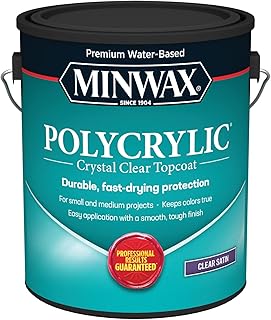
Minwax Clear Polycrylic, Satin, 1 Gallon
Same trusted low-odor formula as the quart, priced for volume, which makes sense if you’re finishing a farmhouse table plus a bench and chairs in one session. Buy the gallon only if you’ll use it within a season or two, since water-based finishes don’t love long storage after opening.
Frequently Asked Questions
How many coats does a dining table need?
Three to four thin coats for standard polyurethane or Polycrylic, or one to two for a triple-thick formula. Tabletops take far more abrasion than table legs, so add an extra coat to the top surface only.
Will water-based polyurethane turn yellow?
Modern water-based finishes stay essentially clear and are the right call over white or pastel paint and pale hardwoods. Oil-based finishes will always warm and continue to amber slowly over the years.
Is polyurethane safe for a surface where we eat?
Yes, once fully cured. Solvent odor disappears well before the film reaches full hardness, so allow several days to a week before regular meals and avoid placing hot dishes directly on it.
Can I apply it straight over stain?
Let the stain dry fully according to its label, then topcoat. If you’re layering water-based finish over an oil-based stain, give it extra drying time and confirm adhesion on a test piece first.
Final Thoughts
For most family tables, Minwax Polycrylic in satin is the safest, clearest, lowest-drama choice, while Minwax Fast Drying Polyurethane in Warm Satin brings richer color and slightly better heat tolerance to darker woods. If your priority is finishing the project in one afternoon with a deep gloss, Varathane Triple Thick delivers, as long as you keep the tabletop level and resist the urge to rebrush.