Key takeaways
- Tooth count: For trim, more is better. Aim for 80 teeth minimum on a 10-inch blade and 90 or more on a 12-inch. Higher counts take smaller bites, which is exactly what prevents tear-out on the exit side of a molding profile.
- Grind geometry: ATB (alternate top bevel) is the standard for clean crosscuts in wood, and the bevel acts like a knife edge that severs fibers rather than shoving them. TCG (triple chip grind) is what you want for aluminum, PVC, and rigid composites, where an ATB tooth tends to grab.
- Arbor size: Most 10-inch miter saws use a 5/8-inch arbor; most 12-inch saws use 1 inch. Confirm before you buy, and skip blades that rely on a reducer bushing for a critical finish cut, since any slop translates directly to a wandering kerf.
- Plate quality and kerf: A tensioned, laser-cut plate with expansion slots stays flat when it heats up. A thin kerf reduces load on smaller saws, but a full kerf on a stout 12-inch tracks straighter through a tall crown cut.
- Carbide grade: Micrograin carbide holds a fine edge far longer than generic tips, and that matters most on exterior work where you’re cutting through primer, paint film, and the occasional grit-laden board.
What's inside
Trim is where a project either reads as finished carpentry or reads as guesswork. Whether you’re wrapping a pergola post, capping a deck rail with clean mitered returns, or scribing shoe molding against a floor that refuses to be level, the joint tells the story. And nine times out of ten, the culprit behind a fuzzy, splintered, gap-prone miter isn’t the saw or the operator. It’s a blade with too few teeth, too much runout, or a grind that was never intended for delicate stock in the first place. A 24-tooth framing blade will rip through a 2×8 all day and then tear the face right off a piece of 1×4 primed pine.
This guide is built around the blades that actually earn their keep on trim work, indoors and out. I’ve spent a lot of seasons cutting cedar, PVC, composite, and painted softwood in humid air and cold garages, and the blades below reflect what holds an edge, what leaves a face you can paint without sanding, and what’s worth the money at each size. You’ll find both 10-inch and 12-inch options, plus a specialty grind for aluminum and plastics if your outdoor projects wander into trim caps and screen frames.
As an Amazon Associate we earn from qualifying purchases.



How to Choose a Miter Saw Blade For Trim (2026)
- Tooth count: For trim, more is better. Aim for 80 teeth minimum on a 10-inch blade and 90 or more on a 12-inch. Higher counts take smaller bites, which is exactly what prevents tear-out on the exit side of a molding profile.
- Grind geometry: ATB (alternate top bevel) is the standard for clean crosscuts in wood, and the bevel acts like a knife edge that severs fibers rather than shoving them. TCG (triple chip grind) is what you want for aluminum, PVC, and rigid composites, where an ATB tooth tends to grab.
- Arbor size: Most 10-inch miter saws use a 5/8-inch arbor; most 12-inch saws use 1 inch. Confirm before you buy, and skip blades that rely on a reducer bushing for a critical finish cut, since any slop translates directly to a wandering kerf.
- Plate quality and kerf: A tensioned, laser-cut plate with expansion slots stays flat when it heats up. A thin kerf reduces load on smaller saws, but a full kerf on a stout 12-inch tracks straighter through a tall crown cut.
- Carbide grade: Micrograin carbide holds a fine edge far longer than generic tips, and that matters most on exterior work where you’re cutting through primer, paint film, and the occasional grit-laden board.
The Best Miter Saw Blade For Trim (2026)s Reviewed
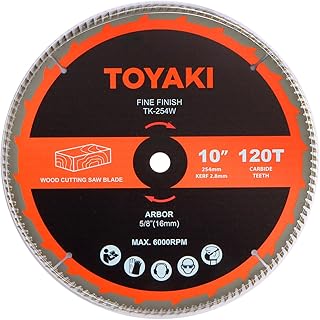
10-Inch 120-Tooth Fine-Finish Woodworking Blade
With 120 teeth on a 10-inch plate, this blade leaves a face so smooth it barely needs a pass with a sanding sponge, which makes it my pick for pre-primed trim and hardwood casing. Feed it slowly and let it work; rushing a blade this fine builds heat fast.
WEN BL1080 10-Inch 80-Tooth Carbide-Tipped
The BL1080 hits the sweet spot for everyday trim carpentry: 80 carbide teeth, a stable plate, and a price that doesn’t make you flinch when you nick a hidden brad. It’s the blade I keep mounted for deck rail caps, shoe molding, and general punch-list work.
10-Inch TCG 120-Tooth Aluminum-Working Blade
The triple chip grind is the whole point here, and it’s what lets this blade slice aluminum extrusion, PVC trim, and cellular composites without the chatter and grabbing you get from an ATB blade. If your outdoor-living projects involve screen frames, corner caps, or vinyl brickmold, this belongs in the rotation.
DEWALT DWA112100 12-Inch 100-Tooth Fine Finish
DEWALT’s tungsten carbide holds its edge longer than almost anything at this price, and the 100-tooth count on a 12-inch plate gives you the reach for tall baseboard and nested crown in one pass. It’s the most dependable all-around premium choice on this list.
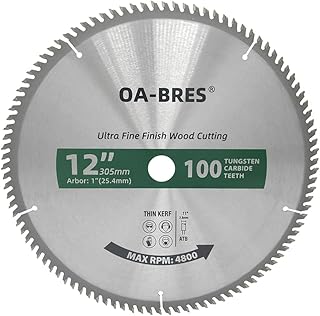
12-Inch 100-Tooth ATB TCT Ultra Fine Finish
A strong value play if you run a 12-inch saw and want fine-finish results without premium spend, with a 1-inch arbor and an ATB grind tuned for crosscutting solid wood. Expect very good cuts in softwood and MDF, and plan to replace it sooner than a top-tier blade under heavy use.
Frequently Asked Questions
How many teeth do I really need for trim?
Eighty teeth on a 10-inch blade handles the vast majority of trim cleanly. Move to 100 or 120 when you’re cutting exposed hardwood, veneered stock, or anything getting a clear finish where every fiber shows.
Can I cut PVC and composite trim with a standard wood blade?
You can, but a high-tooth ATB blade tends to melt and gum in PVC as heat builds. A TCG grind clears chips better and gives a cleaner edge in plastics, aluminum, and cellular composites.
Why do my miters still show a gap?
Usually the blade isn’t the issue. Check that your saw’s bevel and miter detents are calibrated, verify the fence is square, and confirm the blade plate is flat and free of pitch buildup before blaming the cut.
How often should a trim blade be sharpened?
Watch the cut, not the calendar. When you see burn marks, fuzzing on the exit edge, or you find yourself pushing harder, it’s time for a sharpening or a swap. Fine-tooth blades often make more sense to replace than resharpen.
Final Thoughts
For most people the WEN BL1080 is the smart first buy: honest quality, plenty of teeth for trim, and low enough cost to keep a spare on the shelf. Step up to the DEWALT DWA112100 if you run a 12-inch saw and want a blade that stays sharp through big installs, and add the 10-inch TCG 120-tooth if your outdoor projects regularly involve PVC, aluminum, or composite trim.