Key takeaways
- Footprint before finish: Measure your wall run and subtract clearance for door swing — roughly 14 to 16 inches of forward space per door. A 55″ sideboard needs breathing room on both sides to read as intentional rather than wedged. Tall 72″ pantry towers need far less floor but demand you check ceiling slope and crown molding first.
- Shelf adjustability and real capacity: Adjustable shelving is the difference between a cabinet that stores what you own and one that dictates it. Look for multiple peg positions so you can fit stemware in one bay and stacked serving bowls in another. Interior depth around 15 inches handles most dinnerware; anything shallower is better suited to linens and décor.
- Panel construction and finish durability: Reeded fronts in this price tier are typically MDF or particleboard with a laminate or veneer wrap. That’s fine for indoor and covered-porch use, but avoid direct sun exposure and standing moisture, which lift laminate edges over time. Sealed edges and a matte finish hide wear far better than high gloss.
- Load rating for media use: If the cabinet is doubling as a TV console, confirm the top surface rating and center-support design. Low, wide sideboards handle screen weight comfortably; tall narrow towers should never carry a television. Plan for cable routing too, since most reeded cabinets ship without factory cord cutouts.
- Assembly reality and hardware quality: Nearly every cabinet here arrives flat-packed with a two-to-three hour build. Cam-lock joinery goes together fast but tolerates disassembly poorly, so choose your final placement before you start. Soft-close or magnetic catch hinges are worth prioritizing — cheap friction hinges sag within a year of daily use.
What's inside
Reeded fronts have quietly taken over the storage category, and for good reason: those vertical ribs catch light the way a slatted pergola catches late-afternoon sun, giving a flat cabinet door actual depth. The trouble is that most shoppers hunting for a 4-door reeded cabinet end up comparing apples to oranges. A 55″ low sideboard and a 72″ arched pantry tower serve completely different rooms, yet they surface side by side in the same search results. Add in the reality that engineered-wood construction varies wildly between brands, and it’s easy to order something that arrives too tall for your wall, too shallow for your platters, or too flimsy for a 55″ TV.
I spend most of my working life planning transitional spaces — sunrooms, covered porches, three-season rooms — where furniture has to look built-in while surviving humidity swings and heavy daily use. That lens is useful here, because reeded cabinets get placed in exactly those high-traffic, high-visibility spots. Below I’ve broken down what actually matters when choosing one: footprint math, shelf adjustability, panel material, and where each configuration earns its keep. The picks cover both Best Choice Products reeded formats plus two strong alternatives in rattan and wave-panel styling.
As an Amazon Associate we earn from qualifying purchases.



How to Choose a/an Choice Products 4-Door Reeded Storage Cabinet (2026)
- Footprint before finish: Measure your wall run and subtract clearance for door swing — roughly 14 to 16 inches of forward space per door. A 55″ sideboard needs breathing room on both sides to read as intentional rather than wedged. Tall 72″ pantry towers need far less floor but demand you check ceiling slope and crown molding first.
- Shelf adjustability and real capacity: Adjustable shelving is the difference between a cabinet that stores what you own and one that dictates it. Look for multiple peg positions so you can fit stemware in one bay and stacked serving bowls in another. Interior depth around 15 inches handles most dinnerware; anything shallower is better suited to linens and décor.
- Panel construction and finish durability: Reeded fronts in this price tier are typically MDF or particleboard with a laminate or veneer wrap. That’s fine for indoor and covered-porch use, but avoid direct sun exposure and standing moisture, which lift laminate edges over time. Sealed edges and a matte finish hide wear far better than high gloss.
- Load rating for media use: If the cabinet is doubling as a TV console, confirm the top surface rating and center-support design. Low, wide sideboards handle screen weight comfortably; tall narrow towers should never carry a television. Plan for cable routing too, since most reeded cabinets ship without factory cord cutouts.
- Assembly reality and hardware quality: Nearly every cabinet here arrives flat-packed with a two-to-three hour build. Cam-lock joinery goes together fast but tolerates disassembly poorly, so choose your final placement before you start. Soft-close or magnetic catch hinges are worth prioritizing — cheap friction hinges sag within a year of daily use.
The Best Choice Products 4-Door Reeded Storage Cabinet (2026)s Reviewed
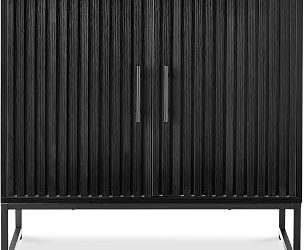
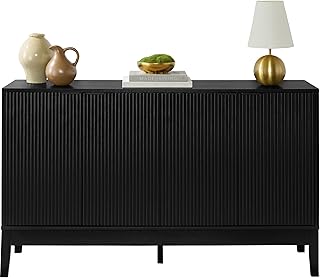
Best Choice Products 55″ 4-Door Reeded Sideboard – Black
This is the most versatile piece in the lineup: low enough for a media console, long enough to anchor a dining wall, and the black finish makes the reeding read as texture rather than pattern. Adjustable shelves behind all four doors give you genuine flexibility, and the horizontal proportions suit rooms where a tall cabinet would feel top-heavy.
Best Choice Products 55″ 4-Door Reeded Sideboard – Natural
Identical bones to the black version, but the light natural tone throws far more warmth into a space and pairs beautifully with rattan, jute, and outdoor-adjacent materials. It’s my pick for sunrooms and open dining areas where you want the cabinet to recede rather than command attention.
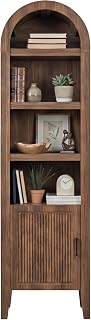
Best Choice Products 72″ Tall Arched Pantry Cabinet, 5-Tier – Walnut
The five-tier configuration delivers the most storage volume of any option here while occupying minimal floor space, which makes it excellent for tight dining rooms and awkward corners. The arched top adds architectural interest that a plain rectangular tower simply can’t match.
Best Choice Products 72″ Tall Narrow Arched Pantry Cabinet, 4-Tier – Walnut
Same height and arched silhouette in a narrower body, so it slips into slim wall segments beside doorways or between windows. Four tiers with adjustable spacing handle pantry goods, books, and display pieces without the visual bulk of the wider model.
Iwell Tall Rattan Cabinet with Drawer
A worthwhile step outside the reeded category — the woven rattan doors bring genuine texture and airflow, which helps if you’re storing linens or anything that benefits from ventilation. The added large drawer solves the small-items problem that pure shelf cabinets never quite address.
Frequently Asked Questions
Can a reeded cabinet hold a television?
The 55″ sideboard models are designed for it and comfortably support most screens up to roughly 55 to 60 inches, provided the TV base sits within the cabinet’s footprint. The 72″ arched towers are not intended for TV placement and shouldn’t be used that way.
Are these cabinets suitable for a covered porch or sunroom?
Sunrooms and fully covered porches are generally fine if the space stays dry and out of direct sun. Laminate and MDF construction doesn’t tolerate rain exposure or sustained high humidity, so open-air patios are a bad fit regardless of how good the cabinet looks there.
How difficult is assembly?
Expect two to three hours with a Phillips driver and a soft surface to work on. Two people make the tall pantry models considerably easier, mainly for standing the finished carcass upright without racking the joints.
What’s the difference between reeded and fluted panels?
The terms get used interchangeably in furniture listings, but technically reeding is convex ribbing that projects outward while fluting is concave grooving cut inward. Both create the same vertical rhythm; reeded fronts tend to catch light more dramatically.
Final Thoughts
For most rooms, the Best Choice Products 55″ Reeded Sideboard in Natural is the smartest buy — it’s flexible enough to work as a buffet, media console, or entryway anchor, and the light finish plays well with almost any palette. If vertical storage is the priority, the 72″ 5-Tier Arched Pantry Cabinet in Walnut delivers the most capacity per square foot with real architectural presence, while the Iwell Rattan Cabinet is the one to choose when you want texture and a drawer in the same package.