Key takeaways
- Detent quality and repeatability: Positive stops at 15, 22.5, 31.6, 45, and 60 degrees matter less than whether the saw returns to the same spot every time. A stamped detent plate with a tight-fitting cam lock will hold a joint tighter than a wide range of loose stops. Look for a detent override so you can nudge past a stop for slightly out-of-square walls or racked frames.
- Fence height and squareness: Tall sliding fences support crown, wide baseboard, and vertically nested cedar stock so the workpiece can’t lean during the cut. Check that both fence halves sit in the same plane and can be shimmed; a fence out by a hair doubles into a visible gap at the miter.
- Single bevel vs. double bevel: Single bevel is fine for straight miters and occasional compound cuts if you don’t mind flipping the workpiece. Double bevel saves flips on crown molding and angled planter sides, and every flip you avoid is one less chance to introduce error.
- Cut capacity for your material: A 10-inch saw handles most trim and 2x stock. Step up to a 12-inch slider if you cut wide cedar boards, 1×12 shelving, or composite decking, since a saw working at the edge of its capacity forces multi-pass cuts that rarely line up perfectly.
- Cut-line guidance and dust control: Shadow-line LED systems project the actual blade position and never need recalibration, while lasers need periodic adjustment but cost less. Pair either with a shop vacuum port, because sawdust piled against the fence is a common and completely avoidable source of drift.
What's inside
Miter joints are unforgiving. A cut that lands half a degree off looks fine on the bench and then opens into a visible gap once four pieces meet at the corners of a picture frame, a planter box, or a run of pergola trim. Most of the frustration people blame on their technique actually traces back to the saw: a detent plate that drifts, a fence that isn’t square to the table, or a blade that deflects under load. If you build outdoor furniture, cedar screens, or deck skirting, the tolerances get tighter still, because seasonal movement will widen any gap you started with.
This guide looks at miter saws through the lens of joinery accuracy rather than raw cutting power. We cover what actually drives clean 45-degree corners, then walk through six saws that span the range from a compact single-bevel for trim work to a full double-bevel slider capable of crosscutting wide cedar and composite decking in one pass. Each pick is judged on fence quality, detent repeatability, blade stability, and how well it holds calibration after being moved around a shop or job site.
As an Amazon Associate we earn from qualifying purchases.


How to Choose a/an The Best Designed Saw For Cutting Miter Joints Is A (2026)
- Detent quality and repeatability: Positive stops at 15, 22.5, 31.6, 45, and 60 degrees matter less than whether the saw returns to the same spot every time. A stamped detent plate with a tight-fitting cam lock will hold a joint tighter than a wide range of loose stops. Look for a detent override so you can nudge past a stop for slightly out-of-square walls or racked frames.
- Fence height and squareness: Tall sliding fences support crown, wide baseboard, and vertically nested cedar stock so the workpiece can’t lean during the cut. Check that both fence halves sit in the same plane and can be shimmed; a fence out by a hair doubles into a visible gap at the miter.
- Single bevel vs. double bevel: Single bevel is fine for straight miters and occasional compound cuts if you don’t mind flipping the workpiece. Double bevel saves flips on crown molding and angled planter sides, and every flip you avoid is one less chance to introduce error.
- Cut capacity for your material: A 10-inch saw handles most trim and 2x stock. Step up to a 12-inch slider if you cut wide cedar boards, 1×12 shelving, or composite decking, since a saw working at the edge of its capacity forces multi-pass cuts that rarely line up perfectly.
- Cut-line guidance and dust control: Shadow-line LED systems project the actual blade position and never need recalibration, while lasers need periodic adjustment but cost less. Pair either with a shop vacuum port, because sawdust piled against the fence is a common and completely avoidable source of drift.
The Best The Best Designed Saw For Cutting Miter Joints Is A (2026)s Reviewed
DEWALT DWS780 12-Inch Double Bevel Sliding Compound Miter Saw
The XPS shadow-line system is the standout here: it casts the blade’s own shadow onto the workpiece, so your cut line stays accurate without the calibration ritual a laser demands. Combined with a stiff double-bevel head, tall fences, and a well-machined detent plate, this is the saw to buy if repeatable tight miters are the whole point.
DEWALT DWS779 12-Inch Double Bevel Sliding Compound Miter Saw
Mechanically close to the DWS780 with the same 15-amp, 3800 RPM motor and generous crosscut capacity, but it trades the shadow light for a lower price. If you already work off pencil lines and a stop block, the savings are real and the joint quality is essentially identical.
DEWALT DWS715 12-Inch Single Bevel Compound Miter Saw
A non-sliding 12-inch chop saw with a stout fence and reliable detents, well suited to picture frames, deck trim, and Adirondack chair parts where crosscut width stays modest. Cabinet-style construction keeps it stable on a stand, which matters more for accuracy than most spec sheets suggest.
DEWALT DWS713 10-Inch Single Bevel Compound Miter Saw
The most portable pick in the DEWALT lineup and a sensible choice for anyone building planter boxes, trellises, or screen frames from 1x and 2x stock. Blade deflection is minimal at this diameter, which is quietly an advantage for thin miters in softwoods like cedar and redwood.
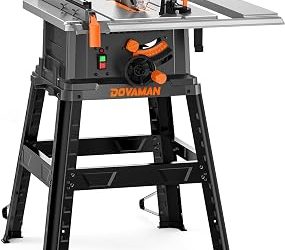
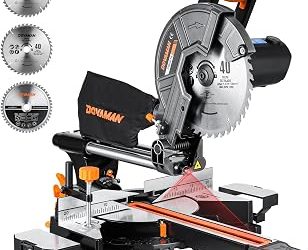
DOVAMAN Updated 10-Inch Sliding Miter Saw
A budget slider with genuinely useful features: three TCT blades for wood, metal, and plastic, dual 5000/3200 RPM speeds, ambidextrous controls, and nine positive stops with a 3.5 x 13.4-inch maximum cut. Expect to square the fence and dial in the detents out of the box, but once tuned it cuts clean 45s.
Frequently Asked Questions
Why do my 45-degree cuts still leave a gap?
Usually the miter scale is accurate but the fence isn’t square to the blade, so two “perfect” 45s add up to something other than 90. Check the fence with a reliable square, then test with four scrap pieces before cutting your good stock.
Do I need a sliding saw for miter joints?
Only if your material is wider than the saw’s chop capacity. For frame stock, trim, and standard 2x lumber, a non-slider is often more rigid and holds its settings better over time.
Which blade should I use for clean miters?
Move to an 80-tooth fine-finish blade for hardwood and molding, and keep a 40- to 60-tooth general blade for framing and outdoor lumber. The stock blade on most saws is a compromise and is the cheapest upgrade you can make.
How often should I recalibrate?
Check squareness any time the saw is transported, dropped, or moved between temperature extremes, and at minimum before every project where joints will be visible. It takes two minutes and saves whole workpieces.
Final Thoughts
For the tightest, most repeatable miter joints, the DEWALT DWS780 earns the top spot on the strength of its shadow-line cut guidance and rigid double-bevel head. The DWS779 delivers nearly the same joinery accuracy for less if you’re comfortable working to a marked line, while the DWS713 is the practical choice for portable outdoor-furniture work where 10-inch capacity is plenty and stability matters more than reach.