Key takeaways
- CertiPUR-US: tests foam for emissions, formaldehyde, and restricted chemicals. The Sleepmax 14 Inch Queen and Novilla both carry it.
- Fiberglass-free: many budget mattresses use fiberglass as a flame barrier, which becomes a problem if the cover is ever removed. Listings that state this outright, like Sleepmax and the zoned hotel-style queen, are being transparent for a reason.
- Trial length: a 365-night trial gives you a full seasonal cycle to judge heat performance. DreamCloud, Sleepmax, and both zoned queens offer one.
What's inside
Spend enough seasons building shade structures, specifying weather-resistant cushions, and figuring out why one screened porch stays pleasant at 2 p.m. while the one next door bakes, and you start to think about comfort as a materials-and-airflow problem rather than a matter of taste. A mattress is no different. It is a layered assembly that has to manage load, heat, and moisture for eight hours at a stretch, in a room whose temperature swings with the seasons. Hybrids have become the default answer because they borrow from both traditions: a steel spring unit doing the structural work, foam or latex on top doing the contouring.
This guide walks through how hybrid construction actually behaves, how to read cooling claims without taking them at face value, how to match firmness to the way you sleep, and which specs are worth paying for versus which are marketing garnish. Below are the picks we keep coming back to, spanning entry-level to premium.
As an Amazon Associate we earn from qualifying purchases.


Understand the Two Jobs Inside a Hybrid
Every hybrid splits responsibility. The pocketed coil unit provides support, ventilation, and edge stability. The comfort layers above it — gel memory foam, polyfoam, latex, or a quilted pillow top — handle pressure distribution at the shoulders and hips. Individually wrapped coils matter here: because each spring compresses on its own, movement stays localized instead of transmitting across the bed. That is why the Novilla 14 Inch King leads with upgraded coils and motion isolation, and it is the single spec that makes hybrids workable for couples with mismatched schedules. If a listing mentions a connected innerspring or a “Bonnell” unit, expect more transfer.
Treat Cooling Claims Like Airflow Engineering
Heat leaves a mattress three ways: convection through the coil layer, conduction into gel or phase-change materials, and evaporation through the cover. Coils give hybrids a structural advantage — there is open space for air to move — but thick, dense foam above can seal that off. Look for how many mechanisms a mattress actually stacks. The Sweetnight CoolNest 14 Inch King is explicit about this with a four-stage breathability approach layered under its cooling pillow top, which is the right way to think about it. Gel infusion alone is a one-note solution; it absorbs heat until it saturates. A breathable cover plus open foam plus an unobstructed coil layer keeps working all night.
Match Firmness to Position, Not to Preference
Firmness ratings are subjective and unregulated, but sleeping position is not. Side sleepers need enough give at the shoulder and hip to keep the spine neutral, which usually means a plusher surface or zoned construction. Back and stomach sleepers need more pushback to prevent the hips from sinking into a hammock. Medium-firm is the broadest-fitting answer, which is why it shows up on both the Sweetnight CoolNest and the 16 Inch Queen Hybrid. Body weight shifts the math too: heavier sleepers compress comfort layers further and generally want firmer, taller builds, while lighter sleepers may never engage a firm mattress enough to feel contouring at all.
Zoning, Height, and Edge Support
Zoned coil systems vary spring gauge or grouping across the mattress so the lumbar region gets more resistance while shoulders get more give. It is a genuine improvement for combination sleepers. Both the 14 Inch Luxury Hotel Zoned Queen, with targeted hip, shoulder, and lumbar reinforcement, and the 16 Inch 7-Zone Queen are built around this idea. On height, 12 inches is plenty of engineering room — the DreamCloud 12″ Queen proves it — while 14 to 16 inches buys thicker comfort layers and a more substantial feel. Just verify your sheets and frame can handle it. Reinforced perimeters are worth checking if you sit on the edge to dress or share a smaller size.
Certifications and Trial Windows
- CertiPUR-US: tests foam for emissions, formaldehyde, and restricted chemicals. The Sleepmax 14 Inch Queen and Novilla both carry it.
- Fiberglass-free: many budget mattresses use fiberglass as a flame barrier, which becomes a problem if the cover is ever removed. Listings that state this outright, like Sleepmax and the zoned hotel-style queen, are being transparent for a reason.
- Trial length: a 365-night trial gives you a full seasonal cycle to judge heat performance. DreamCloud, Sleepmax, and both zoned queens offer one.
Tips
- Allow 30 nights of adjustment before judging a new mattress; your body recalibrates to a different support profile.
- Confirm your foundation has slats spaced three inches apart or less — wider gaps void most hybrid warranties and cause premature sagging.
- Unbox and unwrap within 72 hours of delivery so compressed foam can fully recover its loft.
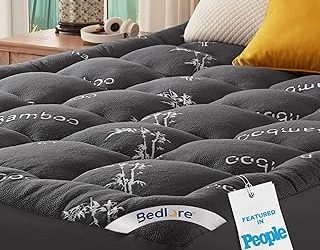
- Add a breathable protector rather than a plush waterproof one; a sealed layer undoes the cooling design you paid for.
Frequently Asked Questions
How long does a hybrid mattress last?
Expect seven to ten years. Coil units typically outlast the foam above them, so the first sign of decline is usually surface impressions rather than a failing spring layer.
Are hybrids genuinely cooler than all-foam mattresses?
Generally yes, because the coil layer allows convective airflow that solid foam blocks. The advantage narrows if the comfort layers are very thick or the cover is dense.
Do hybrids work with adjustable bases?
Many do, but not all. Pocketed coils flex better than connected ones. Check the manufacturer’s compatibility note before pairing, especially with 14-inch and taller builds.
Is a thicker mattress always better?
No. Thickness indicates layer count, not quality. A well-designed 12-inch hybrid can outperform a poorly built 16-inch one.
Conclusion
The best hybrid for you comes down to three honest answers: how you sleep, how hot you run, and how much weight the mattress needs to support. Get those right and the rest of the spec sheet falls into place — zoned coils for mixed positions, multi-stage cooling for warm rooms, medium-firm and 14 inches or more for broad household appeal, and a long trial window so a full year of weather can settle the question for you.