Key takeaways
- Load rating and frame material: Treat the stated capacity as a proxy for build quality, not just a limit. A 400 to 500 lb rating usually signals a steel base, a Class 4 gas lift, and thicker uprights, which means less flex and a longer service life even for lighter sitters.
- Cushion density over cushion thickness: Pocket-spring and high-resilience foam seats recover their shape; low-density foam compresses permanently. Press hard with your palm at the front edge of the seat, where most collapse begins, and look for a waterfall contour that relieves pressure behind the knees.
- Adjustable lumbar, not fixed lumbar: A bump moulded into the backrest only helps if it lands at your natural lower-back curve. Height-adjustable or depth-adjustable lumbar pads are worth prioritising over extras like headrests, especially for anyone over 6 ft or under 5 ft 4 in.
- Breathability for your room, not the showroom: Bonded leather looks executive but traps heat, which matters in sunrooms, converted porches, and any office with afternoon glazing. Mesh backs move air and stay cooler through summer; leather suits cooler, north-facing spaces.
- Casters matched to your floor: Hard nylon wheels chew engineered timber and vinyl plank. Rubber or PU-coated casters roll quietly, protect finishes, and reduce the low rumble that carries through floors in open-plan homes.
What's inside
Spend enough years specifying seating for decks, sunrooms, and covered patios and you develop a particular suspicion of chairs. Outdoor furniture has nowhere to hide: cheap welds crack, thin foam packs down by August, and a base that flexes under load announces itself within a season. Home office chairs get graded on a softer curve, which is exactly the problem. Buyers under a $500 ceiling are shown glossy renders, a headline weight rating, and a wall of adjustment acronyms, then discover six weeks later that the cylinder sinks, the armrests wobble, and the seat edge digs into the backs of their thighs by mid-afternoon.
This guide applies that harder standard to desk chairs. Rather than ranking on feature count, it looks at the things that actually decide whether a chair still feels good in year three: base and frame construction, cushion density and recovery, how the lumbar support meets your spine, caster quality on real flooring, and honest load capacity. Below are six chairs worth your attention under $500 in 2026, including big-and-tall builds, a breathable mesh option for warm rooms, and one recliner that doubles as a break-room chair.
As an Amazon Associate we earn from qualifying purchases.




How to Choose an Office Chair Under 500 (2026)
- Load rating and frame material: Treat the stated capacity as a proxy for build quality, not just a limit. A 400 to 500 lb rating usually signals a steel base, a Class 4 gas lift, and thicker uprights, which means less flex and a longer service life even for lighter sitters.
- Cushion density over cushion thickness: Pocket-spring and high-resilience foam seats recover their shape; low-density foam compresses permanently. Press hard with your palm at the front edge of the seat, where most collapse begins, and look for a waterfall contour that relieves pressure behind the knees.
- Adjustable lumbar, not fixed lumbar: A bump moulded into the backrest only helps if it lands at your natural lower-back curve. Height-adjustable or depth-adjustable lumbar pads are worth prioritising over extras like headrests, especially for anyone over 6 ft or under 5 ft 4 in.
- Breathability for your room, not the showroom: Bonded leather looks executive but traps heat, which matters in sunrooms, converted porches, and any office with afternoon glazing. Mesh backs move air and stay cooler through summer; leather suits cooler, north-facing spaces.
- Casters matched to your floor: Hard nylon wheels chew engineered timber and vinyl plank. Rubber or PU-coated casters roll quietly, protect finishes, and reduce the low rumble that carries through floors in open-plan homes.
The Best Office Chairs Under 500 (2026), Reviewed
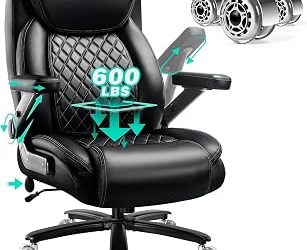
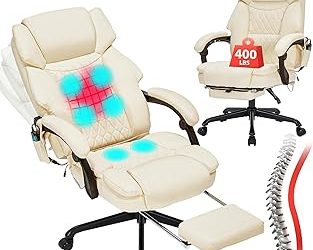
500lbs Big and Tall High-Back Executive Chair with Pocket Spring Cushion
The pocket-spring seat is the differentiator here, distributing weight across independent coils instead of relying on foam alone, so it resists the flattening that ruins most heavy-duty chairs. Combined with a 500 lb rating, adjustable lumbar support, and quiet rubber casters, it is the most floor-friendly big-and-tall pick in this group.
Ergonomic Office Chair for Long Hours with Padded Lumbar Support
A sensible, focused chair for eight-hour days, with a padded adjustable lumbar pad that targets lower-back relief rather than padding out a spec sheet. At a 330 lb capacity it suits average-frame users and compact home offices where a wide executive chair would dominate the room.
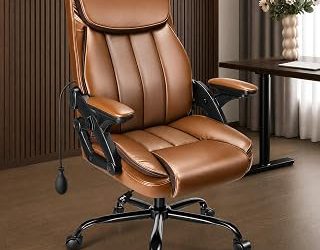
YFO Home Office Desk Chair, Brown Leather
The most traditional-looking option, with warm brown upholstery and a tailored profile that works in studies, libraries, and rooms where the chair is visible from living space. Rubber casters, height adjustment, and lumbar support cover the essentials, though the leather-look finish runs warmer than mesh in sun-exposed rooms.
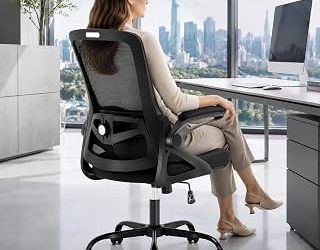
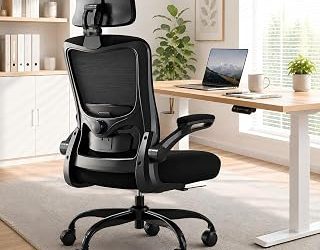
Ergonomic Mesh Office Chair with 4D Arms and 3D Headrest
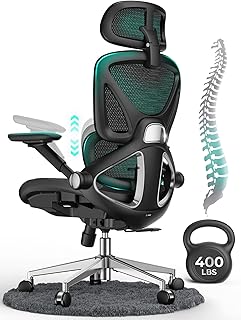
This is the adjustment specialist: 4D flip-up armrests, a three-position tilt lock, and a headrest that moves in three planes, all on a 400 lb-rated frame. The breathable mesh back makes it the pick for warm climates, glazed rooms, and anyone who runs hot in the afternoon.
500lbs Big and Tall Extra-Wide Executive Chair
Built around comfort at scale, with a genuinely extra-wide seat, thick armrest padding, a heavy-duty base, and upgraded wheels. It is the one to choose if you have found standard chairs pinching at the hips or if lower-back pain is your main complaint.
Frequently Asked Questions
Is mesh or leather better for a home office chair?
Mesh wins on airflow and long sitting sessions; leather and leather-look upholstery win on formality and easy wipe-down cleaning. If your office gets direct sun or sits in a converted porch or sunroom, choose mesh.
Do I need a big-and-tall chair if I am average sized?
Not necessarily, but the heavier build is a fair trade for durability. Higher-rated chairs typically use sturdier bases and better gas cylinders, which reduces sinking and wobble regardless of your weight.
Will these casters damage hardwood or vinyl floors?
Rubber and PU-coated wheels, which several chairs here use, are designed for hard flooring and roll quietly. If a chair ships with bare nylon casters, budget for a replacement set rather than a rug.
How long should a chair in this price range last?
Expect three to five years of daily use from a steel-based chair with dense foam or pocket springs. Seat cushions and gas cylinders fail first, so check whether replacement parts are available before you buy.
Final Thoughts
For most home offices, the 500lbs Big and Tall Executive Chair with pocket-spring cushion offers the best durability-per-dollar of the group, while the Ergonomic Mesh Office Chair is the smarter choice for warm, sunlit rooms thanks to its airflow and deep adjustment range. If lower-back pain or seat width is your main issue, the extra-wide 500lbs Big and Tall model is the one to shortlist.