Key takeaways
- Crosscut capacity: Check the width a saw can cross at 90 degrees, not just the blade size. Roughly 13 to 14 inches handles 2×12 bench stock and doubled-up composite fascia in one pass, which is where non-sliding saws stall out.
- Single vs. dual bevel: Dual bevel tilts left and right, so you can cut mirrored miters for planter boxes and mitered table aprons without flipping heavy boards. On long cedar or ipe pieces, that alone saves an hour on a big build.
- Motor and blade tooth count: A 15-amp motor in the 3,800 to 5,000 RPM range has the torque for wet pressure-treated lumber. Pair it with a high-tooth-count finish blade for PVC trim and composite, and keep a coarser blade for framing cuts.
- Cut-line visibility: LED shadow systems cast the blade’s own silhouette on the workpiece and never need calibration. Laser guides are brighter outdoors but drift and require occasional adjustment — decide which you will actually trust.
- Footprint, fences, and dust: Sliders need rear clearance unless the rails are compact. Look for tall fences that support crown and picket stock upright, plus a dust port that mates to a shop vac; sawdust in a covered patio workspace gets tracked everywhere.
What's inside
Outdoor furniture is unforgiving about angles. A mitered corner on a cedar planter or a run of picture-framed decking sits in full sun, soaks up humidity, then dries out again — and any joint that started a half-degree off will telegraph that gap by the second season. Add wide stock like 2×12 bench aprons, 5/4 deck boards, and pergola rafter tails, and a small chop saw runs out of blade before you run out of project. That is usually the moment a builder starts shopping for a slider, then gets buried in spec sheets arguing over blade diameter, RPM, and bevel counts.
This guide looks at sliding miter saws through the lens of outdoor-living work: wide crosscuts in wet-treated lumber, repeatable compound angles for railing and roof pitches, and cut-line visibility when you are working under a shade sail or in a dim garage bay. Below are the saws worth your bench space in 2026, plus the specs that actually change how a piece of furniture goes together.
As an Amazon Associate we earn from qualifying purchases.


How to Choose a Sliding Miter Saw (2026)
- Crosscut capacity: Check the width a saw can cross at 90 degrees, not just the blade size. Roughly 13 to 14 inches handles 2×12 bench stock and doubled-up composite fascia in one pass, which is where non-sliding saws stall out.
- Single vs. dual bevel: Dual bevel tilts left and right, so you can cut mirrored miters for planter boxes and mitered table aprons without flipping heavy boards. On long cedar or ipe pieces, that alone saves an hour on a big build.
- Motor and blade tooth count: A 15-amp motor in the 3,800 to 5,000 RPM range has the torque for wet pressure-treated lumber. Pair it with a high-tooth-count finish blade for PVC trim and composite, and keep a coarser blade for framing cuts.
- Cut-line visibility: LED shadow systems cast the blade’s own silhouette on the workpiece and never need calibration. Laser guides are brighter outdoors but drift and require occasional adjustment — decide which you will actually trust.
- Footprint, fences, and dust: Sliders need rear clearance unless the rails are compact. Look for tall fences that support crown and picket stock upright, plus a dust port that mates to a shop vac; sawdust in a covered patio workspace gets tracked everywhere.
The Best Sliding Miter Saws (2026), Reviewed
DEWALT DWS780 12-Inch Double Bevel Sliding Compound
This is the reference-grade choice for outdoor furniture work: dual bevel, generous crosscut capacity, and the XPS LED shadow line that shows your kerf exactly where the blade will land, with no laser calibration ritual. It ships with a material clamp, wrench, and dust bag, so it earns its keep the day it arrives.
DEWALT DWS779 12-Inch Double Bevel Sliding Compound
Mechanically very close to the DWS780 — same 15-amp, 3,800 RPM motor and the same increased crosscut capacity — but without the XPS shadow light, which is the main reason it costs less. If you already work under good task lighting or plan to add an aftermarket light, this is the smarter spend.
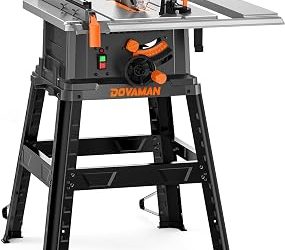
DOVAMAN 10-Inch Sliding Miter Saw
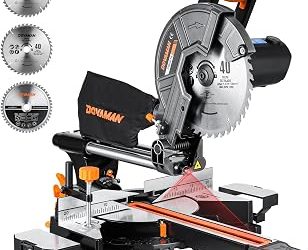
A genuinely versatile budget slider: dual speeds (5,000/3,200 RPM) plus three TCT blades let it move between softwood, composite decking, and aluminum edge trim without a trip to the store. The 3.5 x 13.4-inch capacity and ambidextrous handle make it a practical second saw for a compact patio shop.
12-Inch Dual Bevel Sliding Miter Saw with Laser Guide
The value pick in the 12-inch dual-bevel class, with a 15-amp motor, 80-tooth blade, laser guide, and extension table for supporting long apron and rail stock. Cutting capacity is about 4.2 x 13 inches, and the ETL certification is reassuring at this price point.
DEWALT DWS715 12-Inch Single Bevel Compound
Not a slider, but worth naming: if most of your cuts are 2×6 and narrower — Adirondack slats, picket screens, table legs — the DWS715’s 12-inch blade covers plenty of width in a lighter, cheaper, more portable package. For anything approaching 2×12, step up to the DWS779.
Frequently Asked Questions
Do I need a 12-inch saw, or is 10-inch enough?
A 10-inch slider handles most outdoor furniture stock, including 2×8 and single-layer decking. Go 12-inch if you regularly cut 2×12 bench material, thick ipe, or need extra depth for standing crown-style trim.
Can these saws cut composite decking and PVC trim?
Yes, with the right blade. Use a high-tooth-count carbide blade, slow your feed rate, and expect a slightly gummy chip on composite — cooler cutting reduces melt-back on the edge.
Is dual bevel actually worth the upgrade?
For mitered boxes, planters, and any furniture with wrapped corners, yes. Single bevel forces you to flip or reorient stock for opposing angles, which introduces error on long, heavy boards.
How do I keep a saw accurate in a garage or covered patio?
Keep it off concrete in damp months, cover it when idle, and check the 90-degree and 45-degree stops with a machinist square every few projects. Fence and detent drift, not motor wear, causes most bad joints.
Final Thoughts
If you build outdoor furniture regularly, the DEWALT DWS780 is the saw to buy once and keep for a decade, with the DWS779 as the value-minded twin for anyone who does not need the XPS shadow light. For smaller patio shops or a first slider, the DOVAMAN 10-Inch covers multi-material cutting at a fraction of the cost and still delivers the wide crosscuts that mitered planters and bench aprons demand.