Key takeaways
- Tooth count: Sixty teeth handles everyday crosscutting in pine, poplar, and cedar. Step up to 80 teeth for hardwood furniture parts, and reach for 120 when you need a surface that needs almost no sanding before finish.
- Grind and hook angle: ATB grinds slice wood fibers cleanly for furniture joinery. TCG (triple-chip) grinds are built for aluminum and composite decking boards. A low or negative hook angle keeps a miter saw from grabbing and climbing the workpiece.
- Kerf width: Thin kerf near 1/8 inch reduces strain on smaller 10-inch saws and wastes less stock on repeat cuts. Full kerf resists deflection better on long compound miters where accuracy matters more than motor load.
- Arbor and plate quality: Confirm a 5/8-inch (16mm) arbor before ordering. Beyond that, look for laser-cut expansion slots and a flat, tensioned plate, since a wobbling plate ruins a cut no matter how sharp the carbide is.
- Carbide grade: Denser carbide holds an edge through teak, ipe, and pressure-treated lumber. If your projects lean toward exterior hardwoods, treat carbide quality as more important than raw tooth count.
What's inside
Building a cedar bench for the deck or a set of teak-style dining chairs for the patio exposes a truth most weekend woodworkers learn the hard way: the saw rarely limits the work, the blade does. Outdoor furniture lives in a world of wide crosscuts, compound miters on chair aprons, and joints that sit in full sun and driving rain. A blade with worn carbide or the wrong tooth count leaves torn end grain that drinks up moisture, fuzzy shoulders that refuse to close tight, and burn marks that telegraph straight through an oil finish. Those flaws don’t just look rough on day one — they become the spots where water gets in and joints loosen a season later.
This guide sorts through the blades worth putting on a 10-inch miter saw in 2026, with an eye toward the furniture-grade cuts that outdoor projects demand. You’ll find picks for glass-smooth finish work, general shop crosscutting, aluminum trim and framing, and value two-packs that cover both ripping and finishing. Each pick is judged on tooth geometry, kerf, plate stability, and how cleanly it handles the dense, oily hardwoods common in patio builds.
As an Amazon Associate we earn from qualifying purchases.


How to Choose a 10 Miter Saw Blade (2026)
- Tooth count: Sixty teeth handles everyday crosscutting in pine, poplar, and cedar. Step up to 80 teeth for hardwood furniture parts, and reach for 120 when you need a surface that needs almost no sanding before finish.
- Grind and hook angle: ATB grinds slice wood fibers cleanly for furniture joinery. TCG (triple-chip) grinds are built for aluminum and composite decking boards. A low or negative hook angle keeps a miter saw from grabbing and climbing the workpiece.
- Kerf width: Thin kerf near 1/8 inch reduces strain on smaller 10-inch saws and wastes less stock on repeat cuts. Full kerf resists deflection better on long compound miters where accuracy matters more than motor load.
- Arbor and plate quality: Confirm a 5/8-inch (16mm) arbor before ordering. Beyond that, look for laser-cut expansion slots and a flat, tensioned plate, since a wobbling plate ruins a cut no matter how sharp the carbide is.
- Carbide grade: Denser carbide holds an edge through teak, ipe, and pressure-treated lumber. If your projects lean toward exterior hardwoods, treat carbide quality as more important than raw tooth count.
The Best 10 Miter Saw Blades (2026) Reviewed
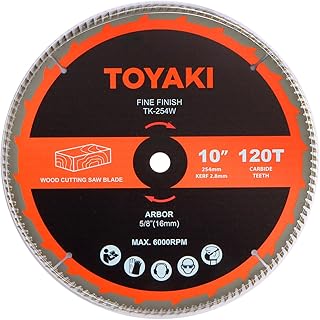
120-Tooth Fine-Finish Professional Woodworking Blade
With 120 teeth on a 10-inch plate, this blade leaves an edge close to planed, which makes it the one to fit when cutting visible chair rails, table aprons, or mitered trim on a planter box. Feed slowly and let the tooth count do the work, because rushing a blade this fine builds heat fast.
WEN BL1080 10-Inch 80-Tooth Carbide-Tipped
Eighty carbide teeth strike the practical middle ground for outdoor furniture: clean enough for exposed end grain, aggressive enough that you’re not babying every cut. It’s a sensible everyday blade for cedar, redwood, and softer hardwoods on a home shop miter saw.
WEN BL1060 10-Inch 60-Tooth Fine-Finish Blade
The 60-tooth count clears chips efficiently, so it stays cool through long batches of deck framing, bench legs, and slat stock. Expect a good working finish rather than a showpiece edge, which is exactly right for parts that get sanded anyway.
US1080-MTR 80-Tooth USA-Made Miter Blade
Purpose-built tooth geometry and a 1/8-inch kerf make this a specialist rather than a do-everything blade, and it shows in crosscuts and miters that need no cleanup. Domestic manufacturing and consistent carbide grinding justify the premium if you cut hardwood joinery regularly.
120-Tooth TCG Aluminum-Working Blade
The triple-chip grind is the right tool for aluminum tubing, composite decking, and PVC trim that shows up in modern patio builds, where an ATB blade would chip or grab. Keep it separate from your wood blades so the carbide stays sharp for the material it was designed to cut.
Frequently Asked Questions
How many teeth do I need for outdoor furniture?
Eighty teeth covers most furniture-grade crosscuts. Choose 120 for finish-critical miters and 60 for bulk framing and rougher stock.
Can I cut composite decking with a standard wood blade?
You can, but a TCG blade produces less melting and fewer chipped edges. Composites and aluminum dull ATB wood teeth quickly.
Why does my blade leave burn marks?
Burning usually means dull carbide, pitch buildup, or too slow a feed rate through the cut. Clean the blade with pitch remover first, then check alignment before replacing it.
Do thin-kerf blades hurt accuracy?
Not on well-tuned saws with proper support. Thin kerf reduces motor strain, though full-kerf plates resist flex better on tall compound miters.
Final Thoughts
For most patio and deck furniture builds, the WEN BL1080 80-tooth is the most balanced blade to keep mounted, while the US1080-MTR earns its place when hardwood joinery has to close tight with zero cleanup. Add the 120-tooth TCG blade if aluminum or composite materials show up in your projects, and you’ll have nearly every outdoor-living cut covered.