Key takeaways
- Tooth count: Blades with 80 to 100 teeth are suited to smooth crosscuts and visible furniture edges, while 40 to 60 teeth offer a better balance for general cutting and occasional ripping.
- Cutting task: A miter saw primarily makes crosscuts, but a versatile blade can handle limited ripping when you are breaking down boards or trimming outdoor lumber.
- Tooth geometry: ATB teeth are a dependable choice for clean wood cuts. More specialized profiles can reduce splintering, though results also depend on feed speed and board support.
- Kerf: Thin-kerf blades remove less material and may feel efficient on smaller saws, but confirm that the blade is compatible with your saw and cutting setup.
- Material and durability: Carbide-tipped teeth are the practical standard for repeated woodworking. Avoid cutting dirty or embedded-nail lumber unless the blade is specifically designed for that abuse.
What's inside
A 12-inch miter saw blade can turn a clean furniture cut into a ragged, splintered edge if its tooth count, kerf, or cutting pattern does not suit the job. Outdoor projects add another concern: pressure-treated boards, cedar, composite trim, and weather-resistant hardwoods can all punish a blade that is designed only for light indoor trim work.
This guide to the Best 12 Blade For Miter Saw (2026) compares practical options for furniture building, deck details, garden structures, and general shop work. It covers ultra-fine finish blades, versatile general-purpose designs, and value-focused multipacks so you can match the blade to the material rather than simply choosing the highest tooth count.
As an Amazon Associate we earn from qualifying purchases.



How to Choose a 12-Inch Blade for a Miter Saw (2026)
- Tooth count: Blades with 80 to 100 teeth are suited to smooth crosscuts and visible furniture edges, while 40 to 60 teeth offer a better balance for general cutting and occasional ripping.
- Cutting task: A miter saw primarily makes crosscuts, but a versatile blade can handle limited ripping when you are breaking down boards or trimming outdoor lumber.
- Tooth geometry: ATB teeth are a dependable choice for clean wood cuts. More specialized profiles can reduce splintering, though results also depend on feed speed and board support.
- Kerf: Thin-kerf blades remove less material and may feel efficient on smaller saws, but confirm that the blade is compatible with your saw and cutting setup.
- Material and durability: Carbide-tipped teeth are the practical standard for repeated woodworking. Avoid cutting dirty or embedded-nail lumber unless the blade is specifically designed for that abuse.
The Best 12-Inch Blades for Miter Saws (2026) Reviewed
DEWALT DWA112100 100-Tooth Fine Finish Blade
The DEWALT DWA112100 is a strong choice when the cut edge will remain visible on cabinet parts, trim, or outdoor furniture components. Its 100-tooth layout favors fine crosscuts and a polished finish, making it especially suitable for careful joinery and final sizing rather than fast stock removal.
FOXBC 12-Inch 100-Tooth Ultimate Finish Blade
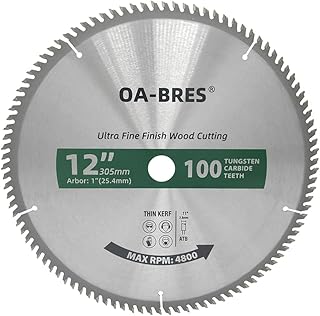
FOXBC’s 100-tooth blade is aimed at woodworkers who want a smooth result from a standard 12-inch miter saw. It is a sensible pick for painted furniture, hardwood trim, and projects where reducing breakout matters more than cutting speed.
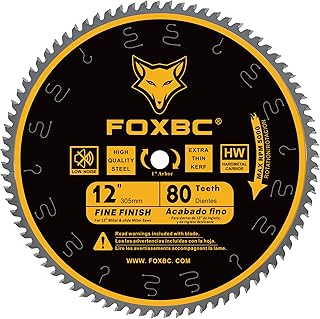
FOXBC 12-Inch 80-Tooth Fine Finish Blade
The 80-tooth FOXBC model occupies a useful middle ground: it is fine enough for presentable crosscuts but less specialized than a 100-tooth finishing blade. Choose it for recurring shop work when you want clean edges without making every cut a slow, final-pass operation.
Freud LU86R012 48-Tooth Thin-Kerf General-Purpose Blade
Freud’s LU86R012 is the most versatile option in this group for makers who move between furniture stock and outdoor lumber. Its 48-tooth general-purpose design is better suited to everyday cutting, while the thin kerf can be helpful on saws where minimizing resistance is a priority.
ANGELSWORD 40T/60T Two-Pack
The ANGELSWORD two-pack gives you a 40-tooth blade for faster ripping and crosscutting plus a 60-tooth blade for finer wood cuts. That separation is useful for a home workshop or outdoor-living setup, since one blade can handle rougher sizing while the other is reserved for visible edges.
Frequently Asked Questions
Is a 100-tooth blade best for every miter saw cut?
No. A 100-tooth blade can produce a very clean crosscut, but it usually removes material more slowly and is not the best choice for ripping or quickly trimming a large stack of boards. Use it when finish quality matters most.
Can these blades cut pressure-treated lumber?
Many carbide-tipped wood blades can cut pressure-treated lumber, but wet, abrasive, or dirty boards accelerate tooth wear. Brush off grit, support the work securely, and check the blade manufacturer’s guidance before cutting heavily treated stock.
What blade should I use for outdoor furniture?
For visible seat slats, rails, and trim, an 80- or 100-tooth finish blade is a practical choice. For breaking down thicker boards or switching between ripping and crosscutting, a 40- to 60-tooth general-purpose blade is more efficient.
Does tooth count prevent splintering by itself?
Not entirely. A sharp blade, stable workpiece, correct cutting direction, and adequate support are equally important. Use painter’s tape or a sacrificial backing board when the material is especially prone to breakout.
Final Thoughts
For the cleanest furniture cuts, the DEWALT DWA112100 and FOXBC 100-Tooth are compelling finishing choices. If you want one blade for broader shop and outdoor work, the Freud LU86R012 offers a more flexible balance, while the ANGELSWORD two-pack is useful when separate rough-cutting and finishing blades fit your workflow best.