Key takeaways
- Tooth count: Blades with 80 to 100 teeth generally produce cleaner crosscuts in trim and furniture parts, while lower tooth counts remove material faster in rough stock.
- Tooth geometry: Alternate-top-bevel (ATB) teeth are a dependable choice for crosscutting wood, helping reduce splintering on visible faces and finished edges.
- Kerf width: Thin-kerf blades waste less material and can require less power, but confirm that the blade is suitable for your saw and does not deflect during demanding cuts.
- Arbor compatibility: Most 12-inch miter saws use a 1-inch arbor, but verify your manual before ordering; a correct diameter alone does not guarantee a safe fit.
- Workpiece and finish: Select a fine-finish blade for hardwood trim and joinery, or a tougher general-purpose option when cutting construction lumber, plywood, and outdoor project stock.
What's inside
Choosing a 12-inch miter saw blade is less straightforward than it looks. Tooth count, kerf width, carbide quality, arbor size, and the type of lumber on your workbench all affect the result. A blade that leaves picture-frame trim silky smooth may struggle in damp decking, while an aggressive general-purpose blade can leave tear-out on an indoor furniture project.
This guide evaluates the leading 12-inch options for homeowners, makers, and outdoor-living enthusiasts who move between cabinetry, shelving, pergolas, planters, and patio furniture. We focus on cut quality, versatility, durability, and how each blade fits real workshop conditions—not just the number printed on the package.
As an Amazon Associate we earn from qualifying purchases.


How to Choose a/an 12in Miter Saw Blade (2026)
- Tooth count: Blades with 80 to 100 teeth generally produce cleaner crosscuts in trim and furniture parts, while lower tooth counts remove material faster in rough stock.
- Tooth geometry: Alternate-top-bevel (ATB) teeth are a dependable choice for crosscutting wood, helping reduce splintering on visible faces and finished edges.
- Kerf width: Thin-kerf blades waste less material and can require less power, but confirm that the blade is suitable for your saw and does not deflect during demanding cuts.
- Arbor compatibility: Most 12-inch miter saws use a 1-inch arbor, but verify your manual before ordering; a correct diameter alone does not guarantee a safe fit.
- Workpiece and finish: Select a fine-finish blade for hardwood trim and joinery, or a tougher general-purpose option when cutting construction lumber, plywood, and outdoor project stock.
The Best 12in Miter Saw Blade (2026)s Reviewed
DEWALT DWA112100 100-Tooth Fine-Finish Blade
The DEWALT DWA112100 is a strong choice for crisp crosscuts in furniture components, casing, and painted trim. Its 100-tooth layout favors a polished edge over speed, making it particularly useful when your outdoor-living project includes visible cedar, redwood, or hardwood details that will be handled up close.
Diablo D1280X 80-Tooth Fine-Finish Blade
Diablo’s D1280X balances clean results with a little more cutting speed than a 100-tooth blade. The hi-density carbide is well suited to repeat work in hardwood and plywood, and its 1-inch arbor makes it a practical all-around upgrade for a full-size miter saw used on both indoor furniture and patio builds.
WEN BL1280 80-Tooth Fine-Finish Blade
The WEN BL1280 offers a sensible fine-finish configuration for makers who want one blade for table-saw and miter-saw duties. Its 80 teeth should provide smooth crosscuts in boards and sheet goods while retaining enough chip clearance for routine workshop work, from planter boxes to dining-table components.
FOXBC 100-Tooth Ultimate Polished-Finish Blade
FOXBC’s 100-tooth blade is aimed at appearance-first cuts, where a clean edge matters more than fast stock removal. It is a compelling fit for delicate trim, picture frames, and furniture parts that will receive a clear finish, although users cutting thick, rough, or resin-heavy outdoor lumber may prefer a less specialized blade.
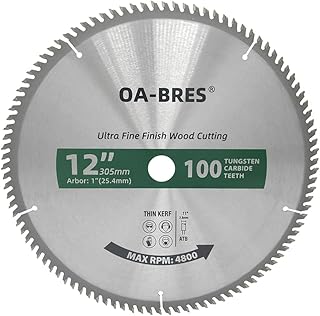
12-Inch 100-Tooth ATB TCT Ultra Fine Finish Blade
This ATB TCT blade is designed for especially fine wood crosscuts, making it attractive for detailed joinery and highly visible project surfaces. The 1-inch arbor suits many 12-inch saws, but buyers should still confirm compatibility and remember that ultra-fine blades work best when fed steadily rather than forced through stock.
Frequently Asked Questions
Is a 100-tooth blade best for every project?
No. A 100-tooth blade can leave an excellent finish, but it cuts more slowly and may clear chips less efficiently in thick or damp lumber. It is best for trim, furniture parts, and finish carpentry rather than fast dimensioning.
Can these blades cut pressure-treated wood?
Many carbide-tipped wood blades can handle occasional pressure-treated lumber, but treatment chemicals and embedded grit can shorten blade life. Brush off debris, avoid cutting contaminated or metal-filled stock, and follow the blade and saw manufacturer’s recommendations.
Should I use a 12-inch blade on any miter saw?
Only if the saw is designed for a 12-inch blade and the arbor, maximum speed, guard clearance, and blade thickness all match its specifications. Never rely on diameter alone; consult the owner’s manual before installation.
Why does my new blade still cause tear-out?
Tear-out can result from incorrect tooth orientation, a loose setup, a worn throat plate, poor workpiece support, or pushing the material too quickly. Support both sides of the cut, clamp small pieces securely, and make sure the blade is installed according to the saw’s instructions.
Final Thoughts
For the cleanest furniture-grade crosscuts, the DEWALT DWA112100 and FOXBC 100-tooth blade are strong candidates. The Diablo D1280X is the more versatile pick for a workshop that alternates between indoor furniture and outdoor projects, while the WEN BL1280 offers a practical balance for everyday cutting.