Key takeaways
- Duty rating over marketing weight: Add your body weight, tool belt, and whatever you are carrying up. Type IA covers 300 pounds and Type IAA covers 375; if you routinely haul a caulk gun, cordless drill, and a coil of wire, size up to IAA rather than living at the ceiling of a IA.
- Fiberglass near anything electrical: Outdoor fixtures, low-voltage transformers, and porch ceiling wiring all argue for non-conductive rails. Aluminum is lighter and fine for painting or gutter cleaning, but fiberglass is the default when a live circuit is anywhere in the picture.
- Foot design for real ground: Patios crown, pavers settle, and lawns give. Wide slip-resistant shoes with a rubber tread grip wet composite decking far better than narrow bare feet, and they spread load so the rails do not dig in.
- Platform versus top cap: A full standing platform changes long jobs completely. Trimming a hedge line or wiring a fixture overhead for twenty minutes is much easier when your arches rest flat instead of balancing on a rung edge.
- Weight you will actually carry: A 6-foot fiberglass ladder typically lands in the mid-to-high teens; aluminum can drop under 15 pounds. If your storage is a shed at the back fence, that difference decides whether the ladder gets used or avoided.
What's inside
Anyone who spends real time on a deck, patio, or screened porch eventually hits the same wall: the work happens between eight and twelve feet up, and a kitchen stool will not get you there safely. Hanging café lights along a pergola beam, clearing a season of maple seeds out of a gutter, swapping a bulb in a dusk-to-dawn fixture, resealing the trim above a slider — these are all six-foot-ladder jobs. Buy the wrong one and you get flex underfoot, feet that sink into soft turf, and that unwelcome sway that makes you rush the task.
This guide looks at six-foot step ladders through an outdoor-living lens: what holds up on uneven pavers and damp lawn, what stays non-conductive when you are within arm’s reach of a light fixture, and what you can carry one-handed from the shed to the far corner of the yard. We compare duty ratings, platform designs, twin-front models for two-person work, and the lightweight aluminum option that earns its keep on repeat trips.
As an Amazon Associate we earn from qualifying purchases.


How to Choose a 6-Foot Ladder (2026)
- Duty rating over marketing weight: Add your body weight, tool belt, and whatever you are carrying up. Type IA covers 300 pounds and Type IAA covers 375; if you routinely haul a caulk gun, cordless drill, and a coil of wire, size up to IAA rather than living at the ceiling of a IA.
- Fiberglass near anything electrical: Outdoor fixtures, low-voltage transformers, and porch ceiling wiring all argue for non-conductive rails. Aluminum is lighter and fine for painting or gutter cleaning, but fiberglass is the default when a live circuit is anywhere in the picture.
- Foot design for real ground: Patios crown, pavers settle, and lawns give. Wide slip-resistant shoes with a rubber tread grip wet composite decking far better than narrow bare feet, and they spread load so the rails do not dig in.
- Platform versus top cap: A full standing platform changes long jobs completely. Trimming a hedge line or wiring a fixture overhead for twenty minutes is much easier when your arches rest flat instead of balancing on a rung edge.
- Weight you will actually carry: A 6-foot fiberglass ladder typically lands in the mid-to-high teens; aluminum can drop under 15 pounds. If your storage is a shed at the back fence, that difference decides whether the ladder gets used or avoided.
The Best 6-Foot Ladders (2026) Reviewed
Louisville Ladder FS1506 Fiberglass Step Ladder
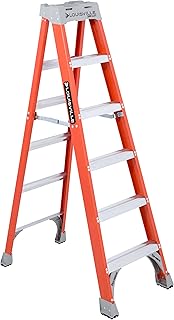
This is the sensible baseline for homeowners: 300-pound Type IA fiberglass with a molded top and pail shelf, sturdy enough for gutter and lighting work without the bulk of a heavy-duty build. If you want one ladder for general outdoor maintenance and nothing more specialized, start here.
Louisville Ladder FS1406HD Fiberglass Step Ladder
The heavy-duty sibling steps up to a 375-pound Type IAA rating, and the extra rail stiffness is noticeable the moment you are on the second-from-top step with tools in hand. Worth the small weight penalty for anyone who works loaded up or simply prefers a stiffer feel underfoot.
Louisville Ladder FM1406HD Twin Front Step Ladder
Twin front means both sides are climbable, which is genuinely useful when two people are stringing lights across a pergola or feeding trim from opposite ends. Same 375-pound IAA rating, and the symmetrical design tends to sit more predictably on uneven patio surfaces.
Little Giant Flip-N-Lite 6-ft Aluminum Stepladder
The lightest pick here by a clear margin, with a wide standing platform, deep anti-slip steps, and a slim folded profile that leans neatly against a shed wall. Aluminum rules it out for electrical work, but for painting, gutters, and umbrella or shade-sail adjustments it is the one you will reach for most.
6-Foot Fiberglass Platform Step Ladder, 500-Pound Capacity
A 500-pound capacity fiberglass platform ladder is overbuilt for most patios, and that is exactly the appeal — near-zero flex and a broad standing deck for long overhead sessions. Choose this if you install outdoor kitchen hoods, heavy fixtures, or shade structures and want zero doubt about margin.
Frequently Asked Questions
How high can I actually reach from a 6-foot ladder?
Figure roughly 10 to 12 feet of working reach for most adults standing on the second step from the top, which covers standard soffits, single-story gutters, and most pergola beams.
Is fiberglass worth the extra weight outdoors?
Yes, if electrical work is ever involved. Fiberglass rails also shrug off UV and moisture better than wood and will not conduct if you clip a hidden wire.
Can I leave a ladder stored outside?
Under cover, ideally. Both fiberglass and aluminum tolerate weather, but standing water in the feet and grit in the hinges shortens service life, so a wall hook in a shed or garage beats leaning it behind the grill.
Do I need Type IAA, or is IA enough?
Type IA at 300 pounds suits most homeowners doing light seasonal work. Move to IAA at 375 pounds if you are heavier, carry substantial tools, or want extra stiffness for long jobs.
Final Thoughts
For most outdoor-living projects, the Louisville FS1406HD is the balanced choice: non-conductive, 375-pound rated, and stiff enough to feel planted on uneven pavers. The Little Giant Flip-N-Lite earns a spot alongside it for anyone tired of dragging weight across the yard, while the FM1406HD twin front is the one to buy if two people regularly work the same job.