Key takeaways
- Blade material: M42 bi-metal blades combine a flexible alloy-steel backing with high-speed-steel teeth, making them a dependable choice for regular steel-cutting work and mixed shop use.
- Tooth pitch: Higher TPI suits thin tubing and sheet, while lower or variable TPI removes material faster from thicker bar, angle, and plate. Aim for several teeth engaged in the work at all times.
- Blade dimensions: Match length, width, and thickness to your saw exactly. A blade that is only slightly wrong may fail to track properly or place excess strain on the wheels.
- Tooth pattern: Variable-pitch teeth help reduce vibration and tooth stripping, especially when cutting irregular stock. Consistent-pitch blades can be predictable on uniform, thinner material.
- Project and machine: Consider your saw’s capacity, speed range, and intended workload. A compact benchtop machine needs a different blade than a heavy floor-standing saw used for repeated cuts.
What's inside
Choosing a metal-cutting band saw blade is less straightforward than it looks. Tooth count, blade width, kerf, material, and machine compatibility all affect whether a cut is clean and controlled—or noisy, slow, and hard on both the blade and the saw. A blade that works well on thick angle iron may be a poor choice for thin-wall tubing.
This guide focuses on practical workshop and outdoor-living projects, from cutting steel brackets for furniture to preparing tubing for garden structures and repair work. We compare six widely used options, with attention to tooth patterns, bi-metal construction, fit, and the kinds of metal each blade handles best.
As an Amazon Associate we earn from qualifying purchases.


How to Choose a Band Saw Blade For Metal (2026)
- Blade material: M42 bi-metal blades combine a flexible alloy-steel backing with high-speed-steel teeth, making them a dependable choice for regular steel-cutting work and mixed shop use.
- Tooth pitch: Higher TPI suits thin tubing and sheet, while lower or variable TPI removes material faster from thicker bar, angle, and plate. Aim for several teeth engaged in the work at all times.
- Blade dimensions: Match length, width, and thickness to your saw exactly. A blade that is only slightly wrong may fail to track properly or place excess strain on the wheels.
- Tooth pattern: Variable-pitch teeth help reduce vibration and tooth stripping, especially when cutting irregular stock. Consistent-pitch blades can be predictable on uniform, thinner material.
- Project and machine: Consider your saw’s capacity, speed range, and intended workload. A compact benchtop machine needs a different blade than a heavy floor-standing saw used for repeated cuts.
The Best Band Saw Blade For Metal (2026)s Reviewed
Imachinist S933414 M42 10/14 TPI
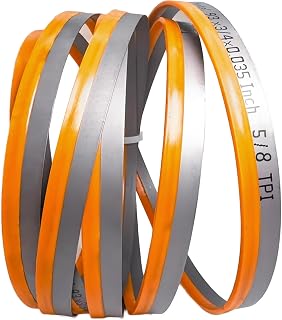
This 93-inch by 3/4-inch M42 bi-metal blade is a strong all-purpose option for thicker steel tubing, angle iron, and general fabrication. Its variable 10/14 TPI pattern balances cutting speed with smoother engagement, making it a sensible choice for furniture frames and outdoor brackets.
Imachinist S93121224 M42 24 TPI
The narrower 1/2-inch profile and fine 24 TPI tooth count are well suited to thin-wall tubing, flat stock, and smaller sections where coarse teeth can catch or chatter. It is particularly useful for detailed shop work, provided the saw accepts the 93-1/2-inch blade length.
FOXBC 93-Inch 10/14 TPI M42
FOXBC’s 3/4-inch M42 blade offers a practical combination of durability and versatility for routine metal cutting. The variable tooth pattern is a good fit for home workshops that move between square tubing, mild-steel bar, and occasional heavier stock.
Imachinist S9334812 M42 8/12 TPI
With a more aggressive 8/12 TPI variable pattern, this blade favors faster work on thicker metal and larger cross-sections. It is a useful pick when productivity matters more than an especially fine finish, though thin material should be supported carefully to prevent vibration.
FOXBC 64-1/2-Inch 24 TPI, 2-Pack
Designed for compatible Harbor Freight, WEN 3970, and Jet saws, this compact 24 TPI blade is convenient for small-shop repair and furniture projects. The two-pack is helpful for keeping a spare on hand, while the fine tooth count suits tubing and lighter-gauge metal better than heavy plate.
Frequently Asked Questions
What TPI is best for cutting metal?
There is no single best TPI for every job. Fine 18–24 TPI blades generally work well on thin tubing and sheet, while 8–14 TPI or variable-pitch blades are better for thicker bar, angle, and structural sections.
Are bi-metal band saw blades worth using?
Yes, for most home workshops. M42 bi-metal blades tolerate heat and intermittent cutting better than basic carbon-steel blades, so they typically offer longer useful life when speed, feed pressure, and coolant are managed correctly.
Can a metal-cutting blade cut aluminum?
Many metal-cutting blades can cut aluminum, but tooth loading can become a problem because aluminum is soft and sticky. Use an appropriate blade pitch, clear chips frequently, and follow the saw manufacturer’s guidance for speed and lubrication.
How do I know when a band saw blade is worn out?
Watch for slower cutting, increased vibration, rough or wandering cuts, and teeth that appear rounded, chipped, or missing. Continuing to force a dull blade can overheat the workpiece and place unnecessary stress on the saw.
Final Thoughts
For broad workshop use, the Imachinist S933414 10/14 TPI and FOXBC 93-inch 10/14 TPI are dependable starting points. Choose the Imachinist S9334812 8/12 TPI for thicker stock and faster cuts, or the fine-tooth FOXBC 64-1/2-inch two-pack when working with a compatible compact saw and lighter material.