Key takeaways
- Blade width: Wider blades generally track more confidently during deep cuts, making 3/4-inch models suitable for serious resawing when your saw can tension them properly. Smaller 10-inch saws often require 1/2-inch blades.
- Tooth pitch: A coarse 2 or 3 TPI pattern clears sawdust efficiently from thick stock, while 4 TPI offers a useful balance for smaller machines and moderate hardwood cuts. Fine blades are better suited to thinner work.
- Tooth design: Hook teeth feed aggressively and can improve cutting speed in hardwood. Skip-tooth patterns provide extra gullet space, which helps reduce clogging when cutting resinous or wet material.
- Material: Hardened carbon-steel blades are economical and practical for general furniture work. Carbide-tipped blades cost more but retain their edge longer and are particularly appealing for frequent production resawing.
- Machine fit: Confirm the exact blade length, width, thickness, and maximum width your bandsaw accepts. A technically excellent blade is useless if it cannot be tensioned correctly or will not clear the wheel housing.
What's inside
Resawing turns a bandsaw into a small-scale lumber mill, but the blade is where many otherwise capable setups fall short. A blade that is too narrow can wander, while the wrong tooth pattern may burn hardwood, clog with pitch, or leave a rough, uneven face that wastes valuable stock.
This guide compares blades for furniture makers, DIY woodworkers, and outdoor-living enthusiasts who process slabs, reclaimed boards, and locally sourced timber. The focus is on tooth geometry, blade width, steel or carbide construction, machine compatibility, and the practical demands of producing straight, repeatable veneers and boards.
As an Amazon Associate we earn from qualifying purchases.

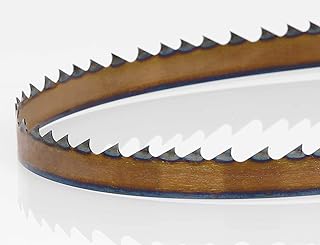


How to Choose a/an Band Saw Blade For Resawing (2026)
- Blade width: Wider blades generally track more confidently during deep cuts, making 3/4-inch models suitable for serious resawing when your saw can tension them properly. Smaller 10-inch saws often require 1/2-inch blades.
- Tooth pitch: A coarse 2 or 3 TPI pattern clears sawdust efficiently from thick stock, while 4 TPI offers a useful balance for smaller machines and moderate hardwood cuts. Fine blades are better suited to thinner work.
- Tooth design: Hook teeth feed aggressively and can improve cutting speed in hardwood. Skip-tooth patterns provide extra gullet space, which helps reduce clogging when cutting resinous or wet material.
- Material: Hardened carbon-steel blades are economical and practical for general furniture work. Carbide-tipped blades cost more but retain their edge longer and are particularly appealing for frequent production resawing.
- Machine fit: Confirm the exact blade length, width, thickness, and maximum width your bandsaw accepts. A technically excellent blade is useless if it cannot be tensioned correctly or will not clear the wheel housing.
The Best Band Saw Blade For Resawing (2026)s Reviewed
AYAO 70-1/2-Inch 4 TPI Hardened-Tooth Blade
The AYAO 70-1/2-inch blade is a sensible match for compact Craftsman and Rikon 10-inch bandsaws, offering a 1/2-inch profile that suits smaller wheels and lighter frames. Its 4 TPI hardened teeth provide a practical compromise between feed speed and surface quality when resawing modest-width boards.
Timber Wolf 93-1/2-Inch 3/4-Inch Resaw Blade
This 3423VPC Timber Wolf blade uses silicone steel and a low-tension design intended for machines that may not comfortably support extreme blade tension. Its broad 3/4-inch format helps maintain a straighter cut through deeper stock, making it a strong option for 14-inch-class saws and careful furniture work.
Dark Stone 111-Inch Carbide-Tipped Resaw Blade
Dark Stone’s 111-inch blade is built for demanding hardwood resawing, with long-life carbide teeth, a 3/4-inch width, and a coarse 2 TPI hook-tooth layout. It is best suited to a robust saw that can tension a wide blade and benefit from carbide’s durability during repeated, long cuts.
Dark Stone 131-1/2-Inch Carbide-Tipped Blade
The 131-1/2-inch Dark Stone model brings the same professional-oriented carbide construction to larger bandsaws. Its 0.032-inch gauge and 2 TPI hook geometry are aimed at straight hardwood cuts, making it attractive for thick slabs, substantial beams, and workshop owners who resaw regularly.
93-1/2-Inch Bandsaw Blade Assortment
This four-pack is a flexible choice for woodworkers who want one purchase to cover resawing, contour work, and smaller detail cuts. The assortment includes two 1/2-inch 6 TPI blades plus 1/4-inch 6 TPI and 1/8-inch 14 TPI options, so it is more versatile than a dedicated deep-resaw blade but less specialized for very thick stock.
Frequently Asked Questions
What TPI is best for resawing?
For thick hardwood, 2 to 4 TPI is usually the most useful range. Coarse teeth clear chips quickly and reduce heat, while a 4 TPI blade can leave a more manageable finish on narrower boards.
Is a wider blade always better?
No. A wider blade can resist deflection, but only if the bandsaw’s frame, guides, wheels, and tensioning system support it. On a compact machine, a properly fitted 1/2-inch blade may outperform an oversized blade that cannot be tensioned correctly.
Are carbide-tipped blades worth the cost?
They can be, particularly for frequent hardwood resawing, reclaimed timber, or production work. Carbide teeth typically hold an edge longer, though they require careful setup and are less forgiving of nails, screws, and hidden grit.
What else fits a 10-inch bandsaw?
Length is machine-specific, but the AYAO 72-inch 1/2-inch 4 TPI blade is made for compatible WEN 10-inch bandsaws. Always verify your saw’s manual and measure the installed blade length before ordering.
Final Thoughts
For compact machines, the AYAO 70-1/2-inch blade is a practical starting point; the Timber Wolf 93-1/2-inch blade is a compelling choice for controlled, deeper resawing; and the Dark Stone carbide models are the strongest candidates for demanding hardwood work on larger, well-tuned bandsaws.