Key takeaways
- Length: Confirm the exact blade length specified by your saw manual. A difference of even a few inches can prevent proper tensioning.
- Width: Wider blades track more steadily for straight cuts and resawing, while narrow blades turn more easily around curves.
- Tooth count: Lower TPI removes chips quickly in thick stock; higher TPI produces a smoother finish in thinner boards.
- Material: Hardened or premium-alloy teeth generally last longer when cutting dense hardwoods, reclaimed timber, and abrasive outdoor lumber.
- Cutting task: Match the blade to the job. Use coarse teeth for fast ripping, finer teeth for detail work, and flexible portable-saw blades for field repairs or compact tools.
What's inside
Choosing a bandsaw blade for furniture work is less straightforward than picking the right length. A blade that glides neatly through pine may wander in hardwood, clog in green stock, or leave a rough edge when its tooth count does not suit the cut. Even a quality blade will disappoint if its length, width, or tooth pattern does not match the saw.
This guide focuses on practical woodshop and outdoor-living projects, from trimming reclaimed boards to resawing lumber for benches, shelves, and garden furniture. We compare blade dimensions, tooth spacing, portability, and likely use cases so you can select a dependable match for your machine and material.
As an Amazon Associate we earn from qualifying purchases.



How to Choose a Band Saw Blade For Wood (2026)
- Length: Confirm the exact blade length specified by your saw manual. A difference of even a few inches can prevent proper tensioning.
- Width: Wider blades track more steadily for straight cuts and resawing, while narrow blades turn more easily around curves.
- Tooth count: Lower TPI removes chips quickly in thick stock; higher TPI produces a smoother finish in thinner boards.
- Material: Hardened or premium-alloy teeth generally last longer when cutting dense hardwoods, reclaimed timber, and abrasive outdoor lumber.
- Cutting task: Match the blade to the job. Use coarse teeth for fast ripping, finer teeth for detail work, and flexible portable-saw blades for field repairs or compact tools.
The Best Band Saw Blade For Wood (2026)s Reviewed
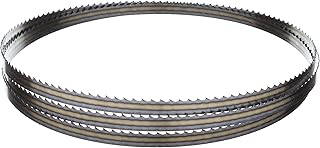
AYAO 70-1/2-Inch 4 TPI Bandsaw Blade
AYAO’s 70-1/2-inch blade is a practical choice for compatible 10-inch saws such as select Craftsman and Rikon models. Its 4 TPI pattern favors fast, open cuts through thicker boards, making it useful for rough furniture parts, firewood-sized stock, and straightforward curves. Verify your machine’s required length before ordering.
Timber Wolf 72-Inch 4 TPI Bandsaw Blade
This 1/2-inch Timber Wolf blade suits woodworkers who value controlled, general-purpose cutting on a 72-inch machine. The coarse four-tooth pattern clears sawdust efficiently, which is especially helpful when cutting deep hardwood or damp outdoor lumber, though it will not leave the polished surface produced by a fine-tooth blade.
FOXBC 72-Inch 6 TPI Bandsaw Blades
FOXBC’s two-pack is designed for compatible 10-inch saws, including WEN 3962 and Delta 28-140 models. Six TPI offers a useful middle ground: smoother results than a coarse ripping blade while retaining enough gullets for everyday boards, plywood, and furniture components. The two-blade format is convenient for keeping a spare ready.
LENOX Tools 44-7/8-Inch 14 TPI Portable Blades
These LENOX portable bandsaw blades are aimed at compact saws and lighter, more controlled cutting rather than heavy resawing. Their 14 TPI pattern is well suited to thinner wood, trim, dowels, and careful on-site adjustments. The five-pack makes sense for homeowners who use a portable saw around a workshop, shed, or job site.
FOXBC 44-7/8-Inch 10/14 TPI Portable Blades
FOXBC’s three-pack fits several popular Milwaukee and DeWalt portable bandsaws and uses a variable 10/14 TPI arrangement. That blend can reduce vibration and improve versatility across thin boards, small hardwood pieces, and mixed materials. Check your exact tool model and blade thickness before purchase, since portable saw specifications vary.
Frequently Asked Questions
What TPI is best for cutting wood?
For thick lumber and fast straight cuts, 3–6 TPI is usually the most useful range. Choose approximately 10–14 TPI for thinner boards, small parts, and a cleaner finish. The teeth should maintain contact with the workpiece without packing the gullets with sawdust.
Can I use a portable bandsaw blade for furniture making?
Yes, but portable blades are intended for compact tools and generally thinner material. They work well for trimming, small joinery components, and repairs, but they are not a substitute for a wide resaw blade on a stationary bandsaw.
How do I know which blade length to buy?
Look for the blade length in the saw’s manual or manufacturer specifications. Do not rely only on the wheel diameter, because frame design and wheel spacing differ between models. Confirm length, width, and thickness together before ordering.
Why does my bandsaw blade wander in wood?
Wandering can result from a dull or unsuitable blade, insufficient tension, misaligned guides, excessive feed pressure, or a fence that is not tracking correctly. Install the correct blade, tension it according to the manual, and let the teeth do the cutting rather than forcing the stock.
Final Thoughts
For general stationary-saw work, the FOXBC 72-inch 6 TPI blade is a balanced option, while the Timber Wolf 72-inch 4 TPI blade is better for faster cuts in substantial stock. Owners of compatible portable saws should consider the LENOX five-pack for fine control or the FOXBC variable-TPI pack for broader day-to-day versatility.