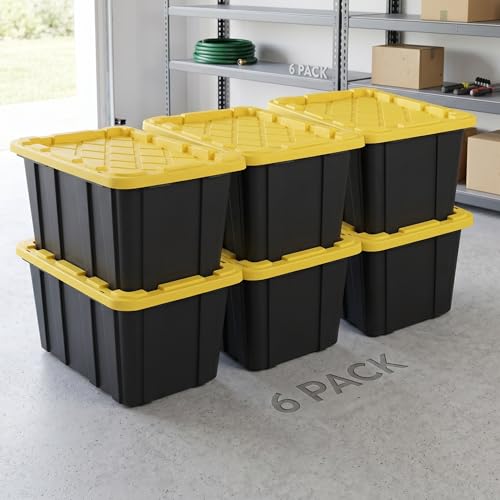
Our Top Picks
 Bagnizer Small Plastic Storage Bins with Bamboo LidsSmall- 6 Pack10 x 7.3 x 4.3 inches4.66 poundsCheck on Amazon
 Tiawudi Set of 10 Clear Plastic Storage BinsLarge & Small11.2 x 8.1 x 6 inches7.7 poundsCheck on Amazon
For most households, clear lidded bins with a stackable design suit under-sink and cabinet storage, small acrylic or bamboo organisers suit countertops and drawers, and lidded woven or fabric baskets suit open shelves and towels. The best choice depends on where the container lives, how much moisture it sees, and whether you want to see the contents at a glance. This guide compares the main container types, the materials makers use, and the limits to know before buying.
Bathroom Storage Containers at a Glance
| Container type | Best for | Typical stated materials | Limits |
|---|---|---|---|
| Clear stackable bins | Under-sink and cabinet shelves; spare toiletries | BPA-free plastic (PET, PP), acrylic | Can scuff; stacking needs matching sizes |
| Drawer dividers and trays | Makeup, razors, hair accessories | Plastic, bamboo, acrylic | Must match drawer depth |
| Countertop canisters and jars | Cotton swabs, cotton rounds, bath salts | Glass, acrylic, ceramic | Glass and ceramic can break on hard floors |
| Lidded woven baskets | Towels, toilet paper, open shelves | Seagrass, rattan-look plastic, fabric | Natural fibre dislikes wet conditions |
| Wall or door-mounted caddies | Shower items and hair tools | Stainless steel, coated wire, plastic | Weight limits depend on mount |
| Turntable (lazy Susan) organisers | Deep cabinets with bottles | Plastic, acrylic | Takes shelf depth |
How to Choose a Container
Start with the zone
A container in a shower caddy faces constant water; a lidded bin under the sink faces humidity and occasional leaks; a drawer tray stays dry most of the time. Match the material to the zone, rather than buying a matched set for the whole room.
Bagnizer Small Plastic Storage Bins with Bamboo Lids 5.2qt Stackable Box Basket Pantry Decorative Containers Cute with Labels for Organizing Desktop Closet Office Cream White of 6 packs 10*7.2*4.1"
Picked as a relevant option in this category.
View on Amazon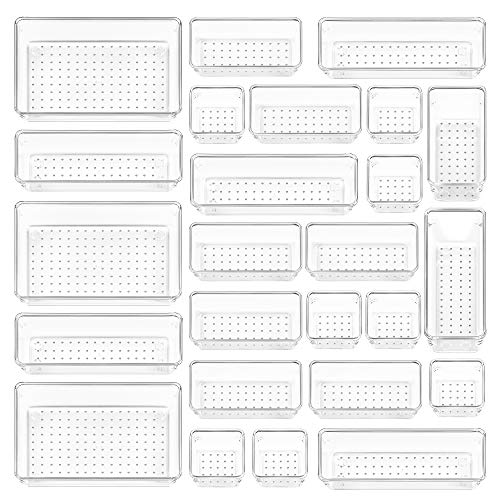
Vtopmart 25 Pack Clear Plastic Drawer Organizers with Non-slip Rubber Pads | 4-Size Versatile Makeup Organizer, Storage Containers Small Bins for Makeup, Jewelries, Bedroom, Kitchen Utensils and Office
Chosen because it specifies 4-Size Versatile Makeup Organizer and Storage Containers Small Bins for Makeup.
View on AmazonTiawudi Set of 10 Clear Plastic Storage Bins, 4 Large and 6 Small Stackable Storage Containers for Pantry Organization, Organizer Bins for Home, Kitchen, Bathroom, Office, Cabinet Shelf Organizers
Chosen because it specifies Organizer Bins for Home and Kitchen.
View on AmazonMeasure first
Measure shelf height, depth and width, plus the clearance for any pipes under the sink. Makers typically list outer dimensions, so allow a little extra room for handles and lids. In drawers, measure the interior depth below the track hardware.
Think about access
Items you use daily belong in open or easily lifted containers. Backup stock can go into lidded bins at the back. Labels or clear walls cut down on rummaging.
Materials Compared
| Material | Strengths | Trade-offs |
|---|---|---|
| Plastic (PP, PET) | Light, affordable, waterproof, easy to wipe | Can yellow or scratch; some feel thin |
| Acrylic | Glass-like clarity, rigid, easy to clean | Scratches; cracks if dropped on hard surfaces |
| Glass | Non-porous, does not hold odours | Heavy and breakable; keep away from wet tile floors |
| Bamboo | Natural look; sealed surfaces handle humidity | Not for standing water; may need resealing |
| Metal (stainless or coated wire) | Strong; good for caddies and racks | Coating chips can rust |
| Woven fibre and fabric | Soft look, hides contents | Absorbs moisture; best for towels in drier rooms |
Care and Safety Notes
- Medicines and chemicals: keep prescriptions, cleaning products and anything hazardous out of reach of children, in their original packaging, and follow the label. A decorative bin is not a substitute for a locked or childproof cabinet where one is needed.
- Dampness: do not put damp items into closed containers; trapped moisture encourages mildew. Let items dry first and leave lids ajar for items that stay damp.
- Cleaning: most plastic and acrylic bins can be washed with mild soap and water. Follow the maker’s instructions, because some acrylic cleaners cause clouding.
- Electrical items: store hair dryers and curling irons dry and unplugged, away from sinks and tubs.
- Glass: use bathroom-safe containers with a non-slip base if you share the space with children or pets.
Representative Brands and Lines
Reviewers often mention the following when discussing this category. Specifications differ by model, so read the maker’s own page for sizes and materials.
- The Container Store (Elfa, Like-It lines) and iDesign: modular bins and drawer organisers in several sizes; clear plastic bins that stack.
- simplehuman: lidded canisters, caddies and trash-adjacent organisers with tidy finishes.
- mDesign and Sorbus: broad ranges of clear bins, turntables and woven baskets.
- Rubbermaid and Sterilite: utility bins widely used for under-sink and linen storage.
- IKEA: inexpensive modular boxes and jars with published dimensions.
Budget Tiers
| Tier | What you get | Trade-off |
|---|---|---|
| Budget | Basic plastic bins, simple baskets, multipacks | Thin walls and lids that can crack |
| Mid-range | Thicker acrylic, bamboo trays, branded modular sets | More weight; sets can be larger than needed |
| Premium | Heavy glass, stainless and designer finishes | Cost and fragility |
Pick This If…
| If you need… | Choose | Why |
|---|---|---|
| Spare supplies under the sink | Clear stackable bins with handles | Easy to see and slide out |
| A tidy vanity drawer | Adjustable dividers or a modular tray set | Fits odd drawer sizes |
| A countertop display | Glass or acrylic canisters | Visible contents; easy to wash |
| Towel storage on open shelves | Lidded woven baskets | Soft look, hides clutter |
| Shower bottles | Stainless or coated caddy with drain slots | Handles constant water |
| Deep corner cabinet | Turntable organiser | Brings items to the front |
Layout Tips
Group by use: daily items on a counter tray, weekly items in drawers, bulk stock under the sink. Use uniform bins on visible shelves for a cleaner look, and mixed sizes where function comes first. Leave at least a little space around pipes and the shut-off valve so you can reach them easily during a leak.
Alternatives to Consider
- Over-the-toilet shelving: if floor-level storage is full, vertical shelving can hold baskets and bins.
- Over-the-door racks: hold hair tools and towels with no floor footprint.
- Recessed shelves or a medicine cabinet: a larger project that adds hidden storage.
Matching Containers to Specific Bathroom Items
Different items deserve different containers. Cotton rounds and swabs are best in lidded jars that keep humidity out. Makeup brushes stand well in open cups, while palettes and compacts suit shallow drawer trays that stop them from sliding. Razors and small tools do better in compartments that separate sharp edges from soft items. Bottles of shampoo and cleaning products prefer bins with a lip, which catches drips and stops them from marking shelves.
Extra stock and travel items
Backup toiletries can go into clear lidded boxes labelled by category, such as dental, hair or first aid. A dedicated travel-size bin is a quick way to prepare for a trip. Rotate older products to the front so they get used first, and look at expiry dates on skincare and sun products, which can lose effectiveness with age.
Towels and linens
Rolled towels in a basket look tidy and take less space than folded stacks. Choose a basket with sturdy handles and a liner if you plan to place damp items in it. Washable fabric liners make it easier to keep the basket fresh.
Cleaning supplies
A caddy with a handle lets you carry cleaners from room to room. Store cleaning products upright, with caps closed, in their original labelled bottles, and keep them away from children and pets. Never mix products, and follow the label’s ventilation advice.
Small-bathroom strategies
If space is limited, use vertical options: stackable bins in cabinets, hanging organisers on the inside of a cabinet door, and tiered trays on the counter. Uniform containers reduce visual clutter, while clear walls reduce the need to open several lids. Avoid oversized bins that waste cabinet space; measure first, then buy.
Questions to ask before checkout
- Do the dimensions match the shelf, drawer or counter space with a little clearance?
- Is the material suited to the zone’s moisture level?
- Can the lids and dividers be removed and washed?
- Is there a return path if the size is wrong?
A simple three-step reset
Empty one cabinet at a time, discard anything expired or unused, and sort what remains into daily, weekly and backup groups. Then assign a container to each group before you buy anything new. This stops overbuying and shows exactly which sizes you need.
Frequently Asked Questions
What is the best container material for a humid bathroom?
Plastic, acrylic and glass resist moisture best, and sealed bamboo is a reasonable natural option. Untreated fibre and fabric are better for dry shelves and towels.
Should bathroom bins have lids?
Lids keep dust and splashes out and hide clutter, but they also trap moisture if contents are damp. Use lids for dry backup stock and leave them off or ajar for items that are slow to dry.
How do I keep containers from getting mouldy?
Dry items before storing them, clean containers regularly with mild soap, and ventilate the room. If mould appears on porous materials such as fibre, it may be better to replace the container.
Are clear containers worth it?
They save time because you can see what is inside, which helps with supplies that run low. Opaque baskets look neater but may need labels.
Can I store medicines in decorative bathroom containers?
Medicines are generally best kept in their original packaging, out of reach of children, and following the label’s storage instructions. Heat and humidity may affect some products, so ask a pharmacist where to store them.
How many containers do I really need?
Start with one tray for daily items, one drawer organiser and one or two bins for backup stock. Add more only if you still lack a place for specific items.