Key takeaways
- Benchtop or handheld: A stationary saw with a table gives you control for curved furniture parts and resawing thin slats. A portable band saw goes to the material instead, which is what you want for cutting posts in place or trimming metal railing on site.
- Throat and depth capacity: Depth is the number that limits you. Five inches swallows most 4×4 post stock and pipe; a 10-inch benchtop machine handles cabriole-style legs and gentle chair-back curves comfortably.
- Variable speed: Wood wants speed, metal wants restraint. Running a fast blade through aluminum angle work-hardens the cut and dulls teeth fast, so adjustable speed pays for itself the first time you fabricate a bracket.
- Blade availability: Confirm the blade length is a common size before you buy. Odd lengths mean waiting on shipments mid-project, and beginners break blades while learning feed pressure.
- Battery vs. corded: Cordless is genuinely liberating for outdoor work, but bare tools require a compatible battery platform. If you are not already invested in one, a corded saw delivers more sustained cutting per dollar.
What's inside
Anyone who has tried to build a cedar bench, a slatted planter, or a set of Adirondack chairs knows the moment where hand tools stop being charming. Curved armrests, tapered legs, and the notched brackets that carry a pergola beam all want a blade that can turn a corner without splintering the workpiece. A circular saw cuts straight lines and nothing else; a jigsaw wanders under load. That gap is where a band saw earns its bench space, and it is also where most first-time buyers stall out, because the category sprawls from handheld metal-cutting units to floor-standing cabinet machines with three-figure blade options.
This guide narrows the field to saws that make sense for someone furnishing a patio, porch, or backyard workshop for the first time. We looked at cutting depth against the stock that outdoor furniture actually uses, how forgiving each machine is when your technique is still developing, and whether the tool handles the aluminum stock, galvanized pipe, and PVC conduit that show up in trellises, umbrella stands, and irrigation runs. Portability matters here too, since a lot of outdoor building happens on the deck rather than in a garage.
As an Amazon Associate we earn from qualifying purchases.


How to Choose a Beginner Band Saw (2026)
- Benchtop or handheld: A stationary saw with a table gives you control for curved furniture parts and resawing thin slats. A portable band saw goes to the material instead, which is what you want for cutting posts in place or trimming metal railing on site.
- Throat and depth capacity: Depth is the number that limits you. Five inches swallows most 4×4 post stock and pipe; a 10-inch benchtop machine handles cabriole-style legs and gentle chair-back curves comfortably.
- Variable speed: Wood wants speed, metal wants restraint. Running a fast blade through aluminum angle work-hardens the cut and dulls teeth fast, so adjustable speed pays for itself the first time you fabricate a bracket.
- Blade availability: Confirm the blade length is a common size before you buy. Odd lengths mean waiting on shipments mid-project, and beginners break blades while learning feed pressure.
- Battery vs. corded: Cordless is genuinely liberating for outdoor work, but bare tools require a compatible battery platform. If you are not already invested in one, a corded saw delivers more sustained cutting per dollar.
The Best Beginner Band Saws (2026) Reviewed
WEN 10-Inch Band Saw with Stand (BA3962)
This is the most sensible first stationary saw for outdoor furniture work: the 10-inch throat and two-speed drive let you cut curved chair backs and shaped table aprons without fighting the machine, and the included stand saves you from building a base before you build anything else. The 3.5-amp motor is honest about its limits, so keep resaw cuts modest and let the blade set the pace.
DEWALT 20V MAX Band Saw (DCS374B)
A five-inch capacity in a cordless package makes this the tool for cutting posts, threaded rod, and conduit exactly where they sit, and the hang hooks are a small detail you appreciate on a ladder or a half-built pergola. It ships bare, so budget for a battery and charger unless you already run the 20V platform.
DEWALT 20V MAX XR Bandsaw (DCS378B)
The brushless motor and lighter 3-3/8 inch frame make this the more comfortable choice for overhead and one-handed work, like trimming railing brackets or cutting strut in tight quarters. Choose it over the DCS374B if maneuverability matters more than raw capacity.
VEVOR Portable Band Saw, 5-Inch Deep Cut
A corded 10-amp motor with a wide speed range and a removable steel base gives you two tools in one: a handheld saw for on-site cuts and a semi-stationary setup for repetitive stock. The 0-45 degree bevel is genuinely useful for mitered planter frames and angled leg cuts.
DOVAMAN Portable Band Saw, 5-Inch with Base
Similar footprint to the VEVOR with variable speed, an adjustable bevel, and two blades in the box, which shortens the gap between unboxing and cutting. It is a reasonable entry point if you want deep-cut capability without committing to a battery ecosystem.
Frequently Asked Questions
Can a band saw cut pressure-treated lumber?
Yes, though wet treated stock gums up blades and leaves residue on the tires. Let boards dry, use a coarser tooth count, and clean the blade afterward. Always wear a respirator and gloves when cutting treated wood.
Do I need a stationary saw if I already own a jigsaw?
For outdoor furniture, yes. A band saw tracks a curve without the blade deflection that makes jigsaw cuts wander, which matters when two chair sides need to match.
What blade should a beginner start with?
A general-purpose 1/4-inch wood blade for curves and a bi-metal 14 TPI blade for metal cover nearly everything a patio project demands. Add wider blades only when you start resawing.
Is a portable band saw safe for one-person use?
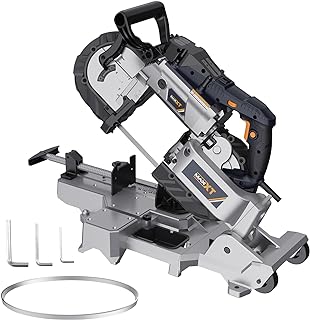
It is, provided the workpiece is clamped. Most beginner injuries come from holding stock by hand while the blade grabs. A base-equipped model like the MAXXT 5-inch deep-cut saw makes secure setups easier.
Final Thoughts
If your projects lean toward shaped wood parts, the WEN 10-inch benchtop saw is the clearest starting point and the best value in this group. For work that happens out on the deck rather than at a bench, the DEWALT DCS374B is the more capable cordless pick, while the VEVOR portable saw delivers similar deep-cut performance on a corded budget.