Key takeaways
- Tooth count: Higher tooth counts generally produce smoother crosscuts in trim and furniture parts, while lower counts remove material faster in framing stock.
- Blade diameter: Match the blade diameter to your saw. A 10-inch saw requires a 10-inch blade, while a 12-inch model needs a 12-inch blade.
- Kerf: Thin-kerf blades waste less material and can put less strain on a smaller saw, making them useful for sliding miter saws and portable workshops.
- Tooth grind: An alternating top bevel, or ATB, pattern is well suited to clean crosscuts in wood, including molding, shelving, and outdoor furniture components.
- Material: Carbide-tipped teeth hold an edge longer than basic steel teeth, especially when cutting dense hardwoods or completing repeated projects.
What's inside
Choosing a miter saw blade is less straightforward than it looks. Tooth count, kerf width, arbor size, carbide quality, and the type of cut all affect whether a board comes away crisp or chipped. For outdoor furniture, the challenge is greater: hardwoods, pressure-treated lumber, cedar, and composite trim each place different demands on a blade.
This guide focuses on blades suited to furniture building, deck details, garden structures, and general home improvement. We compare fine-finish options, versatile multi-packs, thin-kerf designs, and blades that offer a practical balance between speed and clean cuts.
As an Amazon Associate we earn from qualifying purchases.


How to Choose a/an Blades For Miter Saw (2026)
- Tooth count: Higher tooth counts generally produce smoother crosscuts in trim and furniture parts, while lower counts remove material faster in framing stock.
- Blade diameter: Match the blade diameter to your saw. A 10-inch saw requires a 10-inch blade, while a 12-inch model needs a 12-inch blade.
- Kerf: Thin-kerf blades waste less material and can put less strain on a smaller saw, making them useful for sliding miter saws and portable workshops.
- Tooth grind: An alternating top bevel, or ATB, pattern is well suited to clean crosscuts in wood, including molding, shelving, and outdoor furniture components.
- Material: Carbide-tipped teeth hold an edge longer than basic steel teeth, especially when cutting dense hardwoods or completing repeated projects.
The Best Blades For Miter Saw (2026)s Reviewed
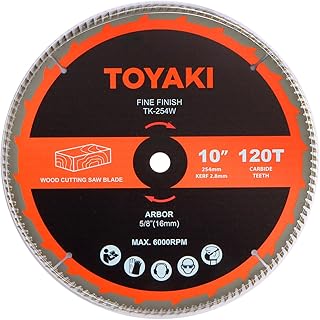
10-Inch 120-Tooth Fine-Finish Blade
This 10-inch, 120-tooth blade is aimed at exceptionally clean cuts in trim, veneer-faced panels, and visible furniture joints. Its 5/8-inch arbor suits many common miter, table, and circular saws, but confirm your saw’s arbor and recommended blade specifications before fitting it.
WEN BL1080 80-Tooth Blade
The WEN BL1080 is a sensible choice for homeowners who want a refined finish without moving to an unusually high tooth count. Its carbide-tipped 80-tooth layout is well matched to crosscutting boards for shelving, planter boxes, outdoor seating, and interior trim.
DEWALT DWA112100 12-Inch Blade
With 100 teeth on a 12-inch platform, the DEWALT DWA112100 is designed for smooth, controlled cuts in larger workpieces. It makes particular sense for owners of 12-inch saws who regularly cut wide trim, hardwood furniture parts, or long boards where a clean edge reduces sanding.
Freud LU91R012 Thin-Kerf Blade
The Freud LU91R012 combines a thin-kerf design with 72 teeth, offering a useful middle ground between cutting efficiency and finish quality. It is a strong fit for sliding compound miter saws and outdoor projects where you want to preserve stock while still producing tidy crosscuts in dimensional lumber.
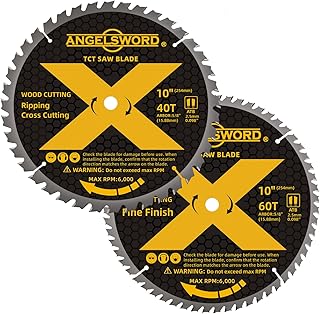
10-Inch 3-Pack: 32T, 60T, and 80T
This three-blade set covers several common jobs, from faster framing cuts with the 32-tooth blade to finer work with the 60- and 80-tooth options. For a home workshop that moves between rough construction, garden projects, and furniture detailing, the range can be more useful than owning one specialized blade.
Frequently Asked Questions
What tooth count is best for a miter saw?
For clean crosscuts in furniture, trim, and finished boards, 60 to 100 teeth is a practical range for many 10- and 12-inch saws. Lower tooth counts are faster for framing and rough outdoor construction, while very high counts favor delicate finish work.
Can a miter saw blade be used on a table saw?
Some blades are designed for both tools, but compatibility depends on diameter, arbor size, blade clearance, and the cut you need. Always follow the saw manufacturer’s guidance and use a blade rated for the material and application.
Is a thin-kerf blade better for outdoor furniture?
It can be, particularly when working with a compact saw or expensive hardwood. A thin kerf removes less material and may require less power, although the blade must be appropriate for the saw and held securely during the cut.
How can I get cleaner cuts in cedar or pressure-treated lumber?
Use a sharp carbide-tipped blade, support the board close to the cut, and let the saw reach full speed before entering the material. Mark the finished face, avoid forcing the blade, and inspect treated lumber for embedded grit or fasteners before cutting.
Final Thoughts
For highly polished furniture work, the 10-inch 120-tooth blade and DEWALT DWA112100 are compelling finish-focused choices. The WEN BL1080 offers a practical everyday balance, while the Freud LU91R012 is especially appealing when thin kerf and smooth sliding-saw performance matter. For varied home and outdoor projects, the three-pack provides the broadest coverage.