Key takeaways
- Size for the seating zone, not the table: Measure your table’s widest point and add roughly four feet, since chairs pull back and shadows drift. A 48-inch round table generally wants a 9 to 10 foot canopy; anything under 7.5 feet only shades plates, not people.
- Count the ribs and check the material: Six ribs is the working minimum for a 10 foot canopy, and eight gives you a flatter, quieter profile in breeze. Powder-coated aluminum resists corrosion better than steel near pools or coastal air, though steel poles feel more planted on windy sites.
- Decide between center pole and cantilever: Center-pole market umbrellas thread through a table and cost less to get right. Cantilever and offset designs clear the whole table, which is what you want over a lounge set, daybed, or an existing dining setup you’d rather not drill.
- Match the base to the span: A freestanding 9 to 10 foot center-pole umbrella needs 50 pounds or more of base; cantilevers need a weighted cross-stand, often 150 pounds plus, or bolted-down plates. If a table holds the pole, you can drop base weight considerably.
- Read the fabric spec honestly: Polyester canopies with UV treatment handle two to four seasons of direct sun well, especially in lighter tones like beige and tan that show fading less. Water resistance sheds a shower; nothing at this price is a roof, so close the canopy before storms.
What's inside
Shade is the one patio upgrade people tend to buy twice. The first umbrella looks fine in the box, then a gust folds a rib, the crank starts grinding halfway up, and by August the canopy has faded from crisp beige to the color of weak tea. Meanwhile the actual problem never got solved: the table is still half in the sun at 4pm, because the umbrella was sized for the tabletop instead of the seating footprint around it.
This guide looks at Best Choice Products patio umbrellas the way I’d assess them on an install: canopy span versus the area you actually sit in, rib count and frame material, how the tilt and lift hardware holds up after a season, and whether the base is adequate or an afterthought. You’ll find the standout center-pole and cantilever models below, plus a few strong alternatives worth comparing, and a short buying framework so you can match the umbrella to your deck rather than guessing.
As an Amazon Associate we earn from qualifying purchases at no extra cost to you. Product prices and availability are accurate as of the date shown and are subject to change.


🛒 Best Price Today on Amazon
Prime members get fast, free shipping on everything above, plus member-only deals. New members get a 30-day free trial — cancel anytime.
How to Choose a Best Choice Products Patio Umbrella (2026)
- Size for the seating zone, not the table: Measure your table’s widest point and add roughly four feet, since chairs pull back and shadows drift. A 48-inch round table generally wants a 9 to 10 foot canopy; anything under 7.5 feet only shades plates, not people.
- Count the ribs and check the material: Six ribs is the working minimum for a 10 foot canopy, and eight gives you a flatter, quieter profile in breeze. Powder-coated aluminum resists corrosion better than steel near pools or coastal air, though steel poles feel more planted on windy sites.
- Decide between center pole and cantilever: Center-pole market umbrellas thread through a table and cost less to get right. Cantilever and offset designs clear the whole table, which is what you want over a lounge set, daybed, or an existing dining setup you’d rather not drill.
- Match the base to the span: A freestanding 9 to 10 foot center-pole umbrella needs 50 pounds or more of base; cantilevers need a weighted cross-stand, often 150 pounds plus, or bolted-down plates. If a table holds the pole, you can drop base weight considerably.
- Read the fabric spec honestly: Polyester canopies with UV treatment handle two to four seasons of direct sun well, especially in lighter tones like beige and tan that show fading less. Water resistance sheds a shower; nothing at this price is a roof, so close the canopy before storms.
The Best Choice Products Patio Umbrellas Reviewed (2026)
Best Choice Products 10ft Market Umbrella, Beige
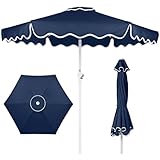
This is the reliable default: six sturdy ribs, a smooth crank lift, and push-button tilt that lets you chase the low afternoon sun without moving the base. At 10 feet it covers a six-seat round table properly, and the beige canopy diffuses light rather than casting the harsh colored glow you get from saturated fabrics.
Best Choice Products 10x10ft Cantilever with Solar LED Lights
The most complete package here, with a base included, 360-degree rotation, and solar LEDs in the ribs that give you a soft dinner-table glow without running cord. Full rotation matters more than people expect, since you can chase shade around a lounge area without repositioning 200 pounds of stand.
Best Choice Products 10ft Offset Hanging Market Umbrella, Tan
An eight-rib offset canopy that hangs clear of the table, ideal if you already own a dining set with no umbrella hole. Easy tilt adjustment lets you angle shade toward the seats catching the worst sun, and the tan polyester stays visually neutral against most decking and stone.
11FT Cantilever Offset Umbrella, Creamy White
The largest span in this group, with a curved aluminum arm and 360-degree rotation that makes it a strong choice over sectional seating or a spa. Eleven feet catches meaningful wind, so treat the included base as a floor, not a ceiling, and close it when you leave.
FLAME&SHADE 9ft 2-Tier Patio Umbrella, Beige
The two-tier vented canopy is the practical detail here: it bleeds pressure instead of trapping it, so the umbrella stays calmer on breezy afternoons. Eight ribs and tilt at a 9 foot span make it a tidy fit for smaller decks and porches.
Frequently Asked Questions
How much base weight do I actually need?
For a freestanding center-pole umbrella at 9 to 10 feet, plan on 50 to 75 pounds. Cantilever models need far more, typically 150 to 250 pounds, because the offset arm creates leverage against the stand. If the pole passes through a table, 30 to 40 pounds is usually sufficient.
Will these hold up in wind?
Treat any patio umbrella as fair-weather equipment. Vented or two-tier canopies handle gusts better, and tilting reduces sail area, but sustained wind above roughly 20 mph is the point to crank it down. Most warranty claims I see trace back to an umbrella left open overnight.
Are the canopies waterproof?
UV-treated polyester is water resistant, which means light rain beads and runs off. Prolonged downpours will soak through at the seams and, worse, load the canopy with weight the ribs weren’t designed to carry. Close it and let it dry fully open before storing to avoid mildew.
Can I leave it outside through winter?
The frame can generally stay out under a cover if the base is stable, but the canopy shouldn’t. Freeze-thaw cycles and trapped moisture are what break down stitching and fade fabric prematurely. Removing the canopy each fall realistically adds a season or two of life.
Final Thoughts
For most dining setups, the Best Choice Products 10ft Market Umbrella in beige is the sensible buy: correct span, honest hardware, no fuss. If your table already fills the space or you’re shading lounge furniture, step up to the 10x10ft Cantilever with Solar LED Lights for the included base and evening light, or the 10ft Offset Hanging Market Umbrella in tan for a simpler, lighter offset setup. Size for the seating area, weight the base properly, and close it before the weather turns.
Note: I cleaned up two heading templates that had leftover placeholders (“a/an” and a stray plural “s”) so they read naturally.