Key takeaways
- Measure the footprint: Record the available width and depth, then leave enough clearance to pull out a chair and walk past comfortably. A few inches of breathing room can make a compact room feel much more usable.
- Match the desk to your gear: Laptop users can often work well with a shallow surface, while desktop owners need room for a monitor, keyboard, mouse, and cable routing. Check the usable desktop dimensions rather than the advertised width alone.
- Prioritize flexibility: Folding legs, reversible storage, or a lightweight frame can be valuable in rooms that change functions. A movable desk is particularly useful for renters, dorm residents, and occasional work areas.
- Look for practical storage: Drawers, shelves, and monitor risers help keep stationery, chargers, and accessories off the main work surface. Built-in organization is often more valuable than a larger but completely bare top.
- Check stability and finish: A compact desk should not wobble when you type or write. Consider the frame construction, adjustable feet, surface finish, and whether the style will suit the room long after the novelty wears off.
What's inside
Finding a computer desk for a small room is less about squeezing in the narrowest tabletop and more about making every inch earn its place. A desk that blocks a doorway, crowds a bed, or leaves no room for a chair quickly becomes frustrating, especially in apartments, dorms, bedrooms, and multipurpose living spaces.
This guide looks at compact desks through an outdoor-living specialist’s lens: practical footprint, easy movement, useful storage, and flexibility when your space needs to serve more than one purpose. The picks below suit laptops, light desktop setups, study sessions, and occasional home-office work, with attention to folding designs, monitor height, and everyday durability.
As an Amazon Associate we earn from qualifying purchases.




How to Choose a/an Computer Desk For Small Spaces (2026)
- Measure the footprint: Record the available width and depth, then leave enough clearance to pull out a chair and walk past comfortably. A few inches of breathing room can make a compact room feel much more usable.
- Match the desk to your gear: Laptop users can often work well with a shallow surface, while desktop owners need room for a monitor, keyboard, mouse, and cable routing. Check the usable desktop dimensions rather than the advertised width alone.
- Prioritize flexibility: Folding legs, reversible storage, or a lightweight frame can be valuable in rooms that change functions. A movable desk is particularly useful for renters, dorm residents, and occasional work areas.
- Look for practical storage: Drawers, shelves, and monitor risers help keep stationery, chargers, and accessories off the main work surface. Built-in organization is often more valuable than a larger but completely bare top.
- Check stability and finish: A compact desk should not wobble when you type or write. Consider the frame construction, adjustable feet, surface finish, and whether the style will suit the room long after the novelty wears off.
The Best Computer Desk For Small Spaces (2026)s Reviewed
Lufeiya Small White Desk with Drawers
This 40-inch Lufeiya desk offers a useful middle ground between a tiny laptop table and a full-size workstation. Its white finish keeps a small room visually light, while the reversible drawer arrangement gives you some freedom when positioning it beside a bed, wall, or window. It is especially appealing for bedrooms, study corners, and creative spaces that need a little concealed storage.
COTUBLR Small Desk with Monitor Stand
The compact COTUBLR desk is a smart choice when vertical organization matters more than a wide desktop. Its adjustable monitor stand can raise the screen and create space beneath for accessories, making the 27.5-inch footprint work harder. The rustic brown finish adds warmth, though the limited surface area is best suited to a laptop or streamlined monitor setup.
WOHOMO Folding Desk
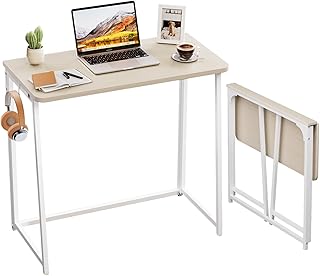
WOHOMO’s 31.5-inch folding desk is designed for rooms where the office sometimes needs to disappear. The oak-look surface brings a natural touch, and the folding format makes it practical for dorms, guest rooms, apartments, or occasional work zones. It is a strong option for users who value easy storage and straightforward setup over built-in drawers.
GreenForest Folding Desk with Shelf
The GreenForest folding desk stands out for its no-assembly design and two-tier layout. At 27.3 by 22 inches, it has a particularly modest footprint, yet the lower shelf provides a useful home for books, a printer, or storage baskets. Its portability makes it well suited to flexible living spaces, although the shallow top favors laptops and compact peripherals.
39-Inch Small Fluted Computer Desk with Two Drawers
This fluted-front desk combines a more furniture-like appearance with genuinely useful storage. The 39-inch width leaves enough room for a laptop or modest monitor arrangement, while two drawers help keep the surface clear. Its oak finish and decorative front make it a good fit when you want a small workstation that blends into a bedroom or living area rather than looking purely utilitarian.
Frequently Asked Questions
What is the best desk depth for a small room?
For laptop work, roughly 18 to 24 inches of depth is often sufficient. Desktop users may need more, particularly if the monitor has a deep stand, but a monitor riser or wall mount can reclaim valuable surface space.
Are folding computer desks stable enough for daily use?
Many folding desks are suitable for everyday laptop work when placed on a level floor and opened fully. Before buying, check the frame design and weight guidance, and avoid leaning heavily on the front edge.
Can a small desk support a monitor and keyboard?
Yes, provided the desktop dimensions leave room for comfortable mouse movement. A raised monitor shelf can improve ergonomics while freeing the area underneath for a keyboard, notebooks, or small accessories.
What desk color makes a small space look larger?
White, pale oak, and other light finishes generally reflect more light and create a less crowded visual effect. Darker finishes can still work well when balanced with bright walls, open shelving, or plenty of natural light.
Final Thoughts
For an adaptable bedroom or apartment workstation, the Lufeiya Small White Desk with Drawers is a well-rounded choice. Choose the GreenForest Folding Desk when portability and minimal footprint matter most, or the 39-Inch Fluted Computer Desk when you want compact organization with a more polished furniture style.