Our Top Picks
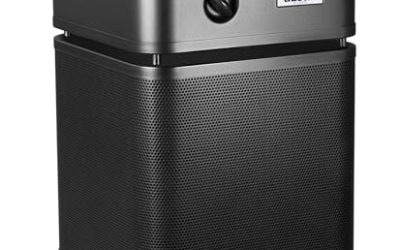
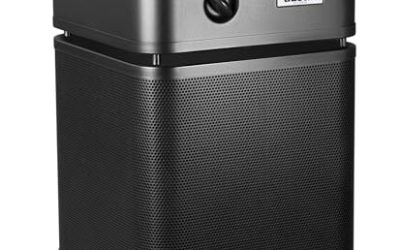
 Austin Air HealthMate Plus Air Purifier1 Count (Pack of 1)14.5 x 14.5 x 23 inches47 poundsCheck on Amazon
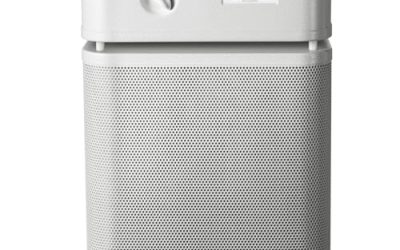
 Austin Air HealthMate Standard Air Purifier1 Count (Pack of 1)14.5 x 14.5 x 23 inches45 poundsCheck on Amazon
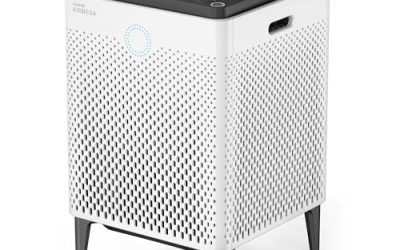
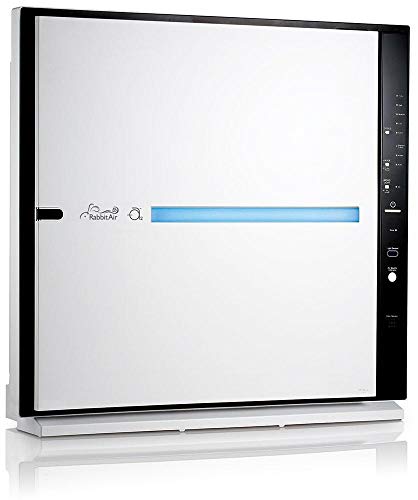 Rabbit Air MinusA2 SPA-780A HEPA Air PurifierSPA-780A White7 x 21.4 x 20 inches19.4 poundsCheck on Amazon
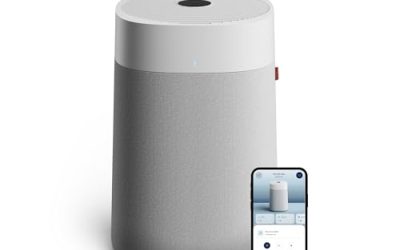
 Medify MA-112 Air Purifier V3.0 with HEPA FilterXlarge Room28 x 16 x 15 inches32 poundsCheck on Amazon
Cooking smells do not stay in the kitchen. Frying, roasting, and fish send gases into the living room, where they settle into curtains and cushions. A particle filter alone cannot solve that problem, because many cooking smells are gases. The best deep bed carbon air purifiers for nearby cooking smells use a thick layer of activated carbon to give those gases time to stick to the carbon surface.
A deep bed is different from a thin carbon sheet. In a thin sheet, air rushes past a small amount of carbon. In a deep bed, air travels through a thick mass of carbon and zeolite, with far more surface area and a longer path. The models below were chosen for carbon mass, room coverage, airflow, and filter life.
Disclosure: As an Amazon Associate, we earn from qualifying purchases.
At a glance
| Product | Key spec | Best for |
|---|---|---|
| Austin Air HealthMate Plus B450 | Up to 15 lb carbon and zeolite, 780 cubic inches | Strong chemical and cooking gas loads |
| Austin Air HealthMate B400 | Over 780 cubic inches carbon and zeolite | Large rooms with a deep carbon bed |
| Rabbit Air MinusA2 SPA-780A | Granular activated carbon, 815 square feet | Wall-mountable odor control near a kitchen |
| Medify MA-112 | Dual large filters, HEPA H13 plus carbon | Very large open spaces |
How to choose
Look for carbon mass, not just the word carbon. A deep-bed unit should state how much carbon it holds, in pounds or cubic inches. The Austin Air models below list over 780 cubic inches and up to 15 lb of carbon and zeolite, far more than a thin sheet. If a listing gives no carbon amount, treat its odor claims with caution.
Check contact time and airflow together. High airflow clears particles fast, but gas removal needs air to spend time inside the carbon. A deep bed gives gases a longer path, so a unit with a large carbon volume often handles cooking bursts better than a fast, thin-filter unit. Look for several fan speeds.
Match coverage to the kitchen and the next room. Cooking smells drift, so size the purifier for the kitchen plus the adjoining living area, not just the cooking zone. Place it between the kitchen and the living space, with clear intake space on all sides.
Consider filter life and replacement cost over time. Deep-bed filters often last far longer than thin carbon sheets, with some Austin Air filters rated for up to five years under normal home use. Follow the maker schedule and replace pre-filters on time so the main bed stays clean.
Watch for pre-filters and HEPA stages. Cooking also creates grease and fine particles that can clog carbon. A washable or replaceable pre-filter catches larger particles first, while a HEPA stage captures fine smoke and dust.
Think about noise, size, and placement. Deep-bed purifiers are often large and heavy, with steel cabinets and no app or sensor. That build suits a fixed spot near the kitchen, but it is not easy to move between rooms. Check dimensions, weight, and noise on high.
Plan for cooking habits, not just one meal. Light reheating needs less carbon than daily frying or cooking with strong spices. If you cook with high heat most days, choose the largest carbon mass you can fit and run the purifier before, during, and after cooking.
Top picks
Austin Air HealthMate Plus B450
Key specs: 4-stage filtration; over 780 cubic inches of activated carbon, potassium iodide impregnated carbon, and mineral-based filtration; up to 15 lb of carbon and zeolite; 60 square feet of True Medical Grade HEPA; coverage up to 1,500 square feet; 360-degree intake; filter life up to 5 years under normal home use.
The HealthMate Plus B450 is the clearest deep-bed pick here, with a carbon stage built for gases, chemicals, and strong odors. Potassium iodide impregnated carbon targets formaldehyde, benzene, and other volatile compounds that plain carbon holds less well. The 360-degree intake pulls air from all sides, and the steel cabinet is built for continuous use.
Best for: Homes near a kitchen where cooking smells are strong, frequent, and mixed with other household gases.
Considerations: It weighs about 47 lb, has no smart features, and gives no CADR figure. Plan a fixed spot with space around the cabinet.
Austin Air HealthMate B400
Key specs: 4-stage filtration; over 780 cubic inches of activated carbon and zeolite; up to 15 lb of carbon and zeolite; 60 square feet of True Medical Grade HEPA; coverage up to 1,500 square feet; 360-degree intake; filter life up to 5 years under normal home use.
The HealthMate B400 uses the same deep-bed idea as the Plus model, with a large carbon and zeolite stage for chemicals, gases, and odors, followed by a large HEPA stage for particles. A thick bed gives frying gases more carbon to pass through than a thin sheet. The unit is a heavy steel cabinet on casters, designed to run for long periods.
Best for: Large living rooms near a kitchen where a deep carbon bed and long filter life matter more than smart controls.
Considerations: The Plus model adds potassium iodide treated carbon for certain gases. It is heavy, and the main filter is a large single assembly.
Rabbit Air MinusA2 SPA-780A
Key specs: 6-stage filtration; charcoal-based activated carbon filter made of high-grade granular activated carbon; coverage up to 815 square feet; CADR 200 pollen, 193 dust, 180 smoke; wall-mountable; dimensions 21.4 by 20.0 by 7.0 inches; weight 19.4 lb.
The Rabbit Air MinusA2 SPA-780A takes a different shape, with a slim panel that can sit on the floor or mount on a wall near a kitchen. Its carbon stage uses granular activated carbon, which the maker describes as more effective than a thin carbon coating, and it pairs that stage with a medium filter, a HEPA filter, and a customized filter for odor control.
Best for: Smaller open spaces and apartments where a slim, wall-mountable unit with granular carbon fits near the kitchen.
Considerations: Coverage is lower than the Austin Air models, so it suits a defined living area. Choose the odor customized filter for cooking smells.
Medify MA-112
Key specs: True HEPA H13 filter; 3-in-1 filter with pre-filter, HEPA, and activated carbon; dual large filters; coverage listed up to 2,500 square feet in some listings; filter class HEPA and activated carbon; touch controls.
The Medify MA-112 is included here for scale rather than for a single deep bed. It uses two large 3-in-1 filters, each combining a pre-filter, HEPA H13 media, and activated carbon, so the total carbon surface is larger than in a single-filter compact purifier. That size suits a very large open kitchen and living room.
Best for: Very large open-plan homes where two large carbon and HEPA filters and high airflow matter most.
Considerations: This is not a single deep bed like the Austin Air models, so its carbon is spread across two composite filters. Check dimensions before choosing it for a small room.
Which one fits your space
For the strongest cooking gas load in a large room, choose the Austin Air HealthMate Plus B450, with the standard HealthMate B400 as a close second. For a smaller space or a wall-mounted spot near the kitchen, the Rabbit Air MinusA2 SPA-780A fits better and still uses granular carbon. For a very large open plan, the Medify MA-112 covers more square feet, even though its carbon is split across two composite filters.
FAQ
What makes a carbon bed deep?
A deep bed is a thick mass of loose or granular carbon, measured in pounds or cubic inches, that air must travel through. A thin sheet has far less carbon and a shorter path.
Will a deep-bed purifier remove all cooking smells?
It can reduce cooking smells substantially, especially when run before, during, and after cooking, but it cannot erase every trace at once. Strong frying and spice cooking release a large gas load, so kitchen ventilation and continued purifier use after cooking both help.
How long does a deep-bed carbon filter last?
It depends on the model and the pollutant load. Some Austin Air filters are rated for up to five years under normal home use, while composite filters need more frequent changes. Follow the maker schedule.
Where should I place a purifier for cooking smells?
Place it between the kitchen and the main living area, with clear space around the intake and output. Run it on a higher speed during cooking, then lower it once the air feels clearer.
Bottom line
The best deep bed carbon air purifiers for nearby cooking smells give gases a long path through a large mass of carbon, not just a thin sheet. The Austin Air HealthMate Plus B450 and HealthMate B400 lead on carbon volume, the Rabbit Air MinusA2 SPA-780A suits smaller spaces, and the Medify MA-112 suits very large open plans. Choose by carbon mass, room size, and cooking frequency.
More from Amazon
Programs that pair well with the guide above. Offers and eligibility are set by Amazon and may change.
Collect the home and kitchen items you want in one registry that guests can shop from.
Create a wedding registrySet up recurring deliveries of everyday items on eligible products. Terms and savings are set by Amazon.
Explore Subscribe & SaveFree shipping on eligible items, Prime Video and more. Eligible new members can start with a free trial.
Start a Prime free trialAudiobooks and podcasts to listen to on the go. Eligible new members can start with a free trial.
Try Audible freeAs an Amazon Associate we earn from qualifying purchases.