Key takeaways
- Crosscut capacity over blade diameter: A 10-inch saw with a well-engineered rail system can clear wider stock than a cheap 12-inch. Look for 13 inches or more at 90° if you plan to crosscut 2×12 rafters or 12-inch composite risers in a single pass.
- Bevel range and stop quality: 0–45° both ways handles nearly all deck and pergola geometry. What separates saws is whether the detents land crisply and hold under vibration, and whether the bevel lock is reachable without crawling behind the saw.
- Fence height: Tall sliding fences let you cut baluster stock and trim boards vertically instead of flat. Short fences force awkward workarounds on anything over 4 inches nominal.
- Cut-line reference: Lasers need periodic calibration; shadow-line LED systems project the blade’s actual kerf and stay honest. Either beats squinting, but shadow systems win on rough-sawn cedar and dark-stained composite.
- Weight and rail design: Rear-rail saws want bench clearance you won’t have on a jobsite. Compact glide mechanisms let you park the saw against a wall or work off a truck tailgate — worth real money if the saw moves between projects.
What's inside
Outdoor builds punish a miter saw in ways indoor work never does. Cedar pergola rafters run long and heavy, composite fascia needs a glass-smooth edge that won’t fuzz in the sun, and a picture-frame deck border only looks right if every corner closes tight after the boards have been sitting in humidity all week. Flip a workpiece to chase a bevel on 2×10 rafter tails and you learn fast why single-bevel saws get abandoned halfway through a patio project. The cut drifts, the reference face changes, and the joint you spent an hour laying out ends up shimmed.
A dual bevel sliding miter saw removes that whole category of frustration: the head tilts both directions, so you cut opposing angles without touching the board. This guide covers what actually matters when you’re framing shade structures, building planter boxes, or trimming out a covered porch — fence height, real crosscut width in wet lumber, dust behavior on a windy deck, and whether the alignment holds after the saw rides in a truck bed. Below are the six saws worth considering in 2026, followed by a buying framework and the tradeoffs behind each pick.
As an Amazon Associate we earn from qualifying purchases.




How to Choose a Dual Bevel Sliding Miter Saw (2026)
- Crosscut capacity over blade diameter: A 10-inch saw with a well-engineered rail system can clear wider stock than a cheap 12-inch. Look for 13 inches or more at 90° if you plan to crosscut 2×12 rafters or 12-inch composite risers in a single pass.
- Bevel range and stop quality: 0–45° both ways handles nearly all deck and pergola geometry. What separates saws is whether the detents land crisply and hold under vibration, and whether the bevel lock is reachable without crawling behind the saw.
- Fence height: Tall sliding fences let you cut baluster stock and trim boards vertically instead of flat. Short fences force awkward workarounds on anything over 4 inches nominal.
- Cut-line reference: Lasers need periodic calibration; shadow-line LED systems project the blade’s actual kerf and stay honest. Either beats squinting, but shadow systems win on rough-sawn cedar and dark-stained composite.
- Weight and rail design: Rear-rail saws want bench clearance you won’t have on a jobsite. Compact glide mechanisms let you park the saw against a wall or work off a truck tailgate — worth real money if the saw moves between projects.
The Best Dual Bevel Sliding Miter Saw (2026)s Reviewed
DEWALT DWS780 12-Inch Double Bevel Sliding Compound Miter Saw
The XPS shadow light is the standout here — no calibration, no batteries, just a crisp blade shadow that reads clearly on weathered decking and dark composite. It’s the safe recommendation for anyone building shade structures and porch trim who wants a saw that will still hold square in five years.
Makita LS1219L 12-Inch Dual-Bevel Sliding Compound Miter Saw
Makita’s compact glide design lets this 12-inch saw sit nearly flush against a wall while still delivering wide crosscut capacity, which matters enormously in a crowded garage shop or on a narrow deck platform. Cut quality in hardwood and thermally modified lumber is the smoothest in this group.
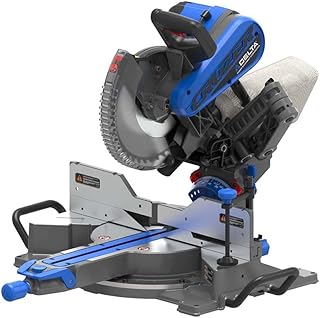
Delta 26-2310 10-Inch Dual Bevel Sliding Miter Saw
A 16-inch crosscut from a 10-inch blade is genuinely useful — you can cross a 2×12 bench slab or wide planter panel without flipping. The smaller blade keeps the saw lighter and the 10-inch replacement blades cheaper, a real consideration if you’re chewing through abrasive treated pine.
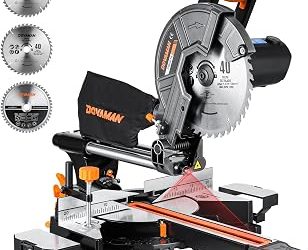
DOVAMAN 12-Inch Dual-Bevel Compound Sliding Miter Saw
Ambidextrous controls and nine positive stops make this an easy saw to work fast on, and the 4.2 x 13-inch capacity covers standard deck framing and pergola stock. Best fit for weekend builders who want dual-bevel convenience without a premium price.
DOVAMAN 10-Inch Dual Bevel Sliding Miter Saw, Multi-Material
The two-speed motor is the interesting part: drop to 3,200 RPM for aluminum trim, railing extrusions, or PVC skirting, then step up for wood. With three TCT blades included and an LED shadow line, it’s the most versatile option for mixed-material outdoor projects.
Frequently Asked Questions
Is a 10-inch or 12-inch saw better for deck work?
Check the crosscut spec, not the blade. A well-designed 10-inch slider often matches a 12-inch on width while running cheaper blades and less weight. Choose 12-inch if you regularly cut thick timber posts or need maximum vertical capacity at steep bevels.
Do I really need dual bevel outdoors?
Yes, more than indoors. Rafter tails, mitered deck borders, and angled planter faces constantly demand opposing bevels, and outdoor stock is too heavy and too long to flip repeatedly without introducing error.
Can these saws cut composite decking cleanly?
They can, with the right blade. Swap to a high-tooth-count fine-finish blade and slow your feed rate; the factory 80-tooth blades on some models handle composite acceptably out of the box.
How do I manage dust on a patio or deck?
Bagged collection catches maybe half of it. Connect a shop vacuum to the port and position the saw so prevailing wind carries fines away from finished surfaces — sawdust ground into fresh stain is a genuine headache.
Final Thoughts
For most outdoor-living builds, the DEWALT DWS780 is the pick that rewards you daily through its shadow-line accuracy and long-term durability. If shop space is tight or you work in hardwood and modified lumber, the Makita LS1219L is worth the premium. Budget-conscious builders tackling mixed materials should look hard at the two-speed DOVAMAN 10-inch, which covers wood, PVC, and aluminum trim in one tool.